128 years ago · 1898 — Paris laboratory
Historically grounded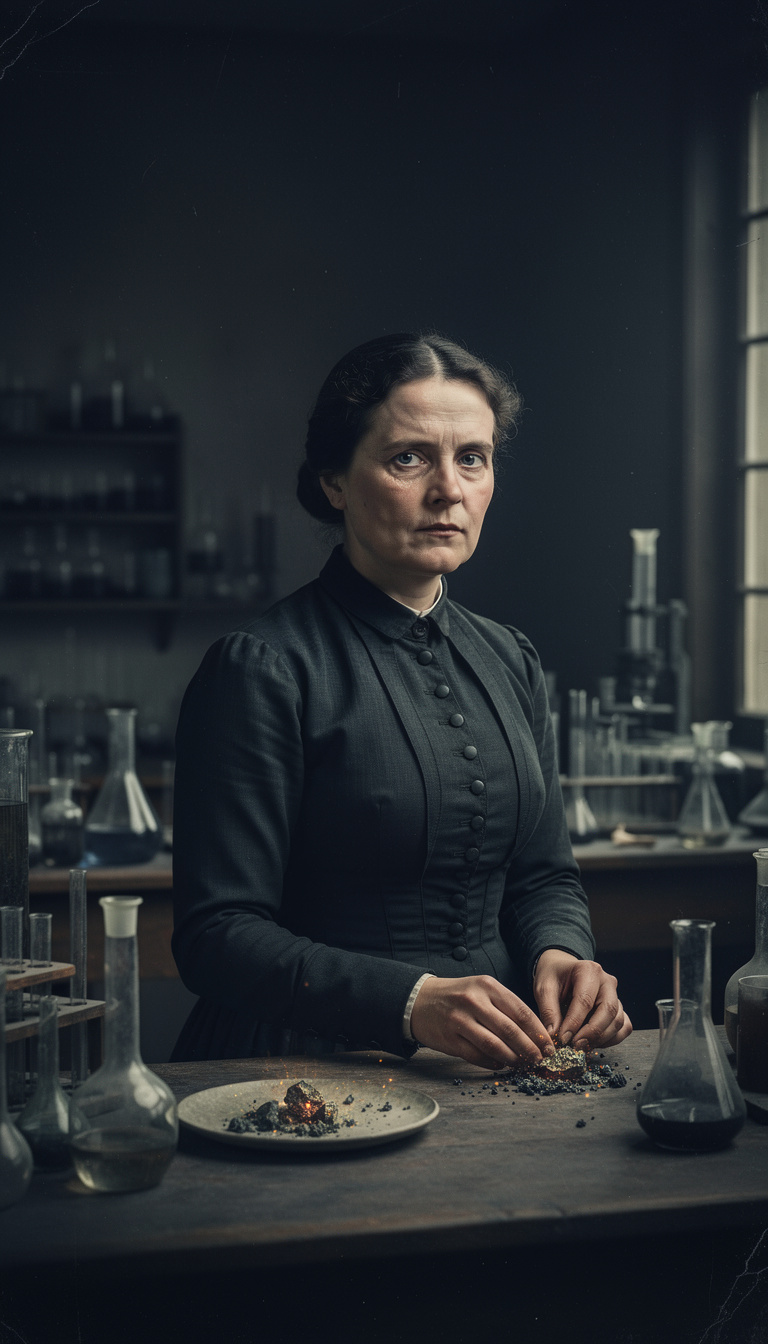
The residue from pitchblende is far more active than uranium. That means something unknown may be hiding here. Science sometimes begins as a stubborn measurement that refuses to make sense.
Explain more
In 1898 Marie and Pierre Curie identified polonium and radium after finding that pitchblende ore was more radioactive than its known uranium content could explain. This post echoes that discovery narrative.
Why it matters
Anomalies are invitations. When the numbers disagree with the map, redraw the map.
What is true / dramatized: Historically grounded. Educational entertainment — not a primary historical source.
Curie discoveries of polonium and radium, 1898.
Difficulty: medium · ~1 min
Related
 Albert Einstein
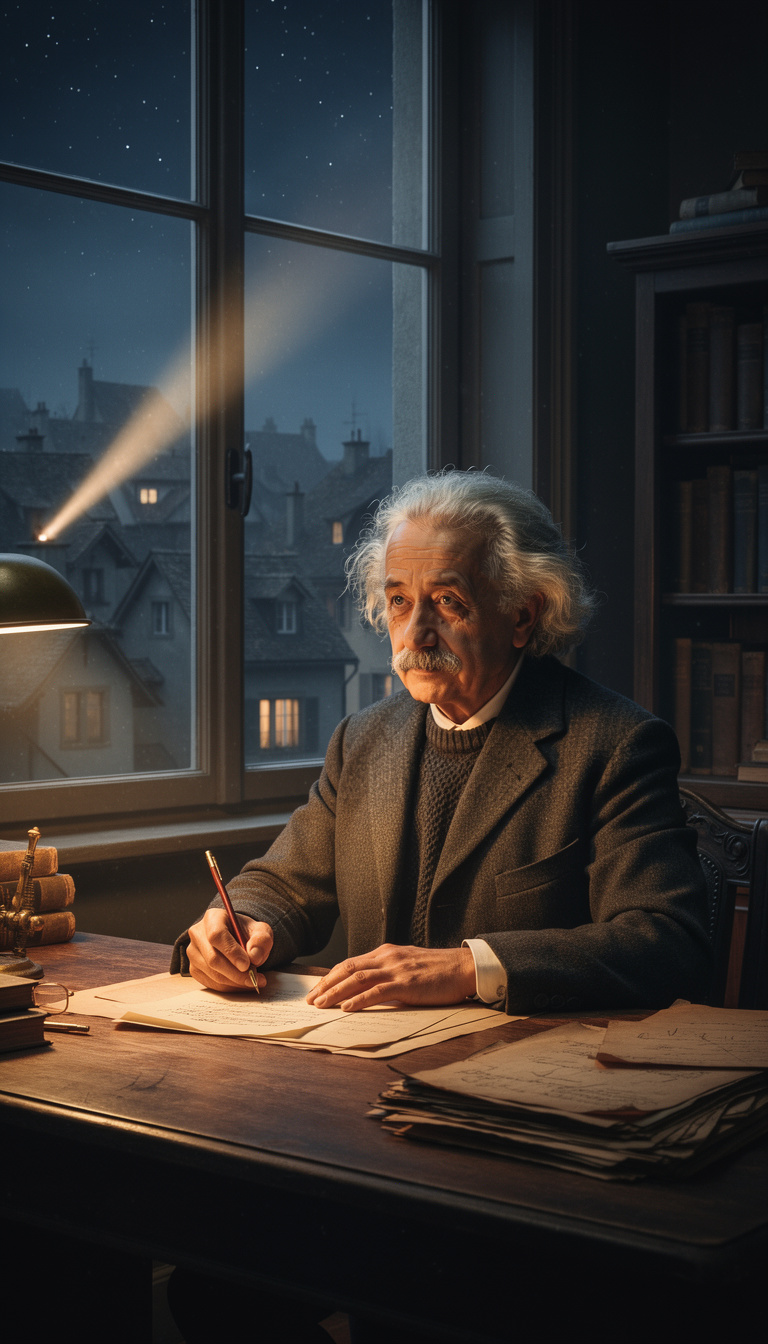
What if light always moves at the same speed, no matter how fast you chase it? Today's thought experiment: ride beside a beam of light and watch where classical physics starts to crack. If the rules refuse to bend for your speed, then time and space may have to.
 Albert Einstein
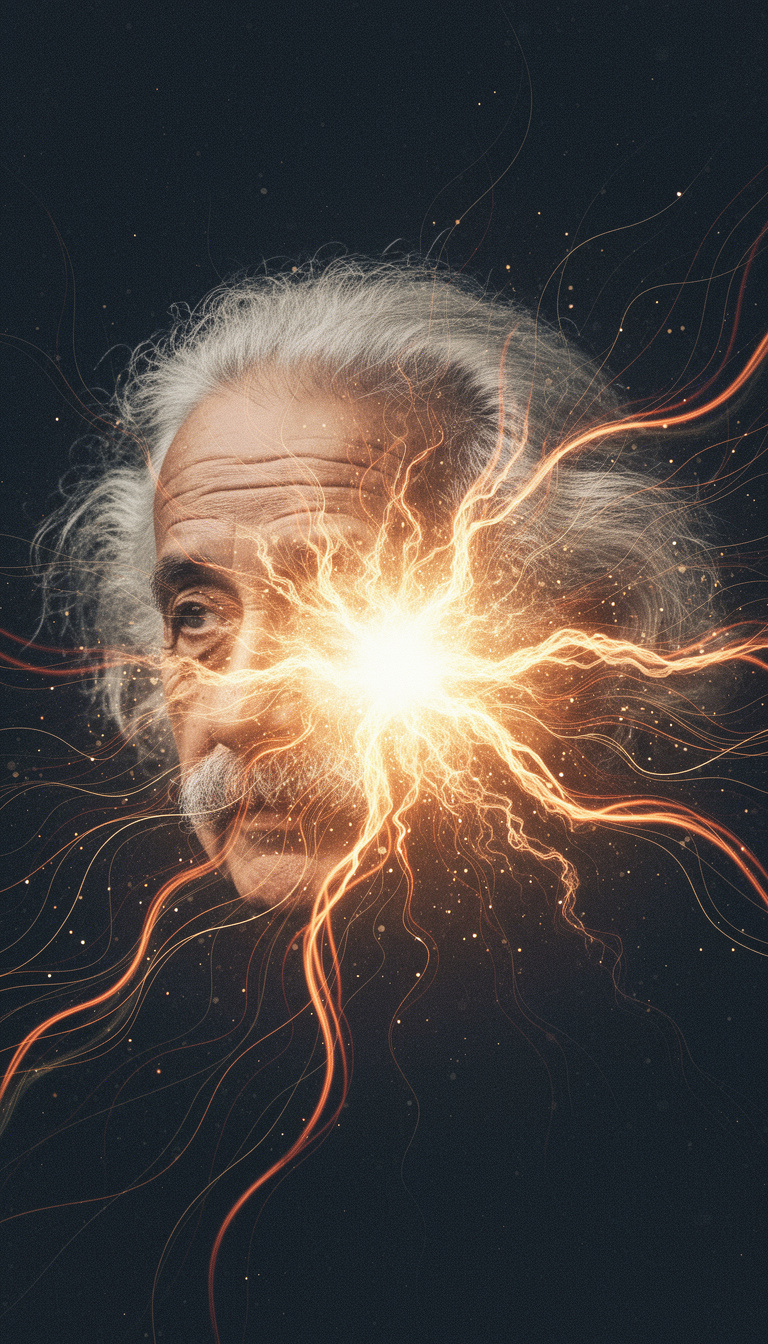
Mass is not a dead pile of stuff. It is energy wearing a quieter costume. E = mc² says a tiny amount of mass stores an enormous amount of energy — because c, the speed of light, is huge, and squared it becomes almost unimaginable.
 Albert Einstein
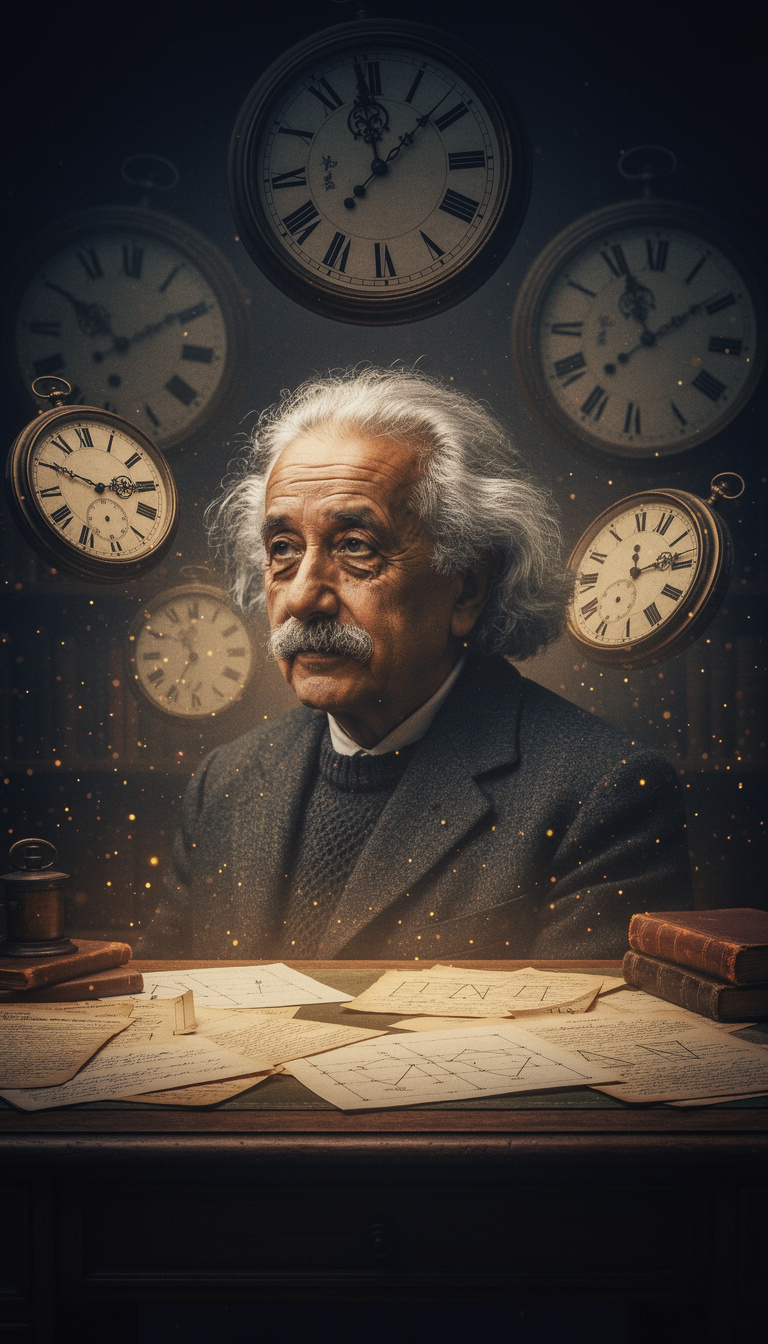
Patent office by day. Revolution by night. In 1905 the papers arrive like a drumroll: light as quanta, Brownian motion proving atoms dance, special relativity rewriting space and time, and then the quiet thunder of mass and energy as one account.
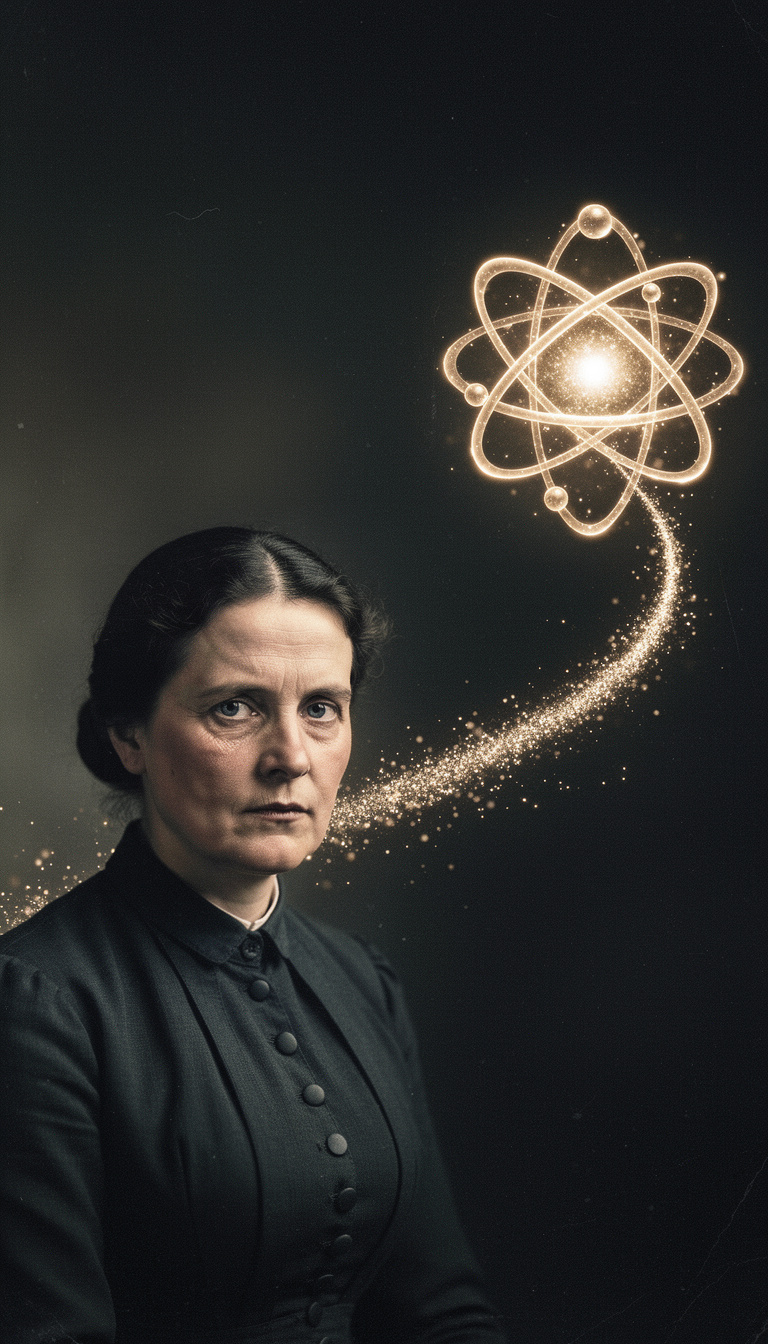 Marie Curie
Radioactivity means some atoms are unstable. They transform, shedding particles or energy, and become different elements. It is not magic glow. It is nature rewriting its own inventory — one nucleus at a time.
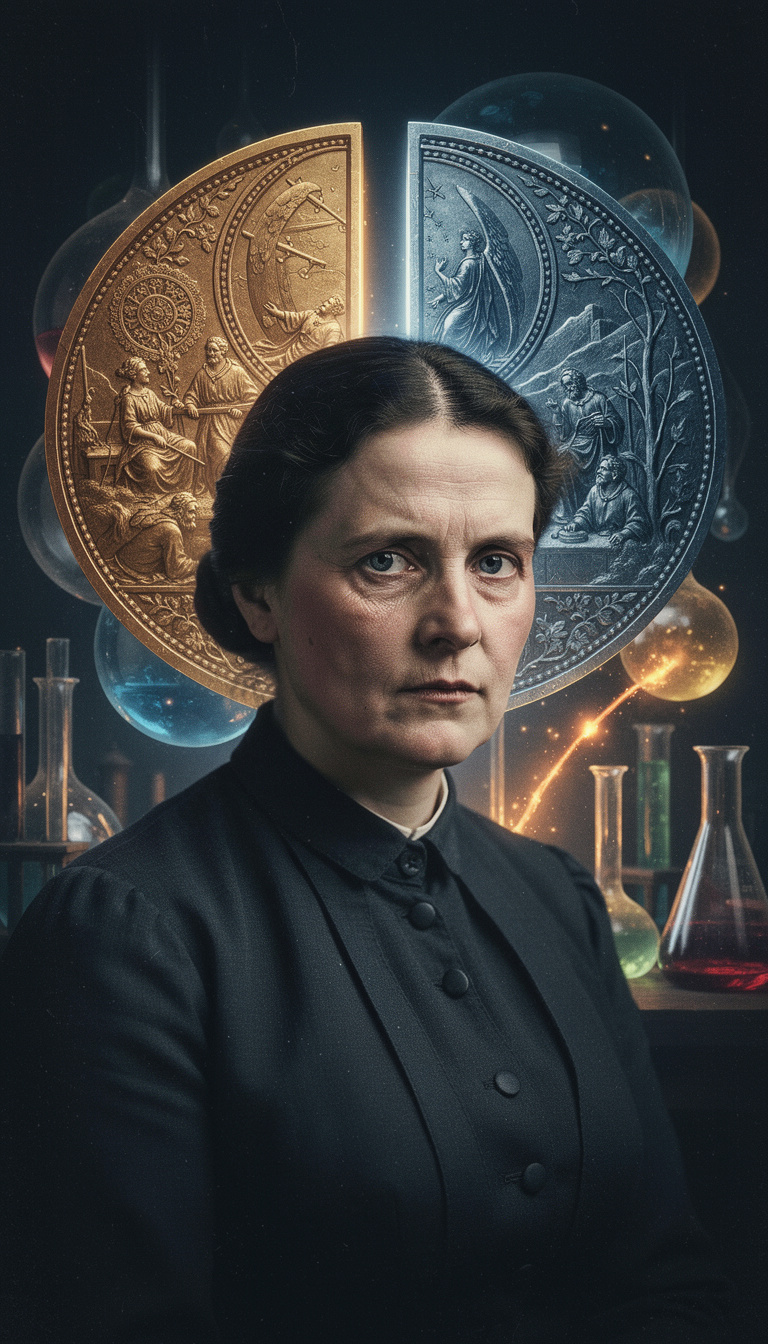 Marie Curie
1903: Physics, shared — for work on radioactivity. 1911: Chemistry, alone — for radium and polonium, and the isolation of radium. The medals are symbols. The real story is years of crushing ore, measuring, and refusing to quit when the work was heavy and the recognition uneven.
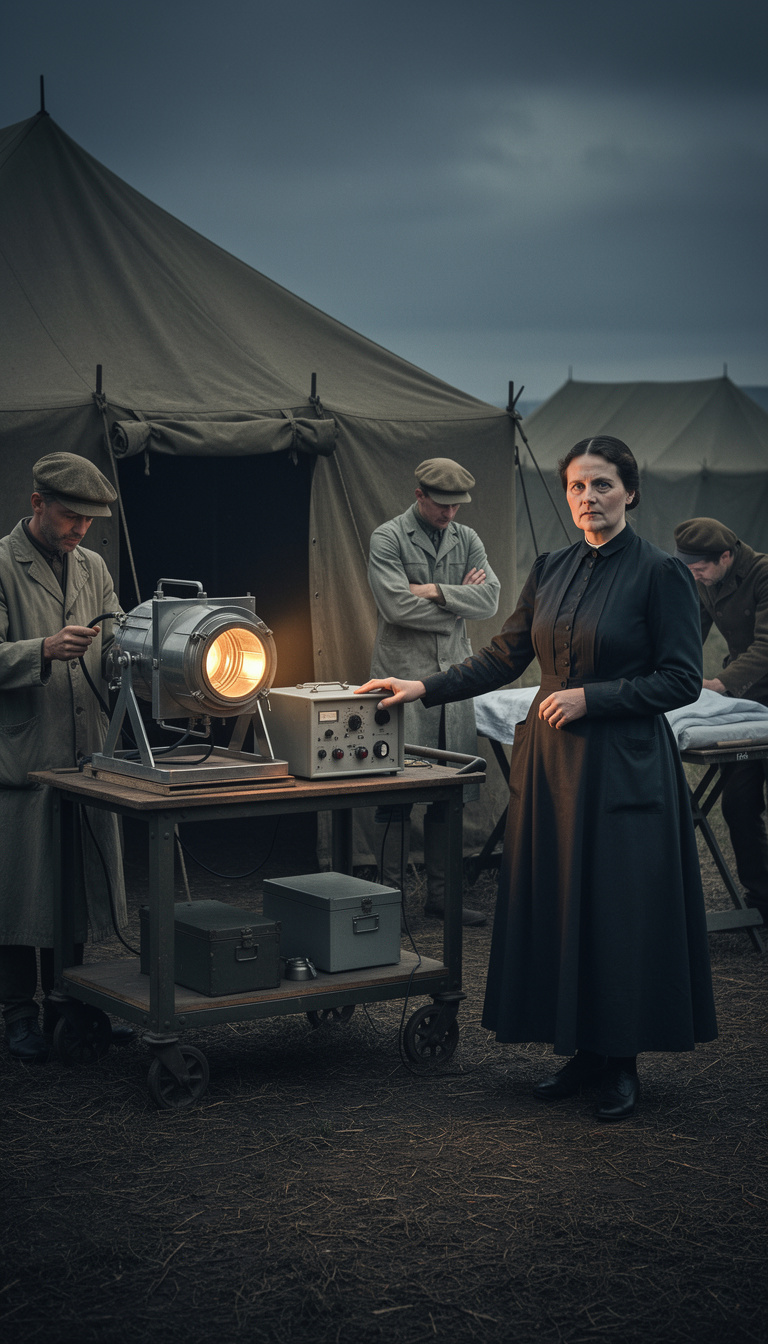 Marie Curie
A broken bone does not wait for a perfect hospital. During the war we took X-ray units to the wounded — mobile radiology, practical and urgent. Discovery earns its keep when it reduces suffering.