1951–1955 · 1951–1955 — The Last Premiership
Dramatized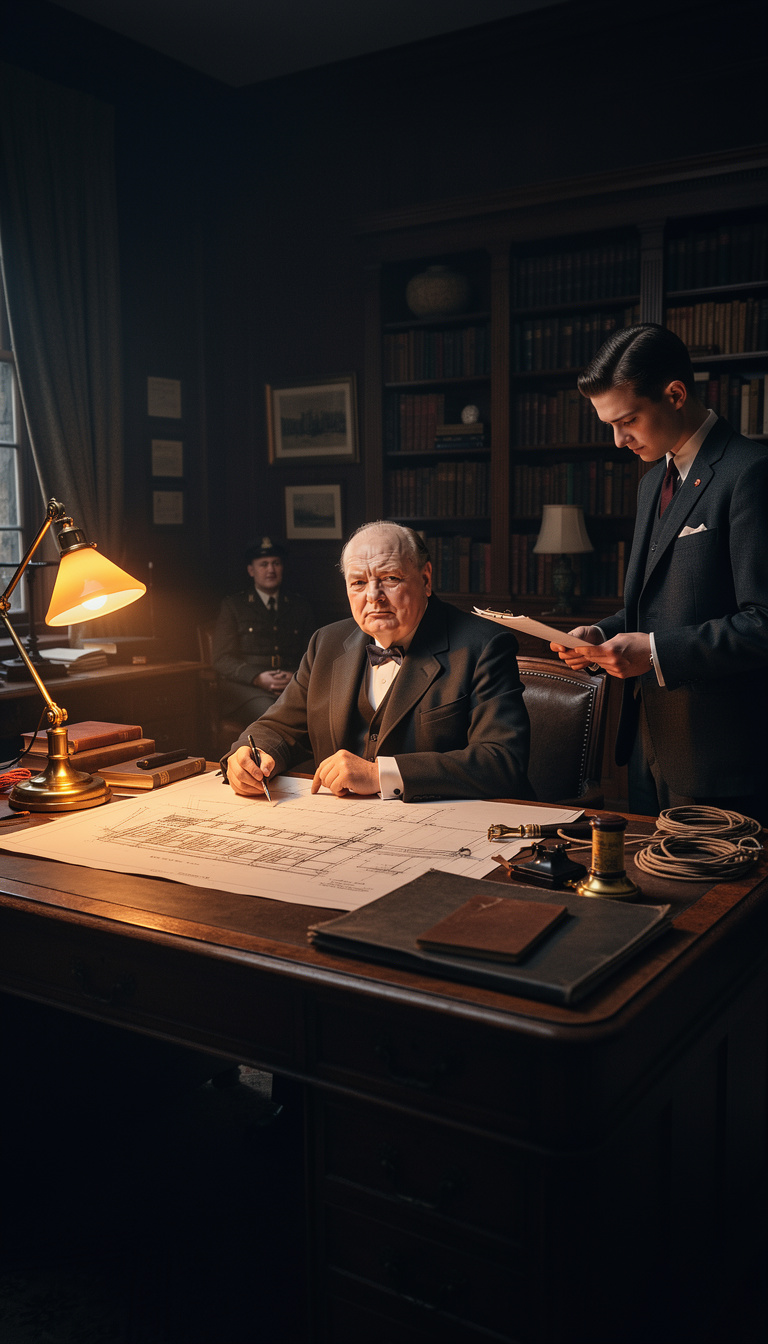
Seventy-six, and the country has called me back. Not for glory—those days are done. The voters returned me with a majority thinner than a good cigar, and I find the House emptier of old faces than I care for. Yet here sits the desk, here the dispatch boxes, here the whisky at six. Foreign affairs consume my mornings. I cross the Atlantic to see Ike, to speak of Greece, of Iran, of this Iron Curtain I named. The Empire shrinks; I cannot stop it, and perhaps I should not try. But I can still weave the Anglo-American alliance—that, I believe, matters more than flags. The surprise, even to me: housing. My ministers build. Two hundred thousand homes a year, they promise, and mostly they deliver. Council houses with gardens, for families who lived in rubble. I, who once ordered fleets and armies, find my legacy in brick and mortar, in a man collecting his key. It does not displease me. A roof is a kind of peace.
Explain more
Churchill's second term was dominated by Cold War diplomacy—repeated summits with Eisenhower and attempts to manage decolonization—while domestically his Conservative government prioritized an ambitious housebuilding programme that delivered approximately 300,000 homes annually by 1953.
Why it matters
This period reveals Churchill's pragmatic adaptation: accepting imperial decline while securing Britain's place through alliance, and recognizing that postwar reconstruction required tangible domestic achievement, not merely rhetorical grandeur.
Try today
Consider what 'legacy' you are actually building versus what you imagine. The mundane good often outlasts the dramatic gesture.
What is true / dramatized: Dramatized. Educational entertainment — not a primary historical source.
Churchill's final premiership, 1951-1955, combining Cold War statecraft with unexpected domestic housing success.
Difficulty: medium · ~5 min
Related
 Winston Churchill
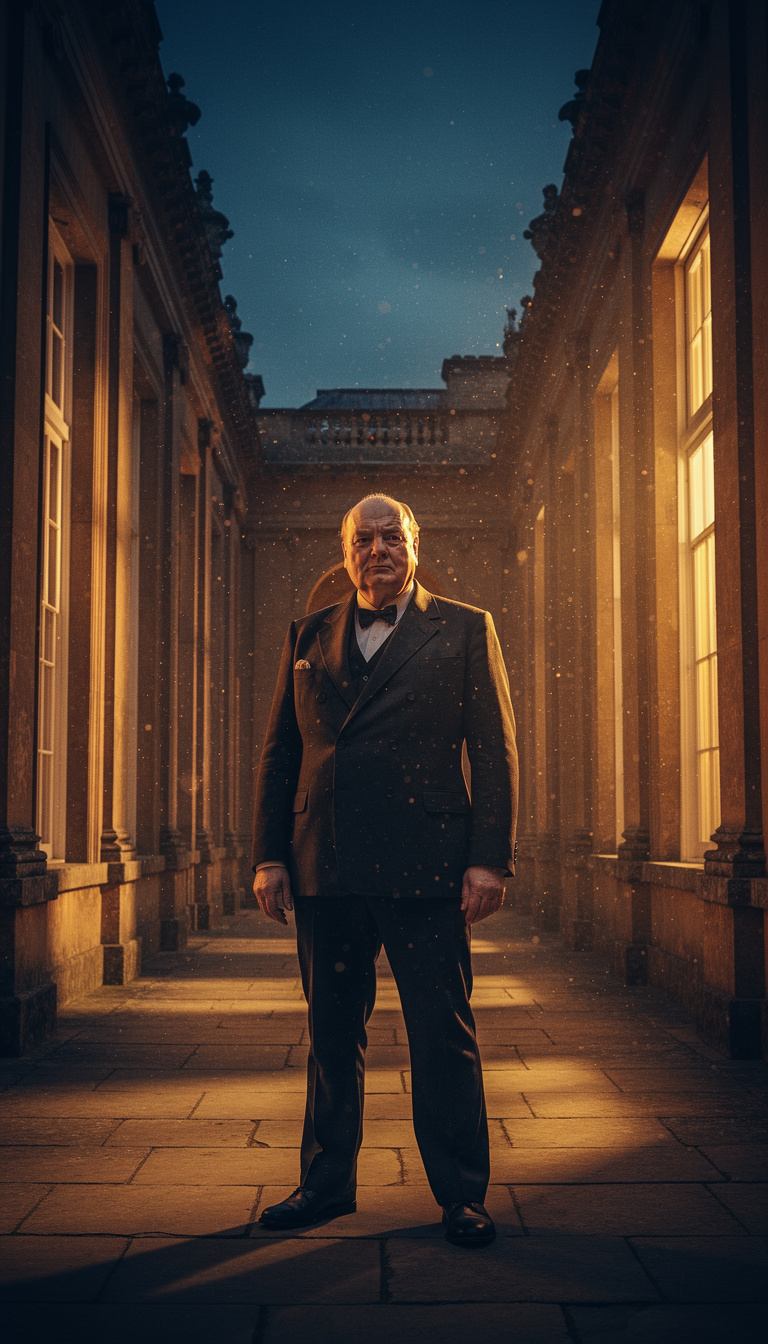
Looking back from my later years, I see that infant swaddled at Blenheim Palace—November 30, 1874—and I marvel at what the boy could not yet know. My mother, Jennie Jerome of Brooklyn, was as American as the Manhattan skyline; my father, Lord Randolph, as English and restless as a foxhound before the hunt. I arrived two months early, apparently impatient even then, in a bedroom overlooking the great park where Marlborough had once plotted his campaigns. What strikes me now: I was born into spectacle and expectation, yet the privilege proved no shelter. My father I scarcely knew; my mother I adored at theatrical distance. The palace gave me stone corridors to shout in, but no warmth to grow by. I learned early that grandeur and loneliness could share the same roof—and that a boy must make his own noise if he wishes to be heard. That, I suspect, was the first draft of the man: desperate to matter, already practicing the roar.
 Winston Churchill
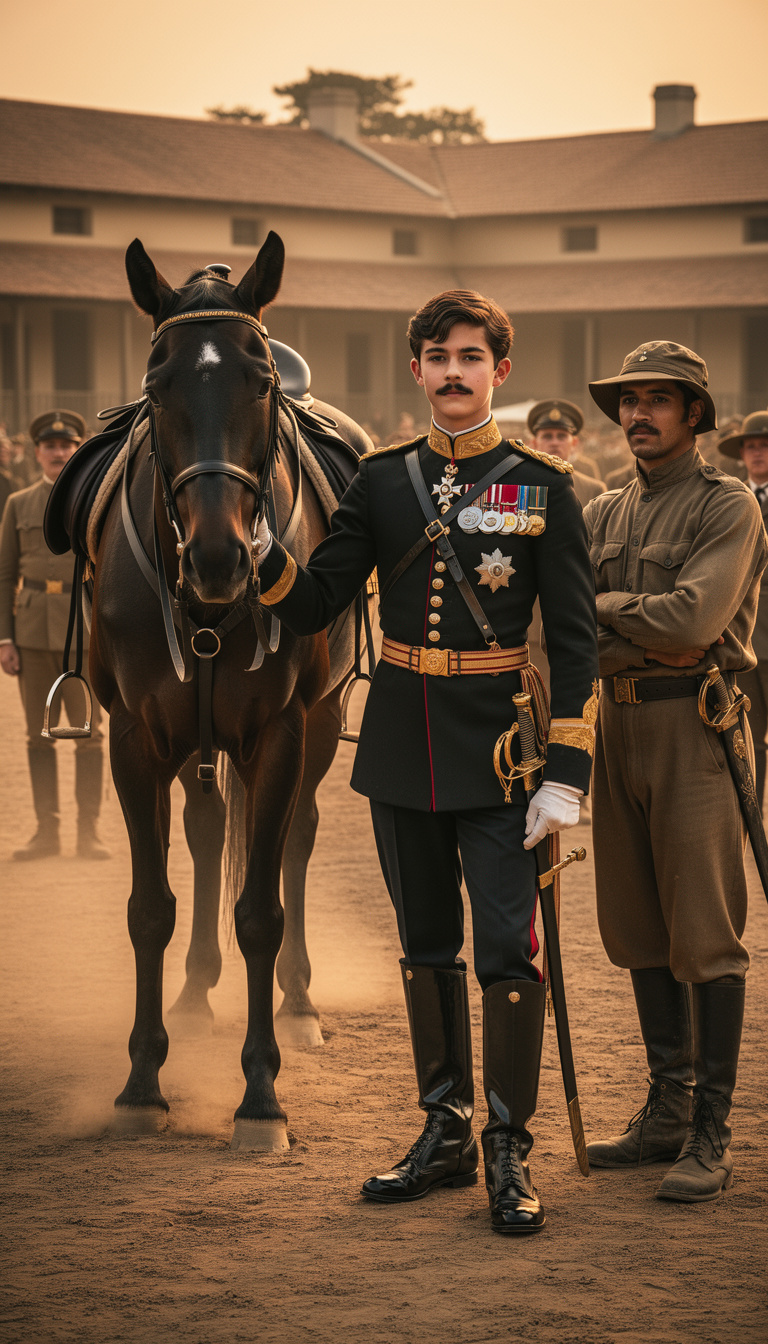
Looking back from my later years, I see that young man of twenty—commissioned a second lieutenant in the 4th Queen's Own Hussars, February 1895, with all the pomp and polished boots that entailed. I had my mother's determination, and I was not shy in using it. I pressed and I pressed until they let me carry my pen where my sword could not yet lead—into war zones as a correspondent. Some called it influence. I called it initiative. What I did not yet understand was that I was forging my true weapon: not the cavalry sabre, but the capacity to witness, to record, to make others see what I had seen. The boy wanted glory. The man I became learned that words outlast charges.
 Winston Churchill
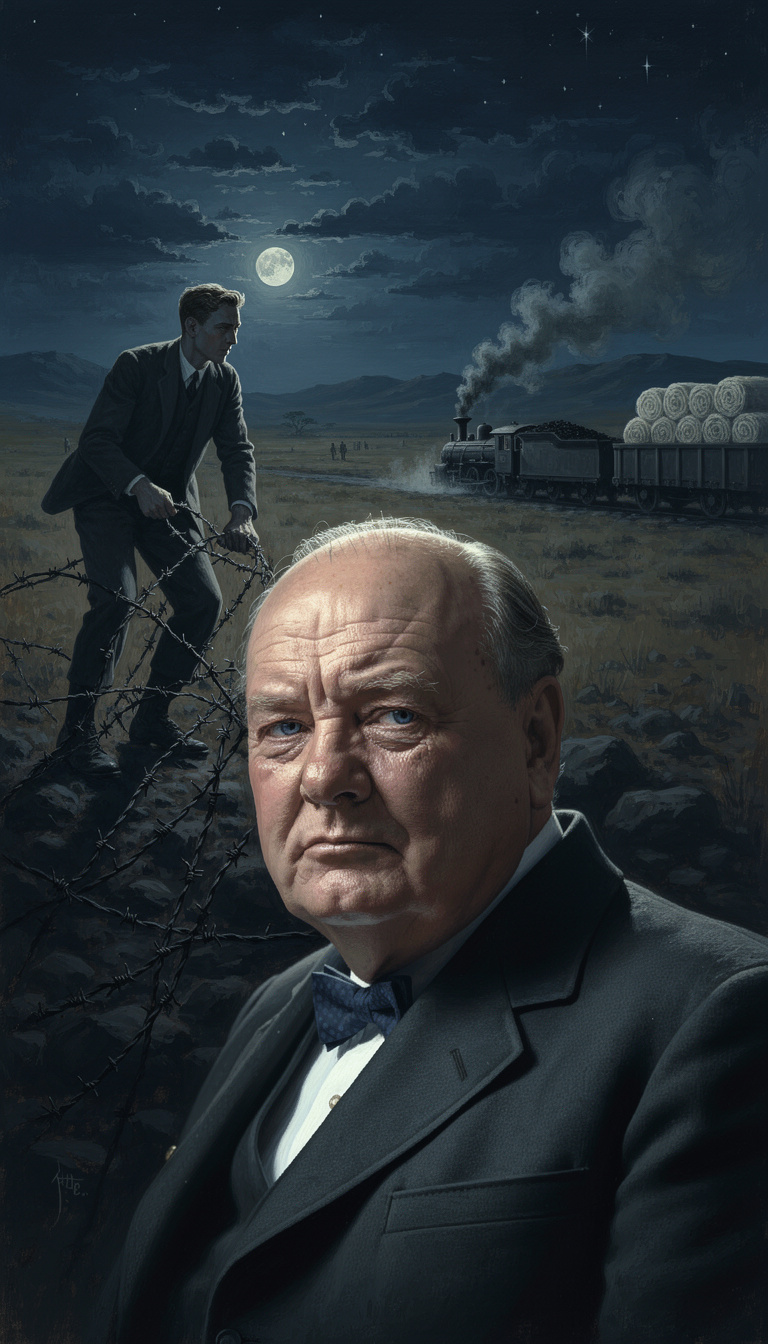
Pretoria, December 1899. The Boers have me. Thirty men and I, taken at the armoured train ambush near Chieveley—my own fault, partly; I had insisted we push forward. Now I pace the States Model School, barbed wire and sentries, while my compatriots languish in their hundreds. I am twenty-four, a correspondent still, yet treated as an officer-captive. The indignity chafes less than the idleness. But I do not idle well. On the night of December 12th—St. John's Ambulance, my cover—I scale the wall. Forty shillings in my pocket, four bars of chocolate, and the compass my mother sent. The railway eastward, then hiding in the wool of a freight car, then buried in the soot of a colliery while the Boers search house to house. Three hundred miles to the Portuguese frontier. I am filthy, famished, and utterly alive. The publicity after is thunderous—too thunderous, perhaps. I did not escape for headlines; I escaped because I could not bear to stop. Had I only known how this restlessness would serve and plague me in equal measure.
 Winston Churchill
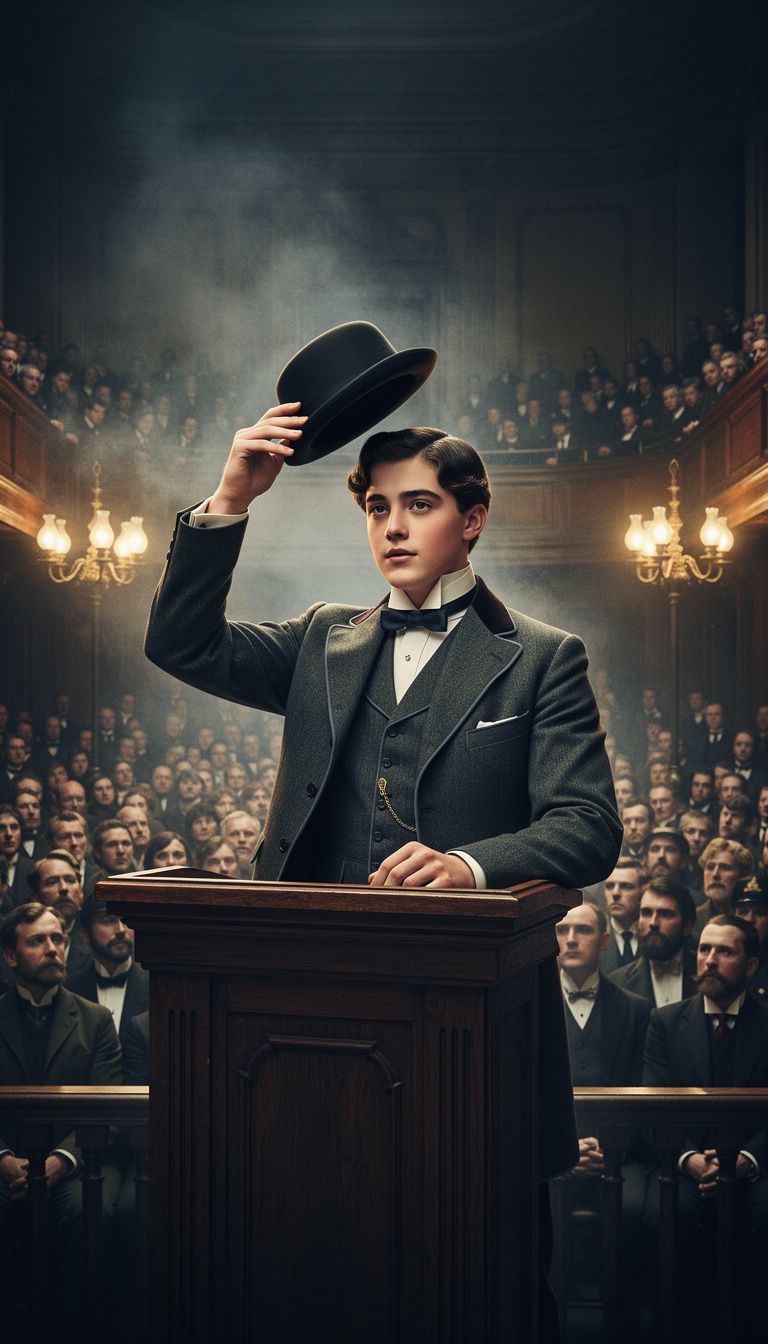
The hustings at Oldham have spoken, and by the slimmest of margins—I am in. Twenty-five years old, the youngest man in the House, and I confess I feel the weight of it even as I exult. The crowd at the declaration roared; I tipped my hat with what I hoped looked like seasoned composure, though my hand trembled slightly. The Boer War still rages, and I campaigned hard on it—too hard, some muttered. I have crossed the floor once already in spirit, from soldier to scribbler to this. Now the real apprenticeship begins. I find I prefer the cut and thrust of debate to the cut of a cavalry sabre—though I shall keep both sharp.
 Winston Churchill
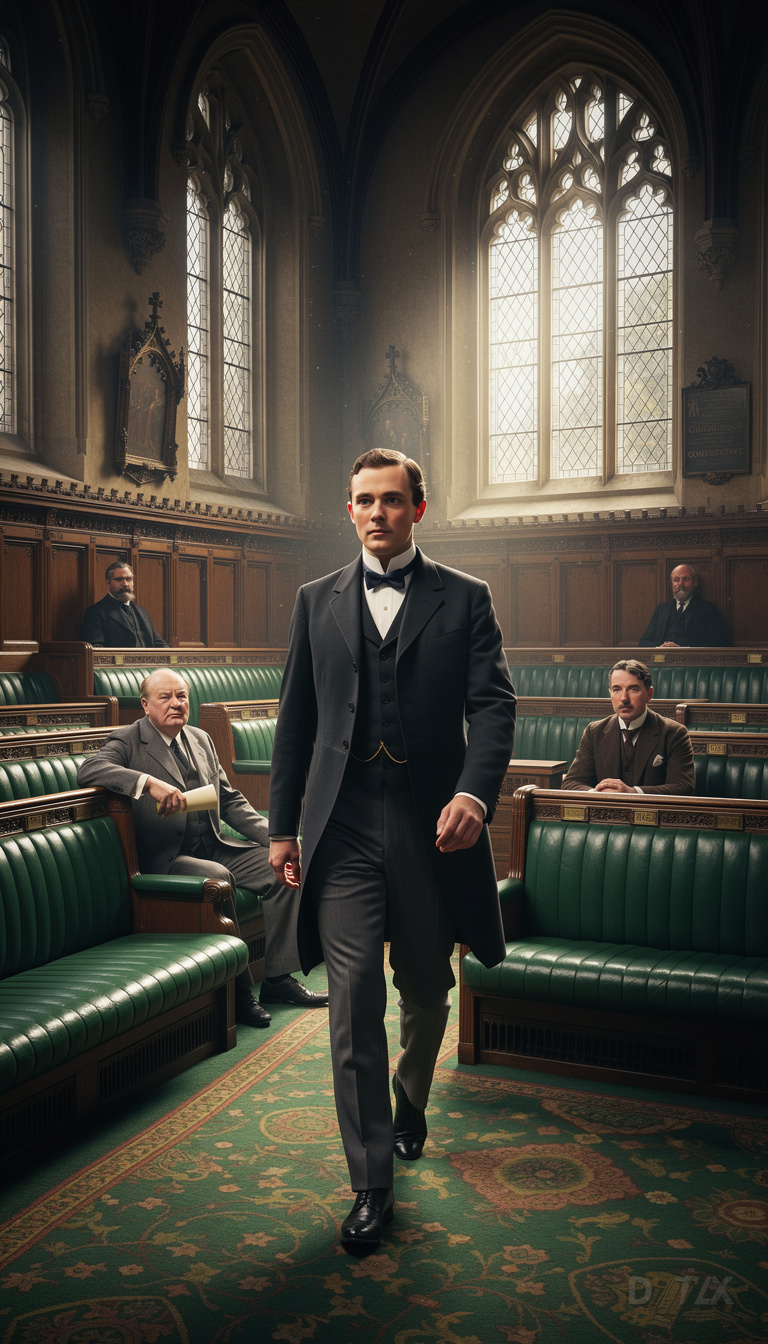
This afternoon I walked across the House of Commons and took my seat on the Liberal benches. The Conservatives—my father's party, the party of my youth—have embraced protectionism, and I will not. To tax bread that the poor might eat, to build tariff walls where commerce should flow: this is not Toryism as I understood it. The House fell silent as I passed. I confess I felt the weight of every eye upon me, and something else besides—a peculiar lightness, as though a man might breathe again after holding his breath for years. My cigar, I find, tastes differently on this side of the Chamber. The same tobacco, yet somehow sharper. I am thirty years old. Too young, some will say, for such theatricality. Yet principles, once examined and found sound, do not improve with age—they only grow more urgent to defend.
 Winston Churchill
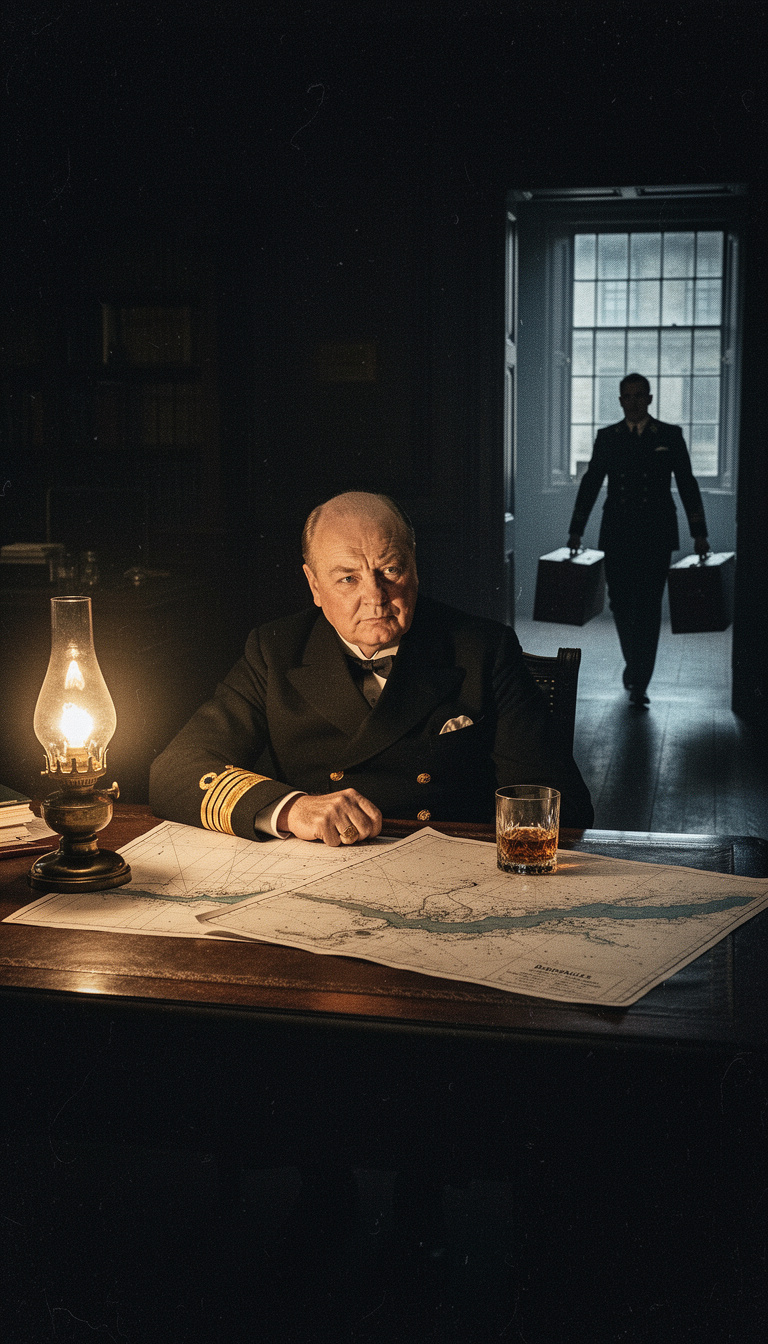
The Admiralty desk is cleared. I sit now in a smaller room at the Duchy of Lancaster, a title that sounds grand and means nothing. The Dardanelles—my scheme, my pressing, my certainty that a naval thrust could knock Turkey out and relieve our Russian allies—has foundered on the beaches of Gallipoli. Ships lost. Men drowned. The generals blame the navy; the navy blames the generals; I, who urged it forward, am diminished to this. I have resigned from the Cabinet. Tomorrow I exchange my ministerial boxes for a commission in the Royal Scots Fusiliers. The Western Front awaits—mud, gas, the lottery of shells. Some call it penance. I call it necessity. A man who orders others into hazard must know the hazard himself, or his words become hollow brass. Had I only known the cost—but no. That way lies paralysis. The error was not in daring; it was in daring without sufficient margin for the friction of war. I am learning, at forty, that resolution must be married to humility, or it becomes mere stubbornness.