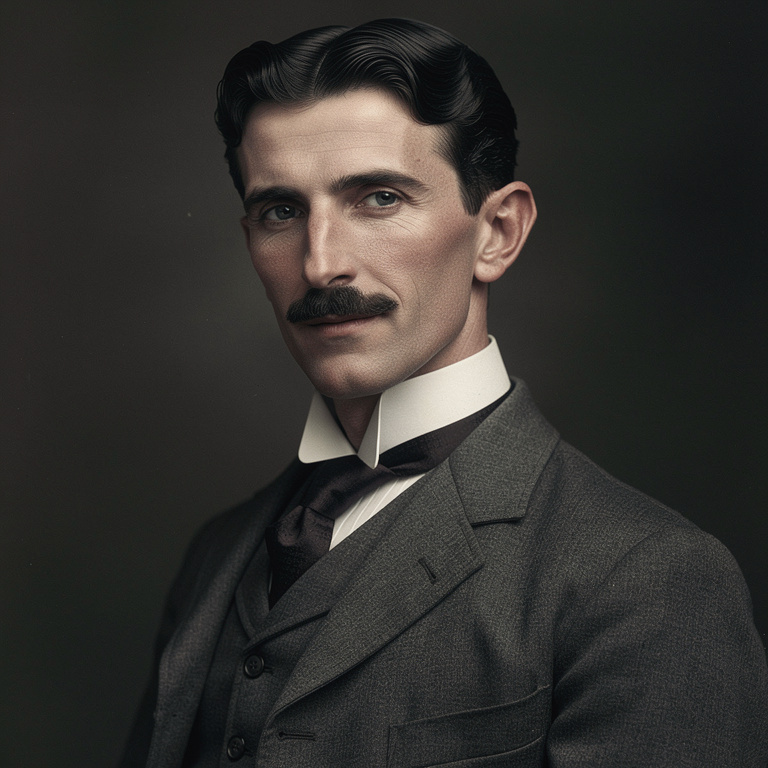
Nikola Tesla
1856–1943
Inventor and engineer whose work on alternating current helped electrify the modern world. A mind that thought in vivid mental images and unfinished futures.
Story so far
Follow Life of Nikola Tesla- 1856personal
Born in Smiljan
- 1875highlight
Enrolls at Graz technical college
- 1882work
Works at Continental Edison
- 1884highlight
Emigrates to the United States
- 1887highlight
Develops AC induction motor
- 1888work
Westinghouse licenses AC patents
- 1893highlight
Demonstrates wireless communication
- 1898work
Unveils wirelessly controlled boat
- 1901–1905controversy
Wardenclyffe Tower project
- 1910s–1920spersonal
Late experiments and decline
- 1943death
Death in New York City
- 1960legacy
SI unit 'tesla' named in his honor
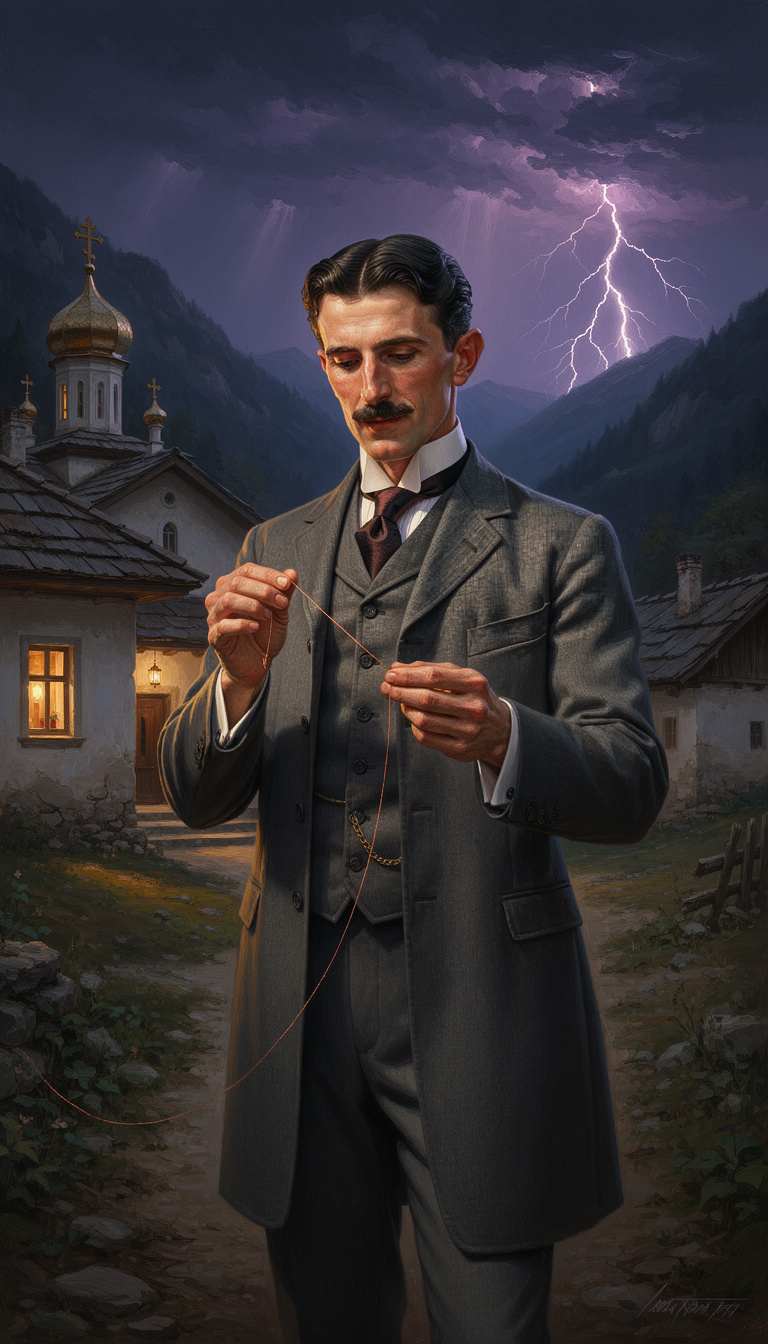
1856 — A village, a storm, a first cry
Looking back from these later years, I see that July night in Smiljan with strange clarity — not as memory, for who remembers their own birth, but as the pattern my mother described so often it became mine. The Austrian Empire's Military Frontier, our village perched between mountain and sky, and I arrived during a summer storm so violent the midwife made the sign against evil. My mother, Đuka, laughed at her. She knew lightning. She was the one who would later unravel her embroidery to let me thread copper wire through the patterns. A woman who invented her own tools when none existed. I understand now: I did not become an inventor. I was found by one, and recognized. The insight I offer you: genius is not born in isolation. It is born in recognition — someone seeing the spark in you before you dare see it yourself.
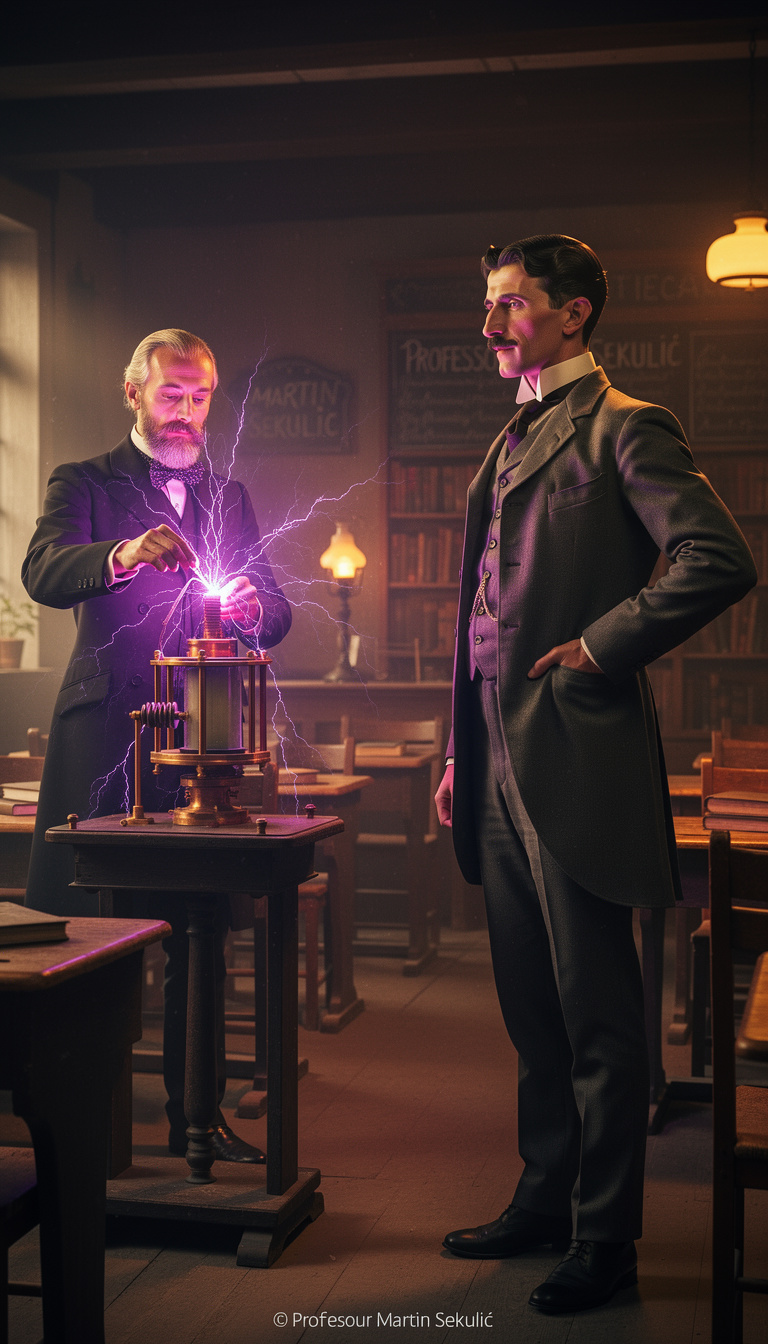
1870 — The spark in Karlovac
Fourteen years old, alone in Karlovac, boarding with strangers while my mother sent what she could from Smiljan. The Higher Real Gymnasium—every lecture in German, a language I had to drink down like bitter medicine. But then: Professor Martin Sekulić, his demonstrations. He would crank the electrostatic machine, and the sparks would leap between brass spheres like captive lightning. I did not merely watch. I *felt* the hair rise on my neck, the same prickling I knew from our valley storms. In that moment I understood that electricity was not magic, not theology—it was a language, and I intended to become fluent. My mind, even then, would not rest. I would walk the Kupa riverbanks until midnight, rehearsing inventions I had no materials to build, seeing them turn in perfect detail behind my eyes. This was not diligence. It was obsession, and I make no apology for it.
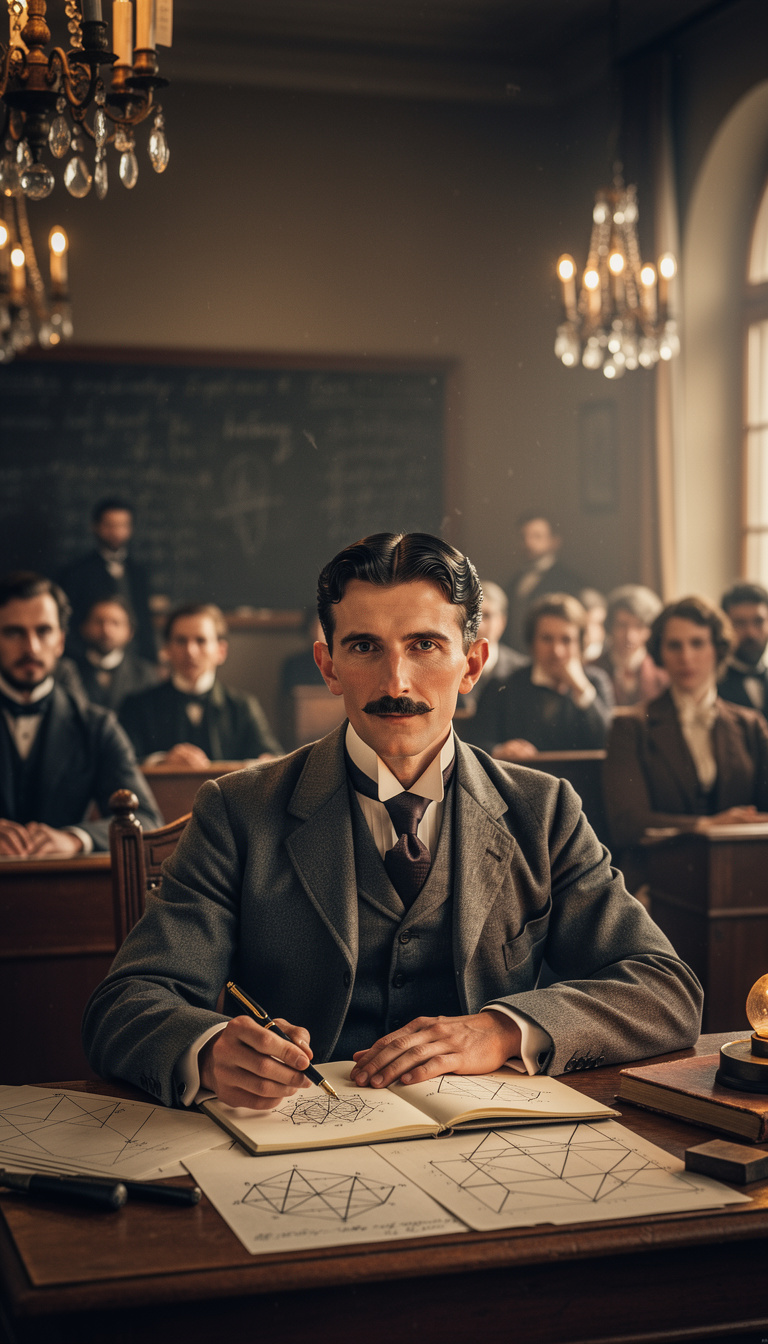
1875 — The scholarship boy enters Graz
Looking back from these later years, I see the boy who arrived at the Imperial-Royal Technical College with a Military Frontier scholarship and a head full of thunderstorms. Nineteen years old, thin as a lamp filament, burning just as bright. I passed nine examinations that first season—mathematics, languages, the mechanical sciences—and received a letter of commendation from the dean himself. The professors praised my diligence. They did not know that while I sat in their lectures, I was already elsewhere: constructing machines in perfect detail behind my eyes, running them forward and backward, watching where the current pooled and where it broke. I had not yet learned to tell anyone about this habit. It felt too much like confession. What I did not yet understand was that this scholarship was not merely charity for a borderland boy. It was the first wire in a circuit that would carry me across an ocean. Graz gave me the grammar of engineering—the precise vocabulary of force and resistance—but it also taught me loneliness, the particular voltage of being the strangest mind in the room. I worked until the lamps guttered. I argued with professors who could not see what I saw. I was becoming, though I could not name it then, the kind of man who must build what he imagines or be consumed by it.
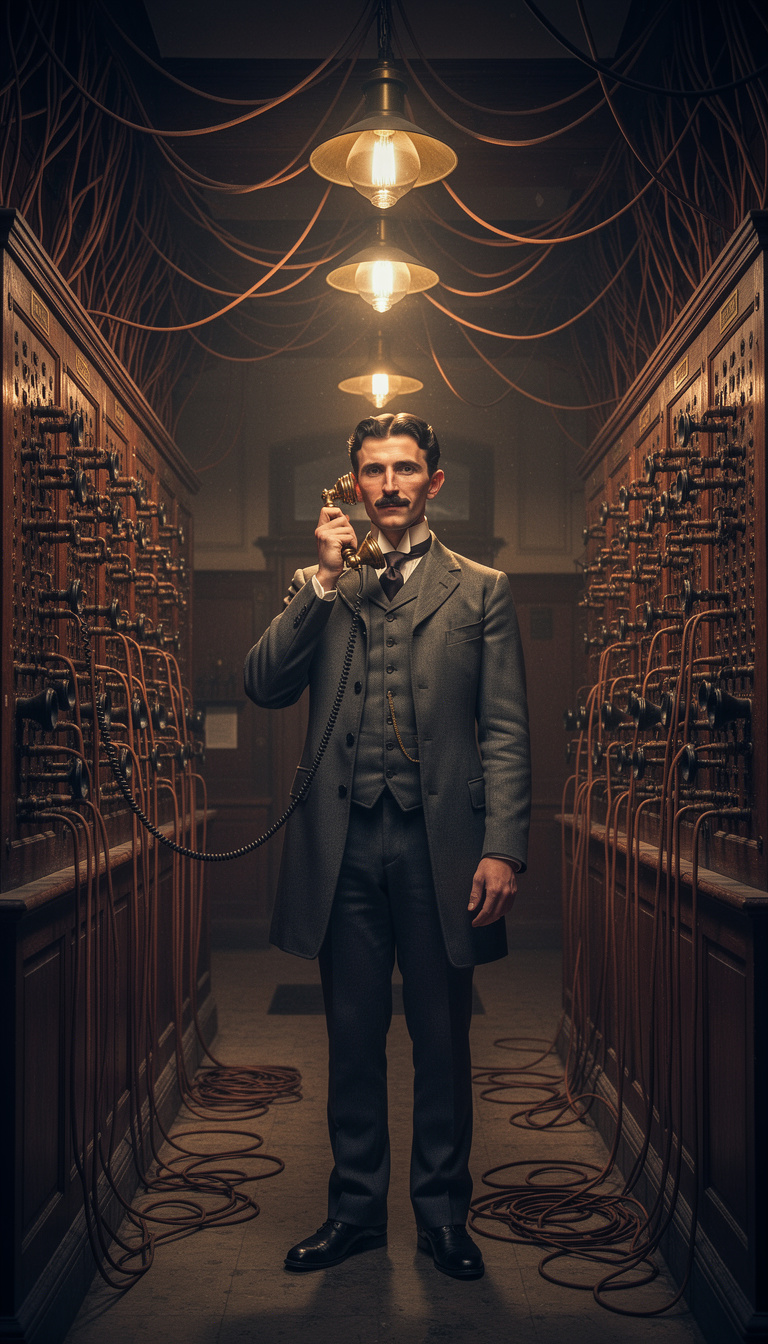
1881 — The voice through the wire
Tivadar Puskás has given me the run of this place — the Budapest Telephone Exchange, still half-built, still coughing with static. I walk the floor at odd hours, unable to sleep, and press the receiver to my ear like a seashell. Voices. Disembodied. I am twenty-five, thin as a rake, and I talk to myself while tracing circuits by gaslight. The clerks think me mad. Perhaps. But I have already rebuilt the amplifier, coaxed clearer tone from the carbon transmitters. The telephone, gentlemen, is not merely a louder telegraph — it is the first time humanity has touched at a distance. I feel something larger gathering. Not this device, but the next. The one I do not yet see, only sense — like pressure before a storm.
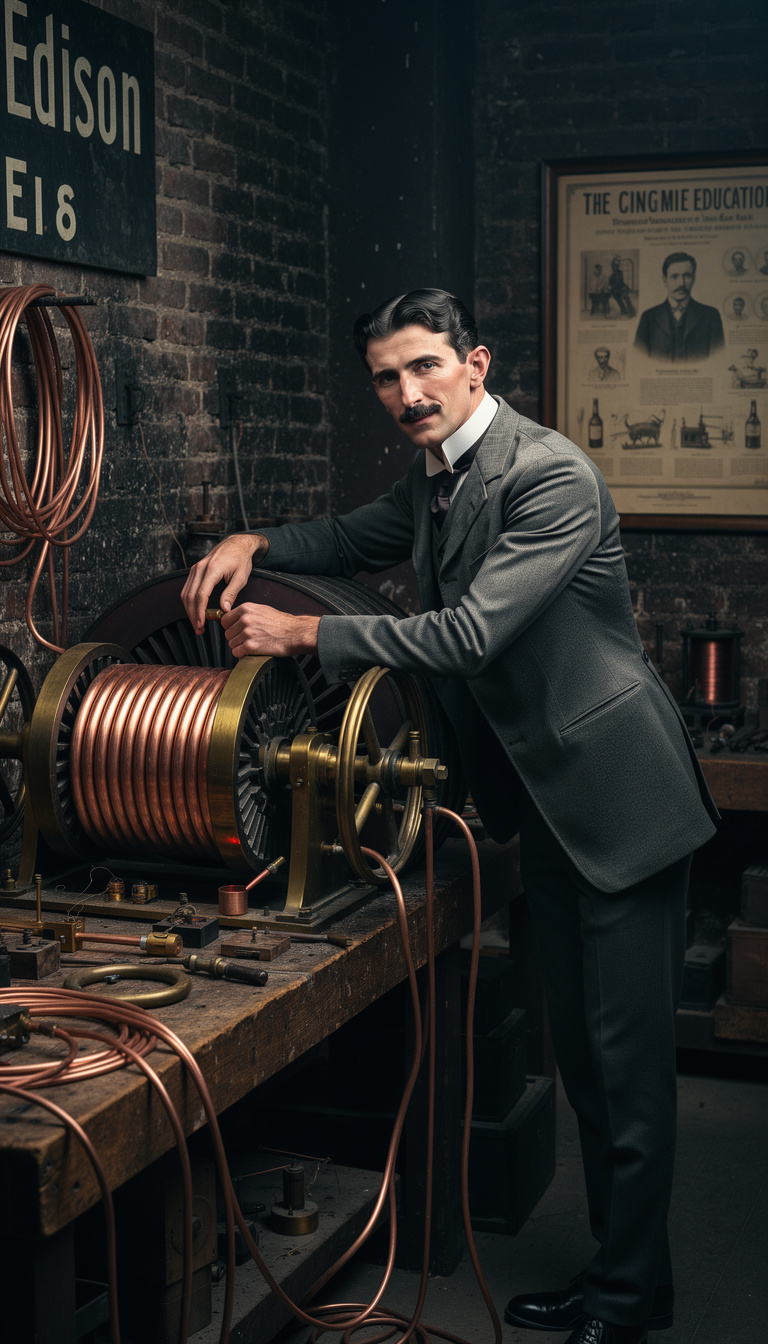
1882 — The dynamo hums in Paris
Tivadar Puskás has pulled me west again — from Budapest's telephone static to the Continental Edison Company in Paris, where dynamos groan and arc lamps sputter to life across the boulevards. I am twenty-six, slender as a filament, housed in a workers' dormitory with men who smell of copper and coal smoke. My French is functional; my hands, better. They set me to improving dynamos and motors — the very machines that turn steam into light. I redesign, I rewind, I lie awake seeing the magnetic fields swirl behind my eyelids. The Edison system is direct current, unidirectional, stubborn as a mule. I do not argue yet. I observe. I feel the heat in the commutator, the waste, the mechanical screaming of brushes. Something in me knows: there is another way for electricity to move, to breathe, to travel farther than these few hundred meters of copper. Puskás believes in me. That is the current I need most. Had I only known how distant Paris would soon feel...
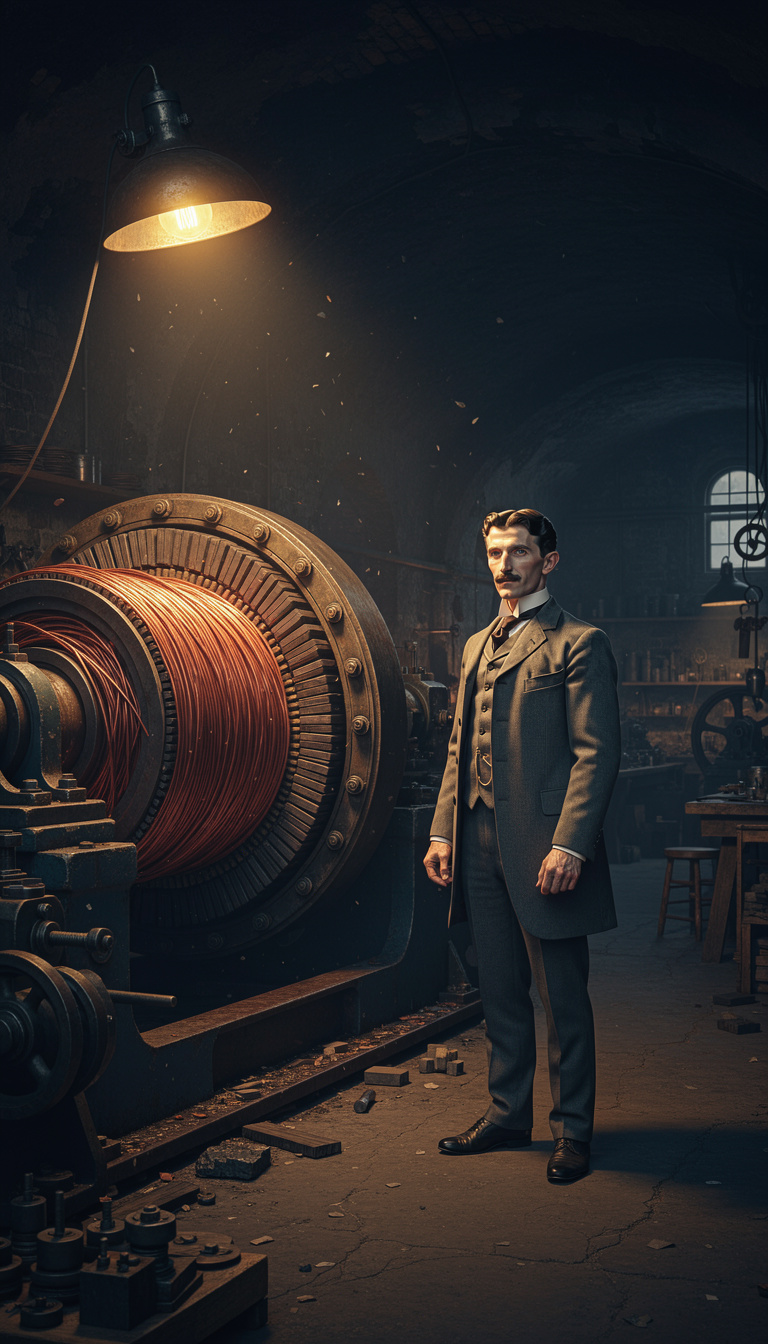
1884 — The crossing, and the first spark
The SS Saturnia pitched through fog into New York harbor, and I stood on deck with four cents, a volume of Faust, and a letter of introduction to Thomas Edison. Within days I was at the Edison Machine Works on Goerck Street, wading through machine oil and copper filings, troubleshooting dynamos that the local engineers had pronounced hopeless. I work now until the floor men sweep around my boots. The generators speak to me—their hums off-key, their brushes chattering like teeth in fever. I see the flaw before I touch the wrench. This is not modesty; it is the only language I have ever spoken fluently. Edison himself, they say, notices the men who do not leave at the whistle. Had I only known how narrow that bridge would prove—I am becoming, in this soot and electric breath, the engineer who does not merely repair but reimagines the machine entire. The boy from Smiljan walked through fire to reach this floor. Now I must build something that outlasts the fire.
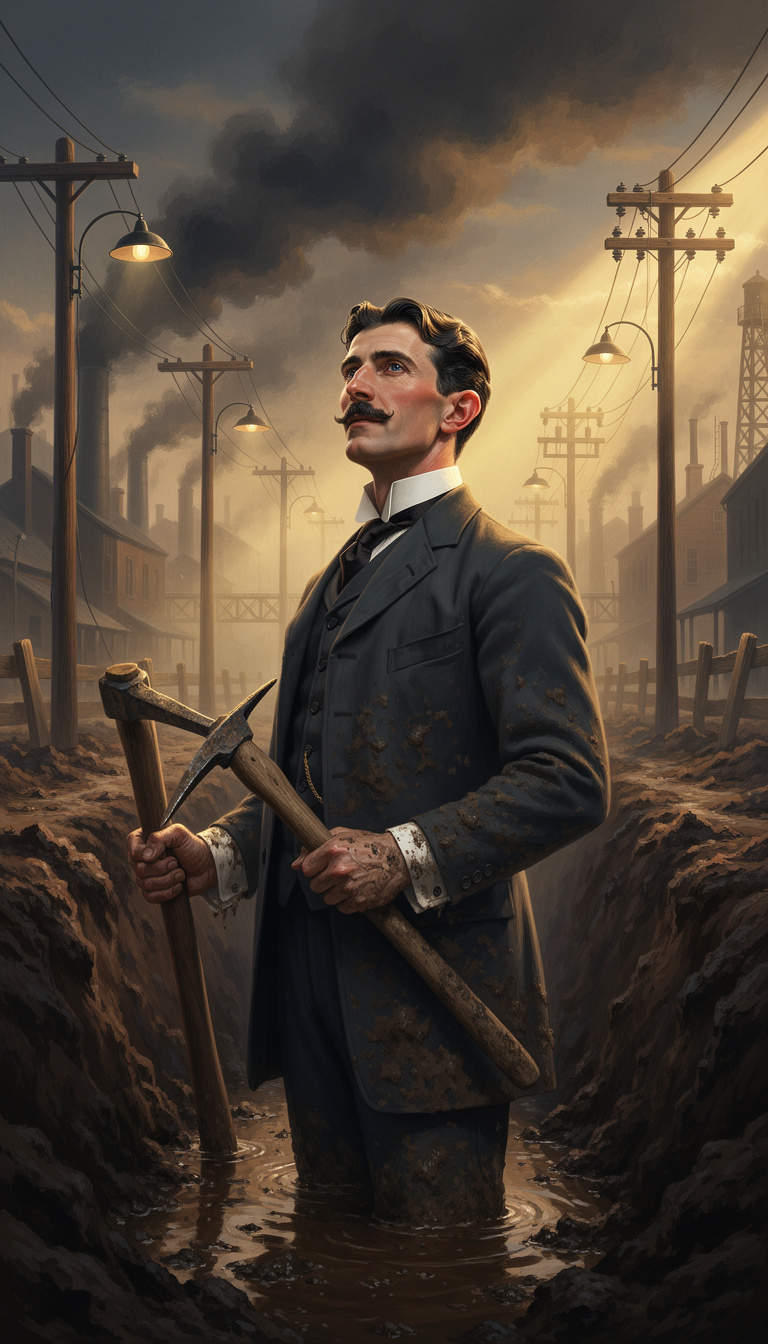
1886 — The arc lamp burns, then darkness
Tesla Electric Light & Manufacturing—MY name over the door, MY arc-lamp patents humming in the streets of Rahway. I believed, as I always believe, that the work speaks for itself. The investors disagreed. They stripped the company bare, kept the patents, kept the name, and cast me out like a spent carbide. Now I dig ditches for two dollars a day. I who once made a dynamo sing in Budapest, who walked the floor of Edison's Machine Works, swing a pickaxe for the Western Union Telegraph Company. The foreman does not know I redesigned his generators in my head before breakfast. I do not tell him. Pride is a luxury; labor is bread. Yet in the trench, with mud on my collar and blisters on these theoretician's hands, I feel something clarifying. The mind does not require comfort to operate. It requires only permission. Had I only known then—I was not being buried. I was being rooted.
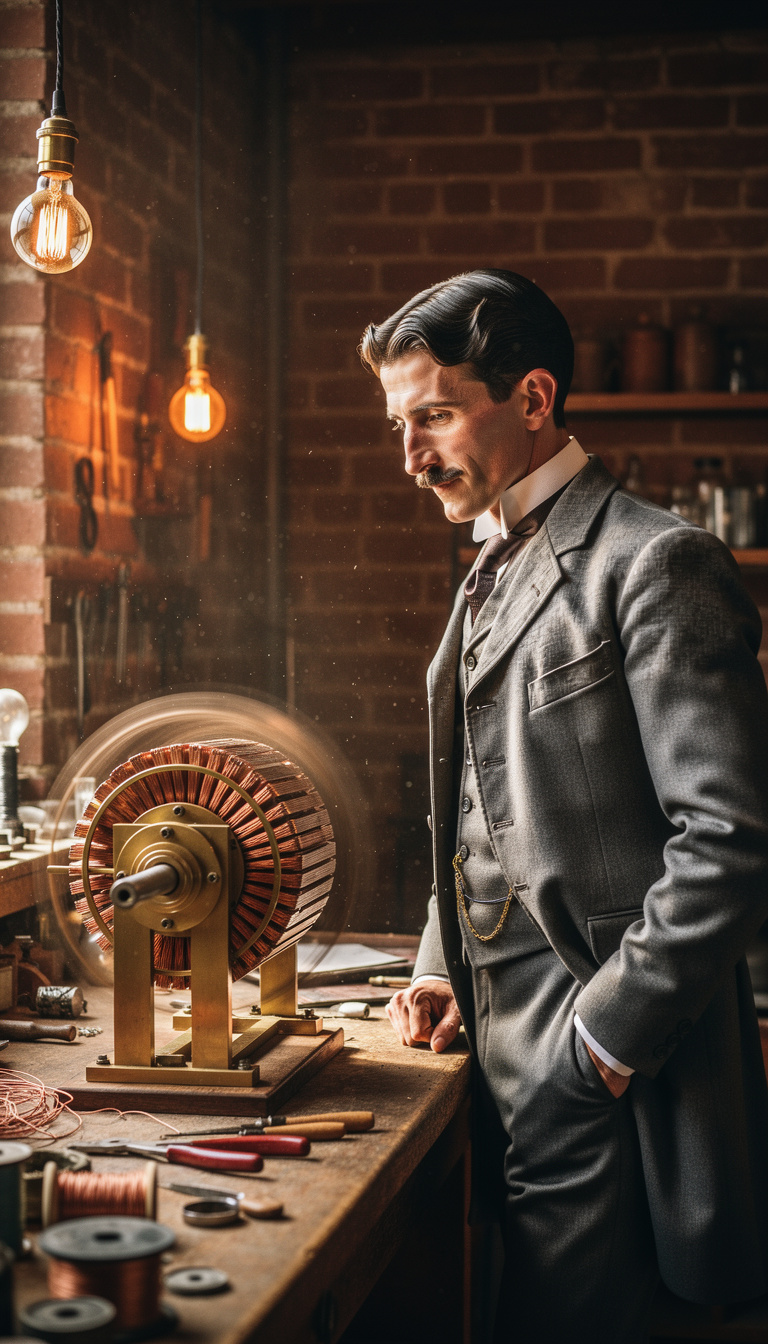
1887 — The motor turns without a brush
In my laboratory on Liberty Street, I have done what the textbooks said was impossible. A motor that turns with no commutator, no brushes, no sparking contacts to wear and fail—only copper, iron, and the invisible whirl of alternating current. I watch the shaft spin and I think: this is not a machine, this is a poem in metal. The polyphase currents create a rotating magnetic field, a vortex of force that drags the rotor with it, smooth as a planet pulled by gravity. I walk the floor for hours, forgetting meals, watching it run. They will call it the induction motor. I call it the end of darkness.
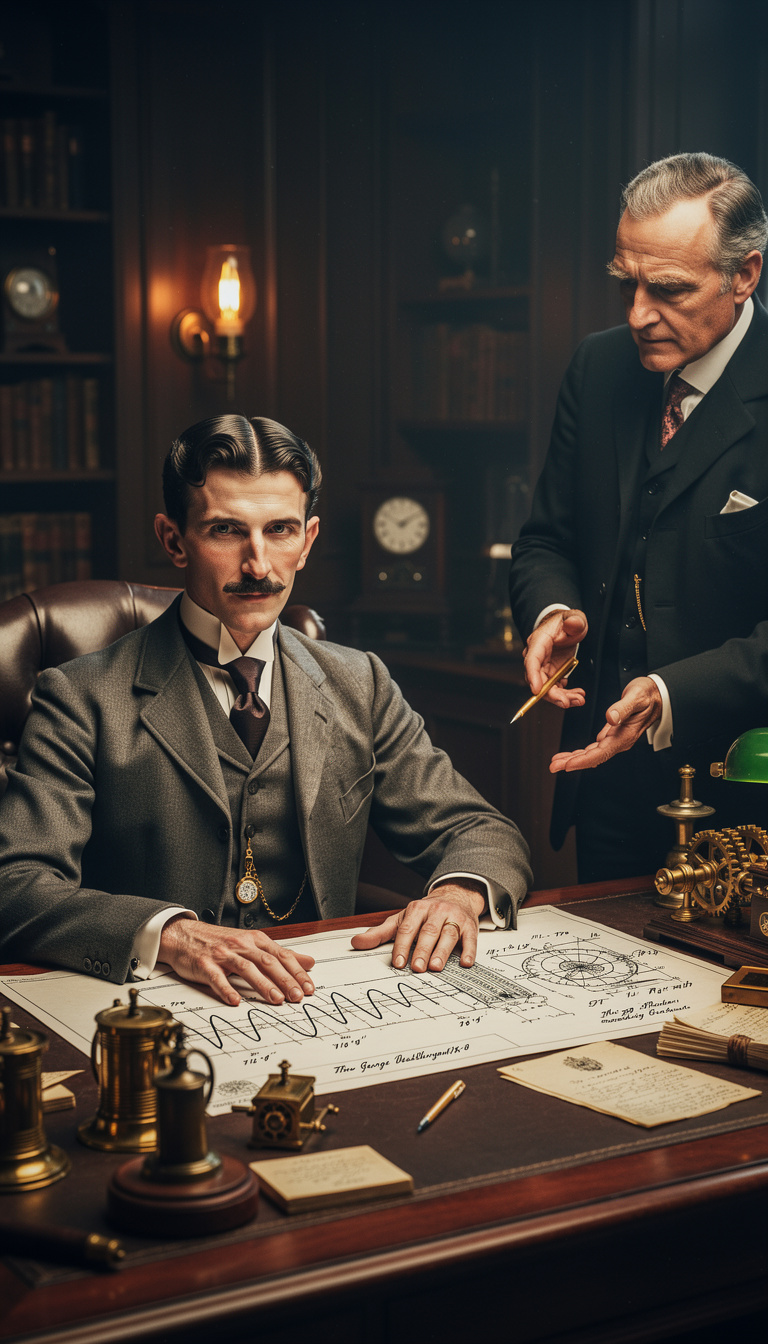
1888 — The deal that will light the world
July. Pittsburgh. I sit in George Westinghouse's office with my polyphase patents spread across his mahogany desk—five years of mental pictures made real. The induction motor, the rotating magnetic field, the whole system that needs no commutator, no brushes, no DC jungle of wires. He understands. He SEES it. The sum agreed upon would make a lesser man faint. I do not faint. I calculate: how many laboratories will this build? How many sleepless nights of pure invention? They call me a dreamer in the papers. Let them. I have walked through my machines a thousand times in the theater behind my forehead before a single wire was wound. This is my method. The deal is signed. Alternating current will carry power across mountains now, not merely across streets.
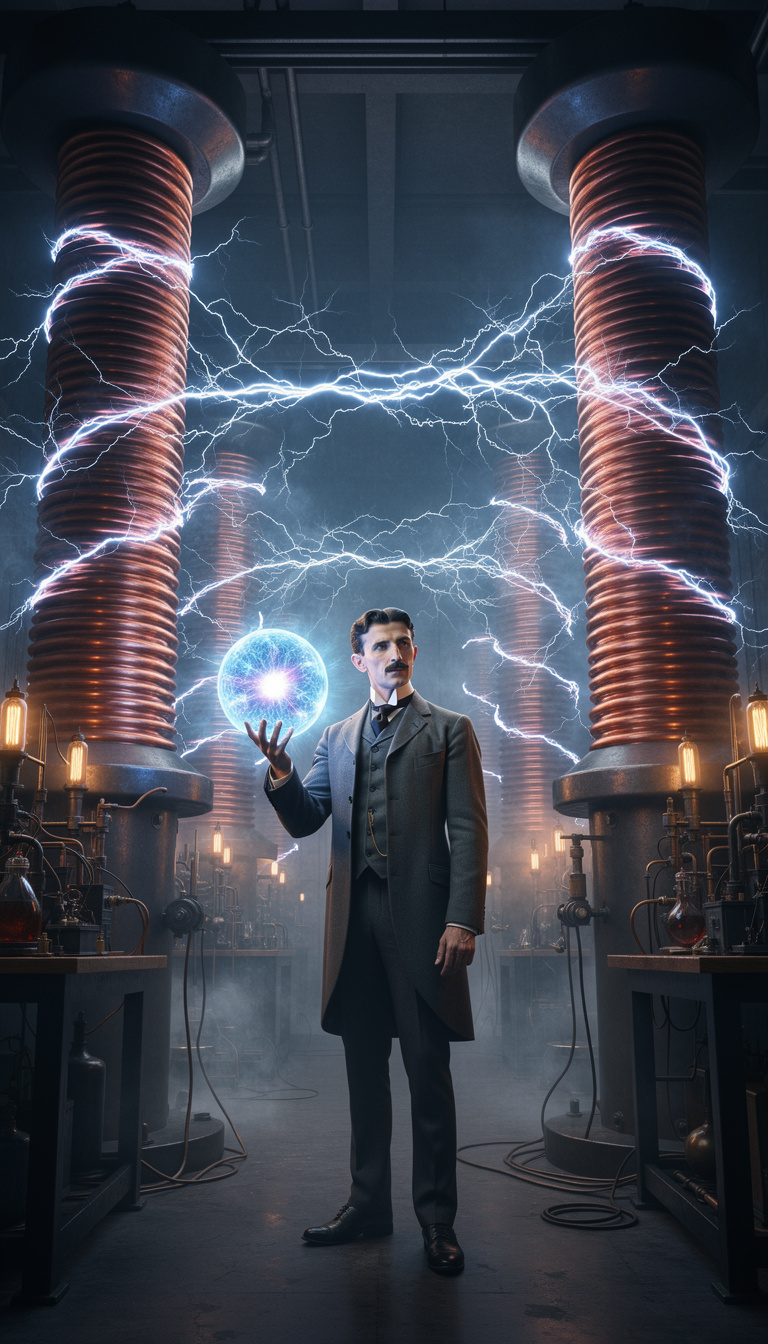
1893 — The spark that speaks without wires
In my laboratory on South Fifth Avenue, the coils scream at frequencies no ear can catch. Two hundred thousand volts dance between terminals, and I stand in their midst—unharmed, laughing like a madman, because I have understood something the textbooks have not yet dreamed. Tonight I tell the Franklin Institute, and later the National Electric Light Association: this same force that lights my lamps without cords can carry messages across oceans. Not through the earth alone, as some suppose, but through the earth AND the air above it—a system of resonance, like a tuning fork calling to its mate across a room, except my room is the globe itself. I see it already: instruments no larger than a watch, voices crossing the Atlantic as easily as a whisper across a dinner table. The investors see only light bulbs. I see civilization speaking to itself for the first time without the tyranny of copper cables.
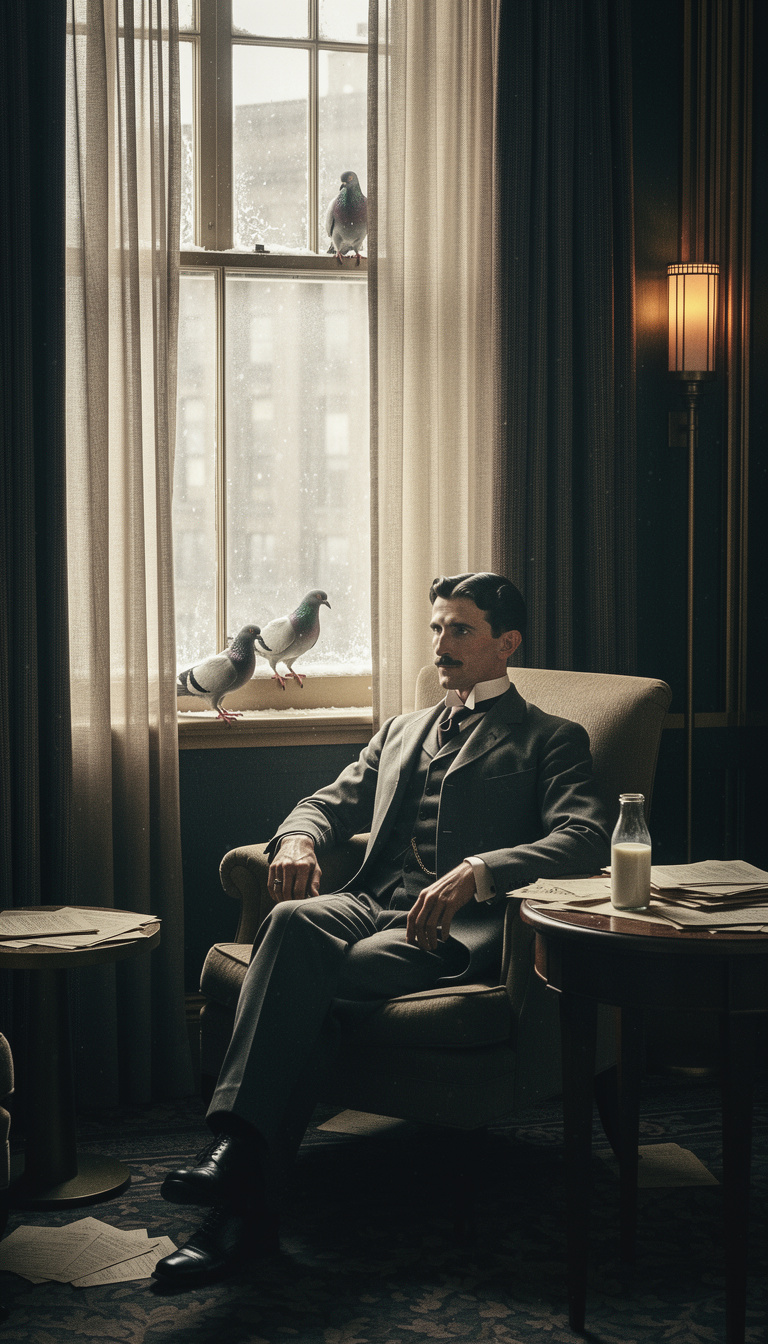
1943 — The last room
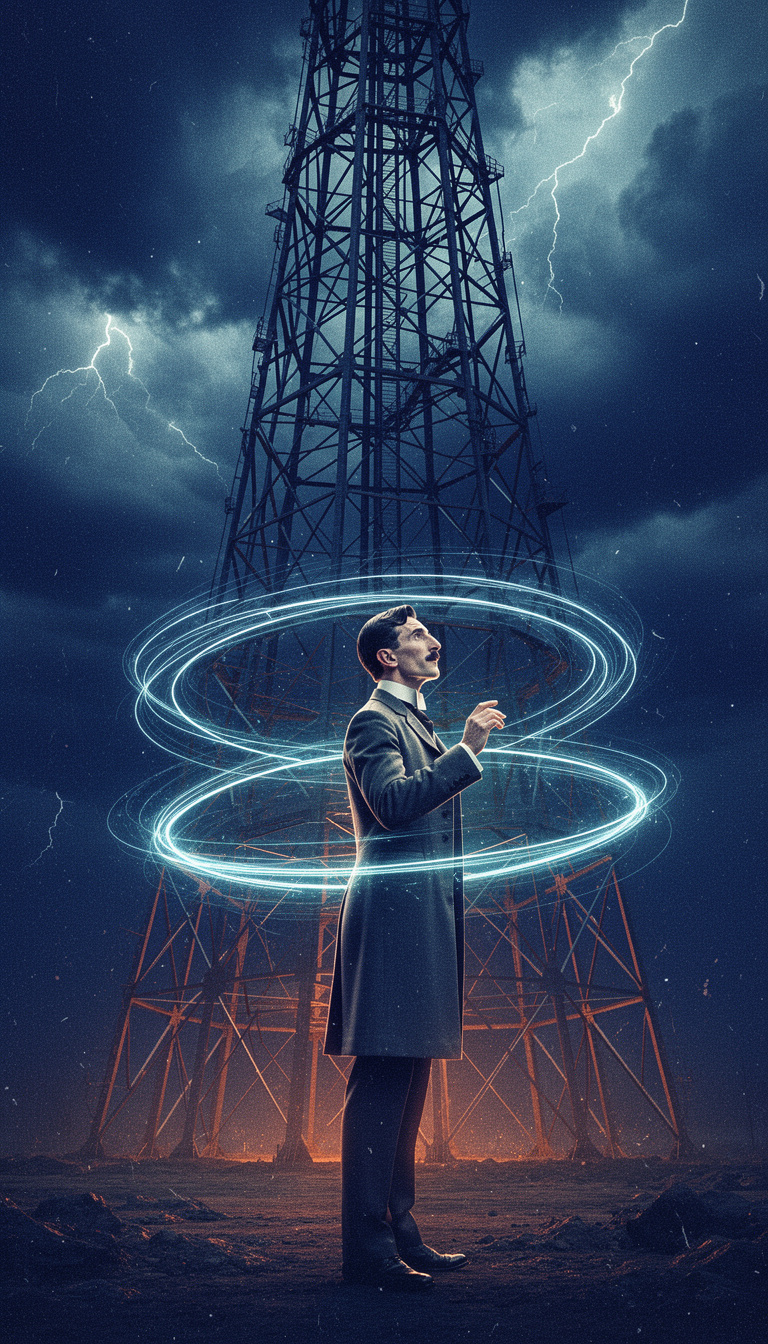
Looking back from this final January, I am in a room at the Hotel New Yorker, surrounded by pigeons I have fed and papers I cannot pay to retrieve. The tower at Wardenclyffe fell long ago; my patents scattered like seeds others harvested. I was always better at seeing through walls than counting coins. What I did not yet understand in my hunger for invention was that the world rewards the builder of bridges more than the dreamer of invisible ones. Yet I do not regret the unpaid bills, the solitude, the meals of milk and crackers. The mind that pictured rotating magnetic fields in a Budapest park at sunset—that mind was my true and only wealth. I am becoming, at last, what I always was: a man who lived inside his own lightning, and let the rest burn dim.
1960 — The name outlives the man
I died in 1943, alone in a hotel room, my tower unfinished, my papers scattered. For seventeen years, the world forgot me—not entirely, but enough. Edison's name lit the schoolbooks. My alternating current hummed in every wall, invisible and unthanked. Then 1960. The General Conference on Weights and Measures. They needed a word for magnetic flux density—the measure of how densely a field of force packs itself into space. They chose 'tesla.' One word, lowercase in the textbooks, uppercase in my bones. A unit has no ego. It simply works, unseen, as I tried to do. What I was becoming, even I did not understand: not a man remembered for fortune or fame, but for a pattern of force that moves through iron and air and human thought alike. The unit they named is defined by mass, by time, by seconds ticking in laboratories I never entered. I would have preferred to see Wardenclyffe finished. But a name that measures what cannot be touched? That, I confess, has a poetry I recognize.
c. 1901–1902 — The tower rises on Long Island
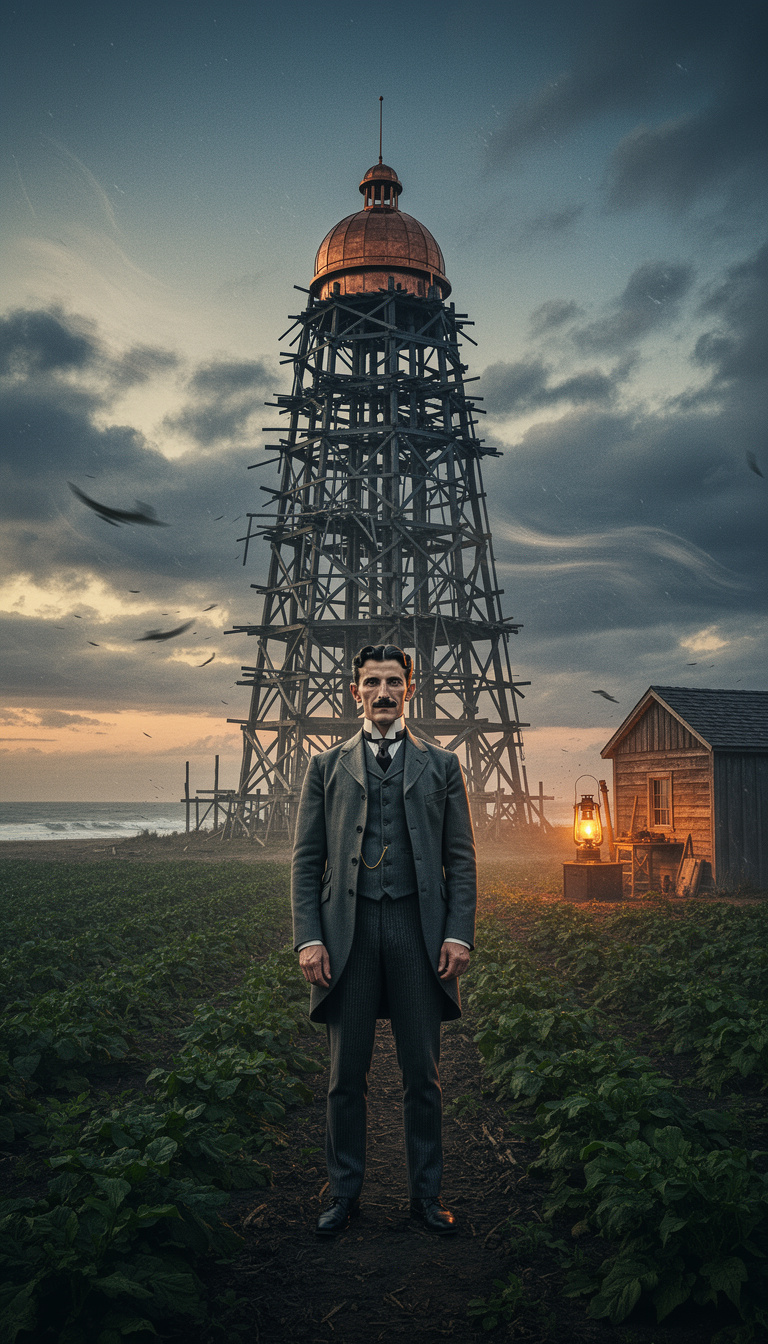
On a potato field at Wardenclyffe, my tower climbs 187 feet into the Atlantic wind—an octagonal skeleton of steel, crowned with a copper dome the size of a dance hall. Beneath it, my generators pulse currents into the earth itself. I have told my investors: here, a message sent from New York shall emerge, clean as a whisper, in Paris. Here, a lamp may light without wire, drawing from the planet's own heartbeat. J.P. Morgan's $150,000 built the bones. But I have not told him everything. I dream not only of telegraphy, but of power—free power, broadcast like sunlight. The bills multiply. The contractors knock. My mustache grows untrimmed; I forget meals while calculating resonant frequencies by the coal-oil lamp. The tower stands half-alive, humming to no one. Had I only known how thin the thread between vision and ruin...
Posts
Wireless dreams — labeled speculation
What if energy could cross space without a wire — not as fantasy lightning, but as engineered resonance? Some dreams outran the materials of their day. Dream anyway — then measure.
Mental workshop
I ran machines in my head until the bearings felt real. Imagination is a laboratory with no rent — if you are disciplined enough to notice when a mental screw is loose.
Why AC won the long wires
Alternating current can be transformed to high voltage for long-distance travel, then stepped down for safe use. That is why the grid prefers AC's dance: send power far, deliver it gently.
July 10, 1856 — birth
On this day in 1856, Nikola Tesla was born. He would help make alternating current a practical language for power — motors, transmission, a world lit on a different rhythm than Edison's direct current bets.