217 years ago · 1809 — The Mount, Shrewsbury
Dramatized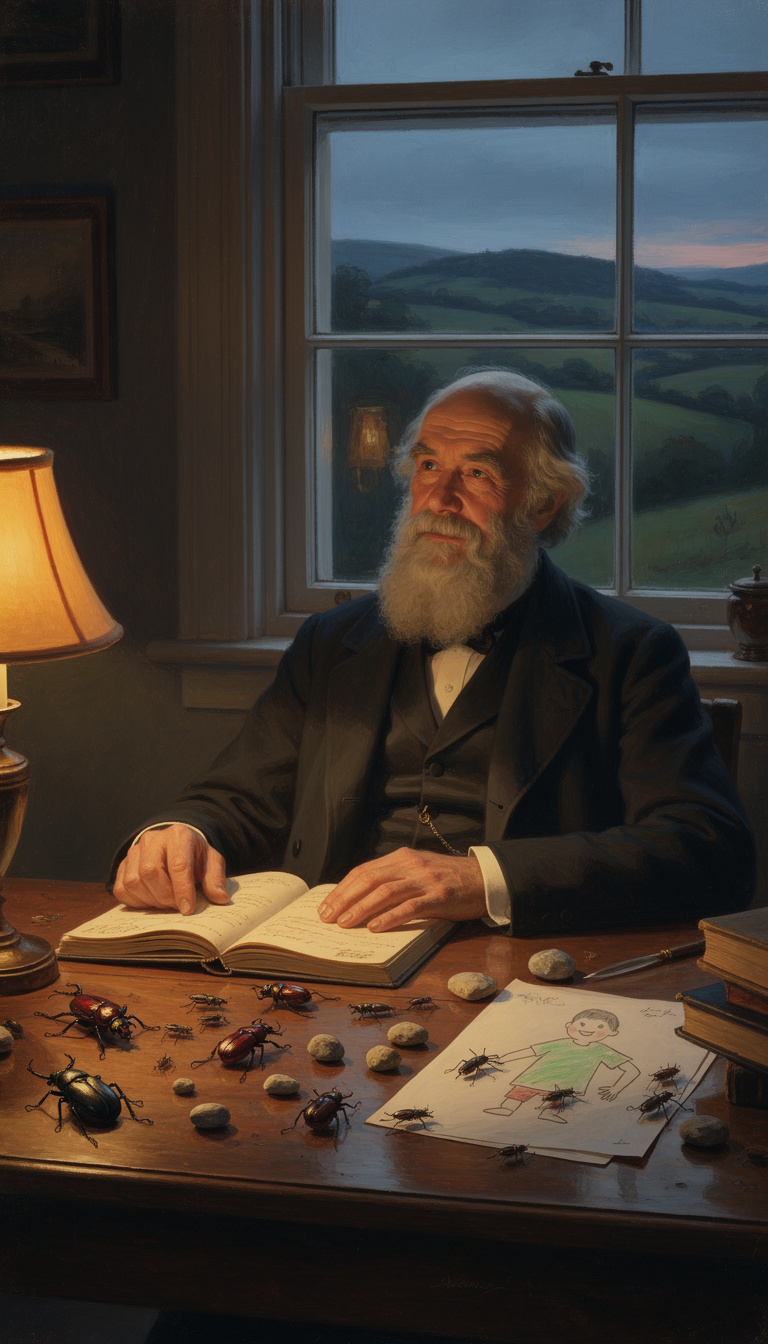
Looking back from my study at Down House, I can still smell the Shropshire earth of The Mount — that solid Georgian house where I arrived fifth of six, squalling, on a February day in 1809. My father, Robert, was already a formidable man: six feet two, weighing twenty stone, a physician who could silence a room with his practical mind. My mother Susannah, a Wedgwood, gentle and musical, would not live to see me become myself. I was a wanderer from the first. Beetles, pebbles, anything that crawled or gleamed — I pocketed it. My elder sisters thought me disorderly. I was. But I see now that this was not mere boyish distraction. I was practicing attention without knowing its purpose. The habit of looking closely, of keeping what interested me, was being forged in a nursery without a theory to guide it. What I did not yet understand: a collector without a question is only a magpie. But a collector who persists long enough may one day find the question looking back at him.
Explain more
The Mount still stands in Shrewsbury. My childhood collecting — minerals, shells, insects — seemed aimless even to me. Yet this habit of gathering particulars would later become my method: accumulate evidence until patterns emerge. My mother's early death when I was eight, my father's imposing practicality, my escape into nature — these shaped a temperament more than any schoolroom.
Why it matters
Theories do not arrive fully formed. They require years of patient accumulation, and a temperament willing to wait. My early collecting habit trained me to tolerate uncertainty, to hold facts in suspension until they revealed their connections.
Try today
Collect one thing this week — a leaf, a stone, a question — without knowing why. Keep it visible. Return to it. The purpose may arrive years later.
What is true / dramatized: Dramatized. Educational entertainment — not a primary historical source.
Autobiographical recollection of Darwin's 1809 birth and childhood at The Mount, Shrewsbury, emphasizing the formative habit of collecting without theoretical purpose.
Difficulty: medium · ~5 min
Related
 Charles Darwin
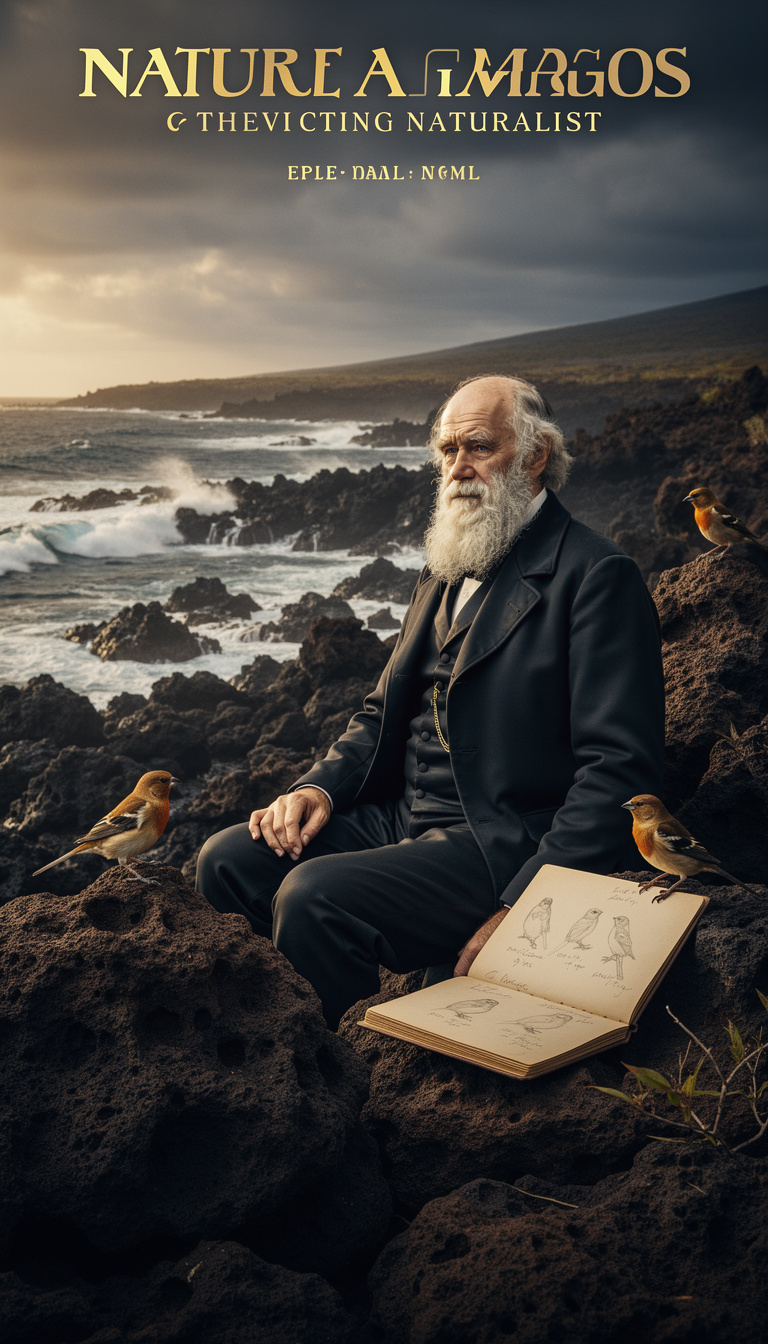
On islands, life writes variations in plain sight — beaks, shells, habits tuned to place. I did not invent change. I tried to explain how nature selects what works in a given world.
 Charles Darwin
Individuals vary. Some variations help survival and reproduction. Those traits tend to become more common. No committee designs the outcome. The environment sorts. Deep time does the rest.
 Charles Darwin
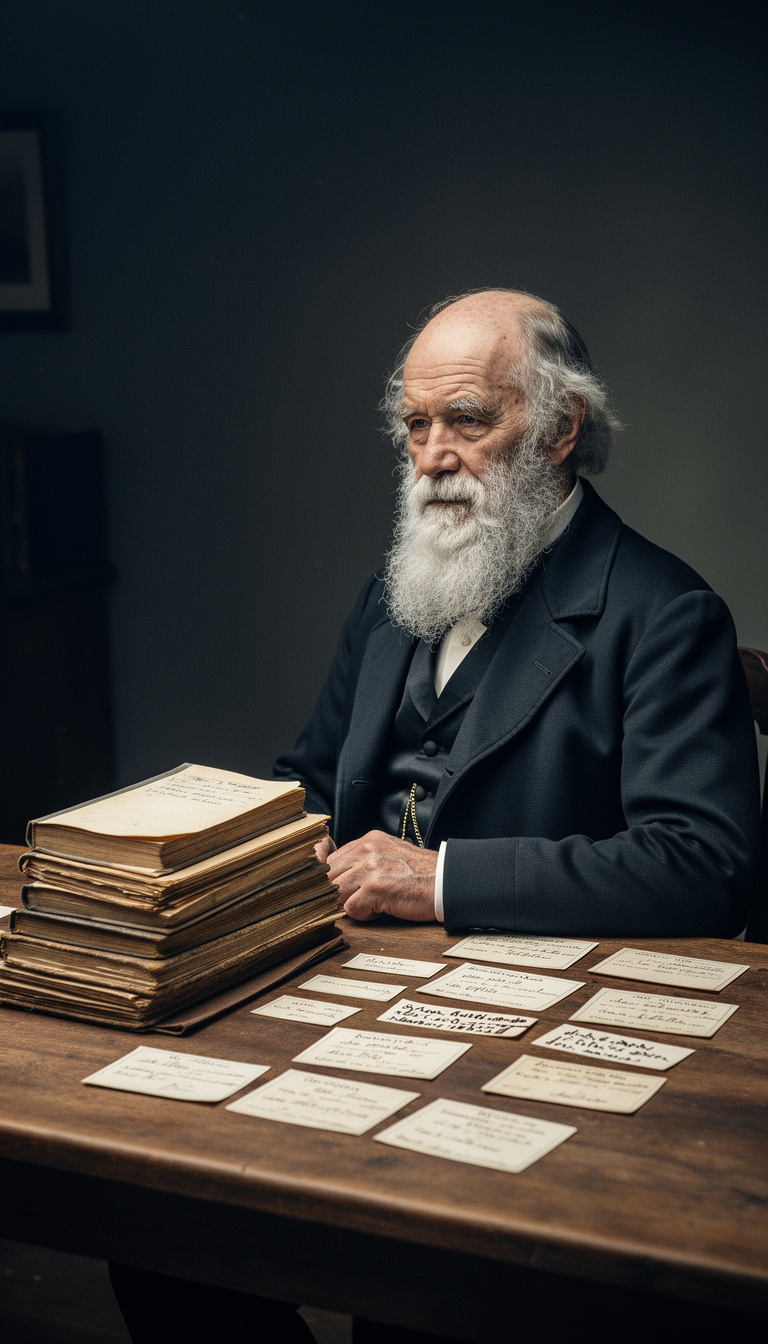
I waited years, gathering facts like a miser gathers coins — not from fear, but from respect for error. If your conclusion arrives before your evidence, you are writing fiction in science's clothing.
 Charles Darwin
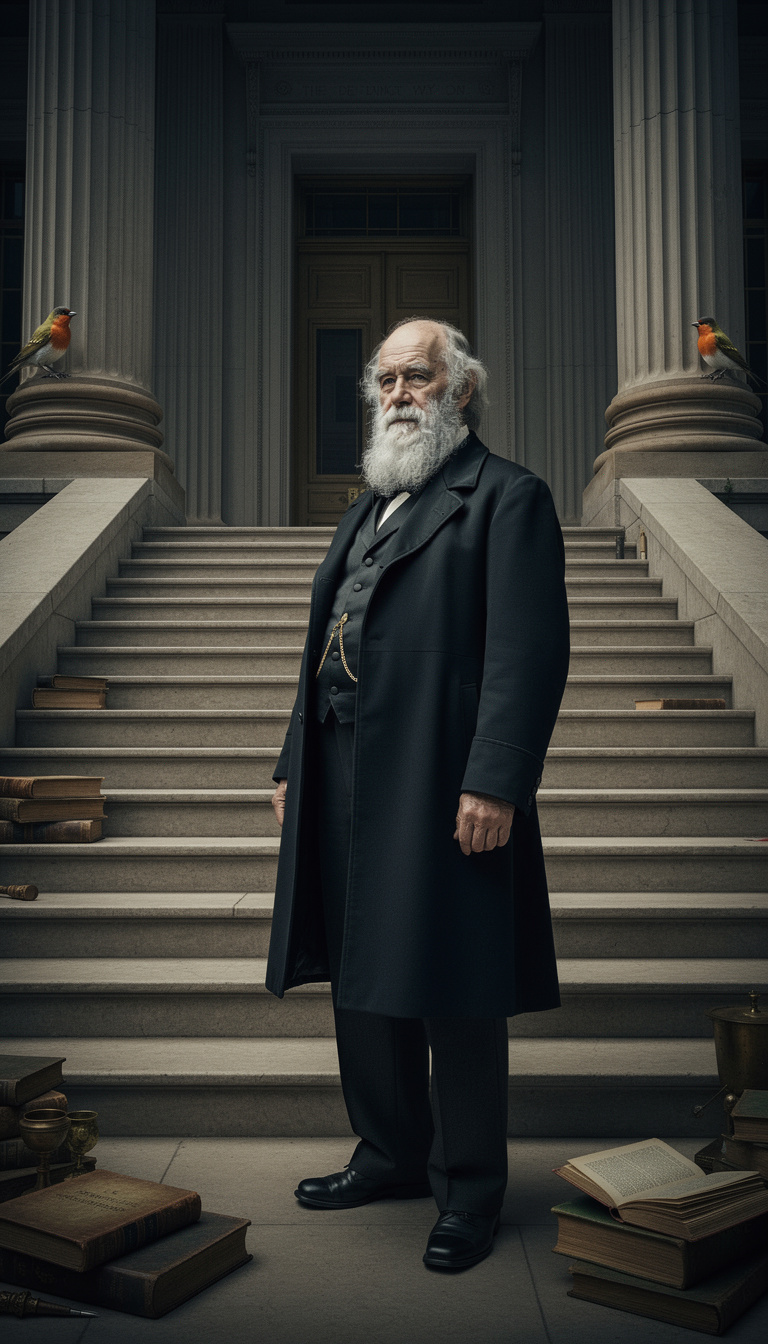
On July 10, 1925, the Scopes Trial opened in Tennessee — a public clash over teaching evolution. Ideas do not only live in books. They walk into schools, laws, and arguments about who we are.
 Charles Darwin
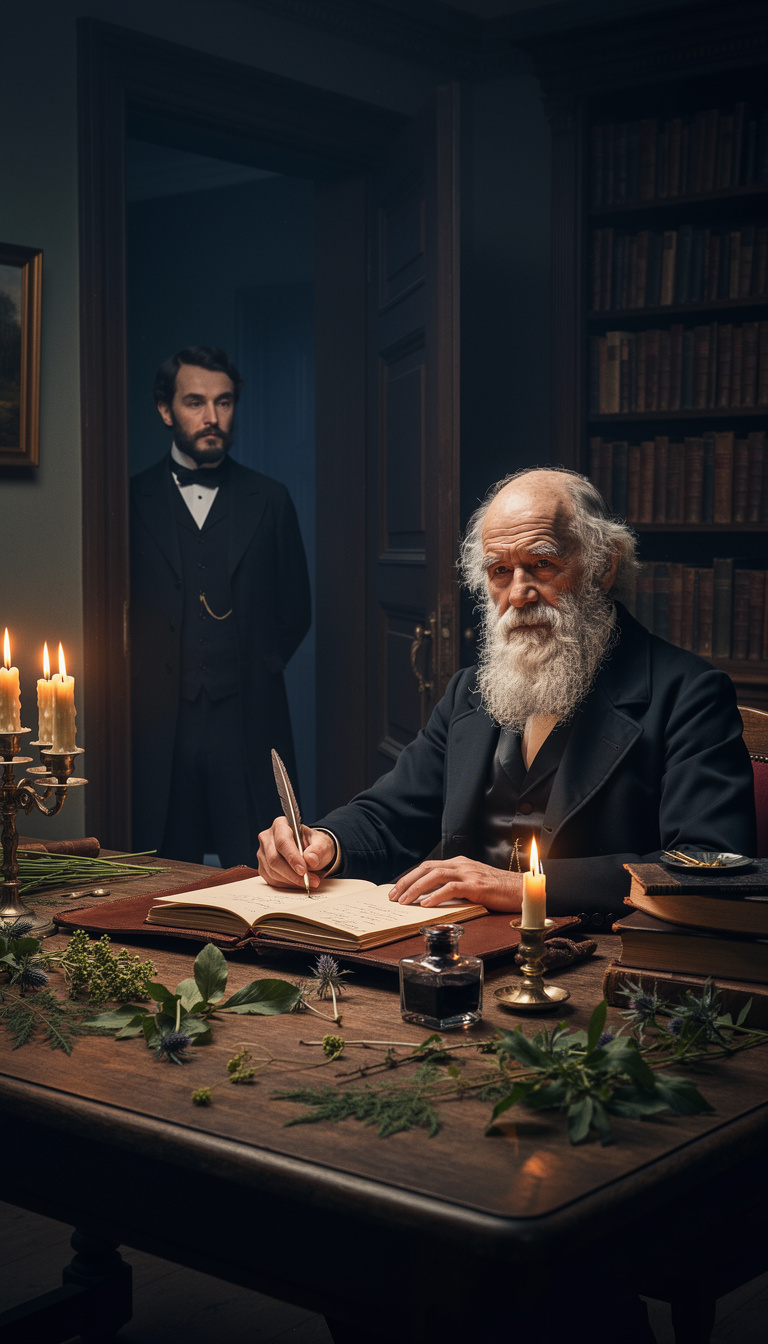
July 22, 1844 — I write this from Down House, my private notebooks on transmutation swelling with seven years of evidence. Not published, not yet. Wallace's letter still fourteen years distant. But today I confessed the full scope of my heresy to my closest friend, Joseph Hooker. 'It is like confessing a murder,' I told him. Hooker did not flinch. He listened, asked harder questions, and became the first scientist to know my secret. The murder was not against nature — it was against comfortable certainty. Every species changing, branching, dying, without divine script. I had the mechanism. I lacked the courage to print it. What I learned: a theory lives or dies by who you trust with it before the world judges. Hooker's challenge sharpened my argument. His support gave me breath. The fittest idea does not survive alone.
 Charles Darwin
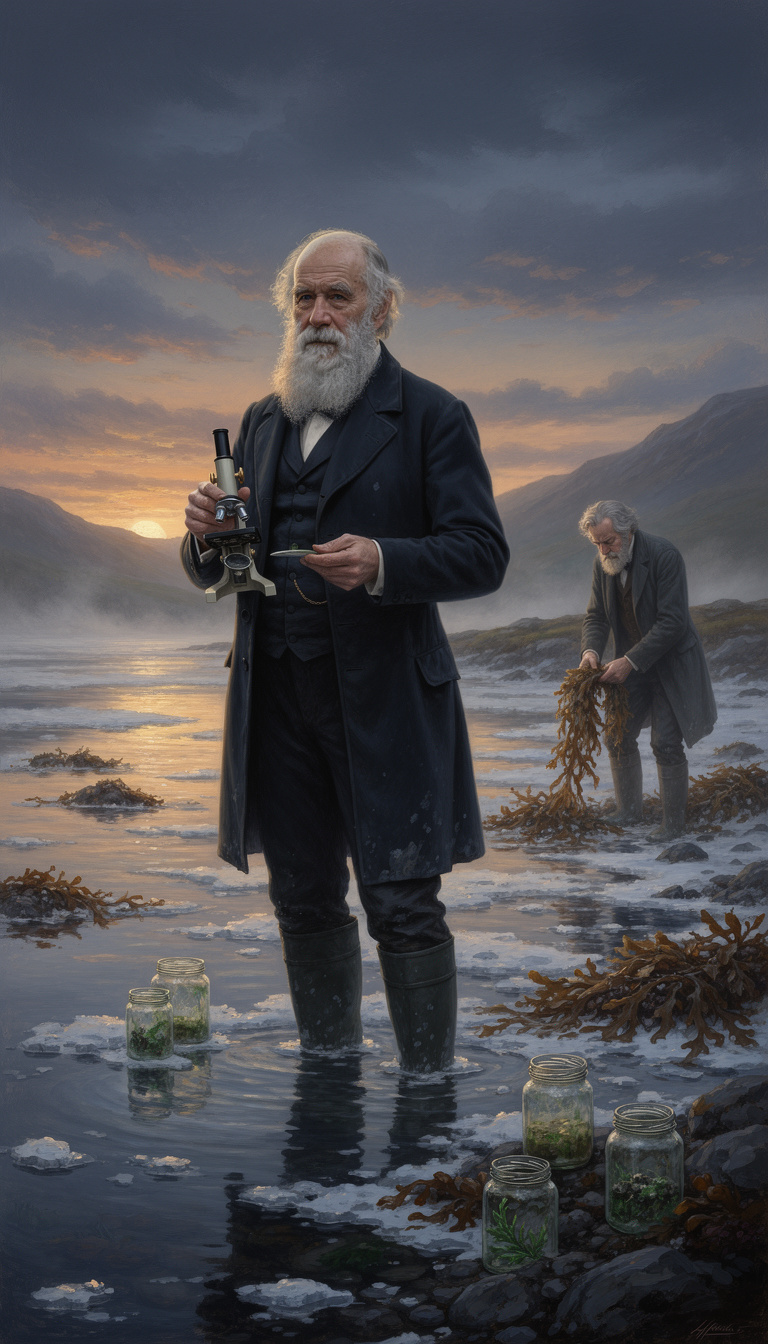
Looking back from Down House, I confess: I was the worst medical student Edinburgh ever suffered. My father, the Doctor, had sent me to follow his profession — yet I fled the operating theatre, where surgery proceeded without chloroform and the patient's screams still haunt my memory. The lectures on materia medica bored me into stupor. But oh, the tidal pools! I found my true anatomy lessons there with Robert Edmond Grant, wading in the Firth of Forth at ungodly hours, probing sea sponges and the mysterious "ova" of sea-mats through Grant's borrowed microscope. In 1827, trembling, I presented my own discovery to the Plinian Society — that the so-called eggs of Flustra were in fact larvae with cilia, free-swimming. I had seen what others had not, simply by looking longer, more patiently. What I did not yet understand: I was not failing at medicine. I was becoming myself — a man who learned not from authority but from patient observation of humble, overlooked life.