170 years ago · 1856 — A village, a storm, a first cry
Historically grounded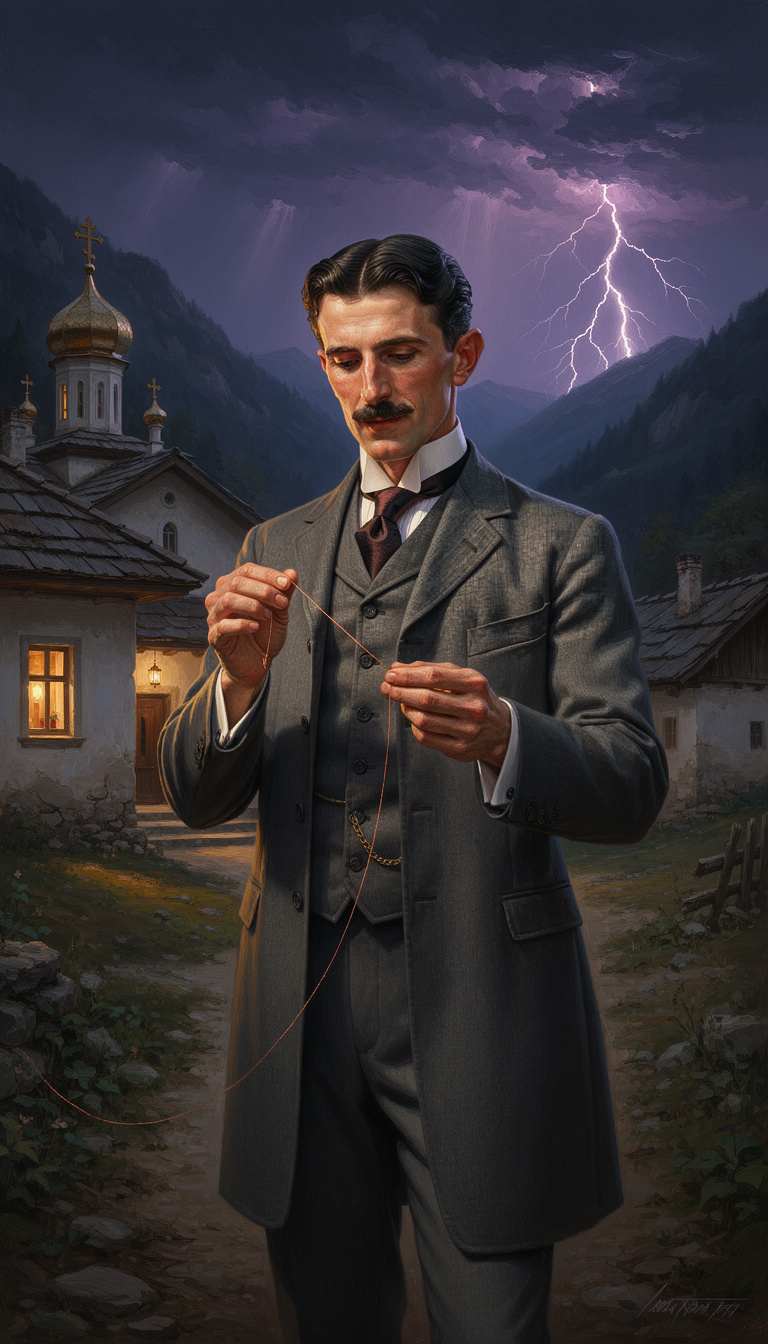
Looking back from these later years, I see that July night in Smiljan with strange clarity — not as memory, for who remembers their own birth, but as the pattern my mother described so often it became mine. The Austrian Empire's Military Frontier, our village perched between mountain and sky, and I arrived during a summer storm so violent the midwife made the sign against evil. My mother, Đuka, laughed at her. She knew lightning. She was the one who would later unravel her embroidery to let me thread copper wire through the patterns. A woman who invented her own tools when none existed. I understand now: I did not become an inventor. I was found by one, and recognized. The insight I offer you: genius is not born in isolation. It is born in recognition — someone seeing the spark in you before you dare see it yourself.
Explain more
Smiljan sat in the Lika region, part of the Military Frontier where Serbian families guarded the Habsburg border against Ottoman incursion. Tesla's father, Milutin, was a Serbian Orthodox priest; his mother, Đuka, came from a family of inventors and crafted household tools herself.
Why it matters
Tesla later credited his mother's inventive mind as his true inheritance. The 'frontier' condition — between empires, between old crafts and new machines — shaped his entire relationship with established authority.
Try today
Ask someone who knew you young: what did you do that made you unmistakably *you*? Their answer may reveal an engine you forgot you built.
What is true / dramatized: Historically grounded. Educational entertainment — not a primary historical source.
Based on Tesla's autobiographical writings in 'My Inventions' (1919) and verified biographical records of his Smiljan birth and family circumstances.
Difficulty: medium · ~4 min
Related
 Nikola Tesla
On this day in 1856, Nikola Tesla was born. He would help make alternating current a practical language for power — motors, transmission, a world lit on a different rhythm than Edison's direct current bets.
 Nikola Tesla
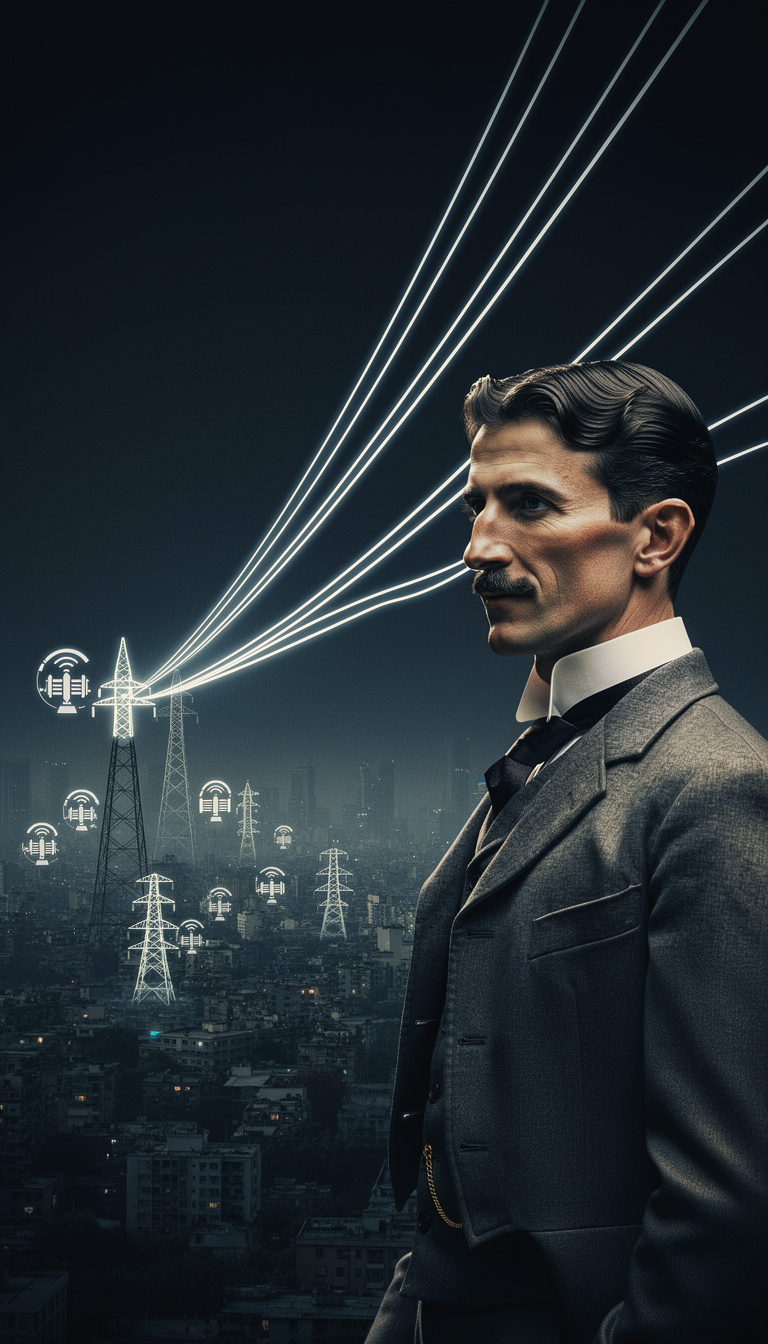
Alternating current can be transformed to high voltage for long-distance travel, then stepped down for safe use. That is why the grid prefers AC's dance: send power far, deliver it gently.
 Nikola Tesla
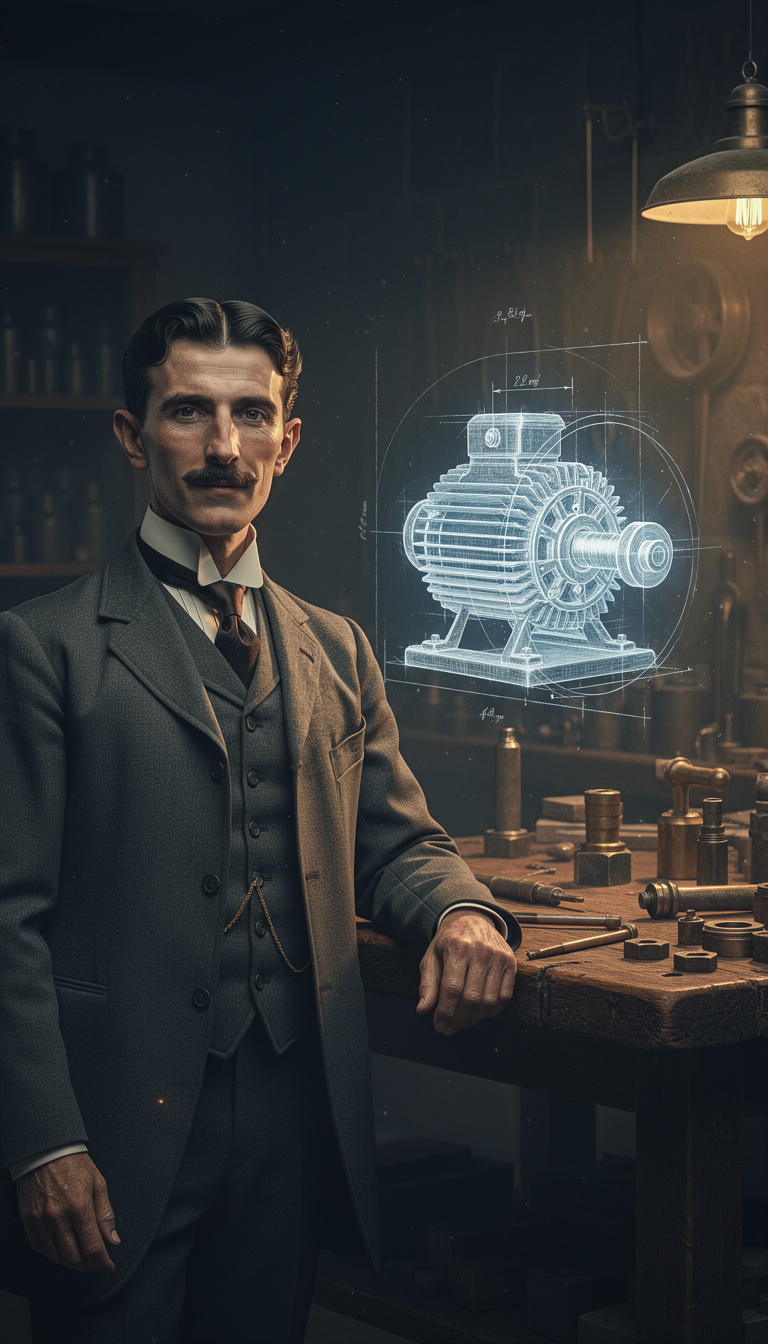
I ran machines in my head until the bearings felt real. Imagination is a laboratory with no rent — if you are disciplined enough to notice when a mental screw is loose.
 Nikola Tesla
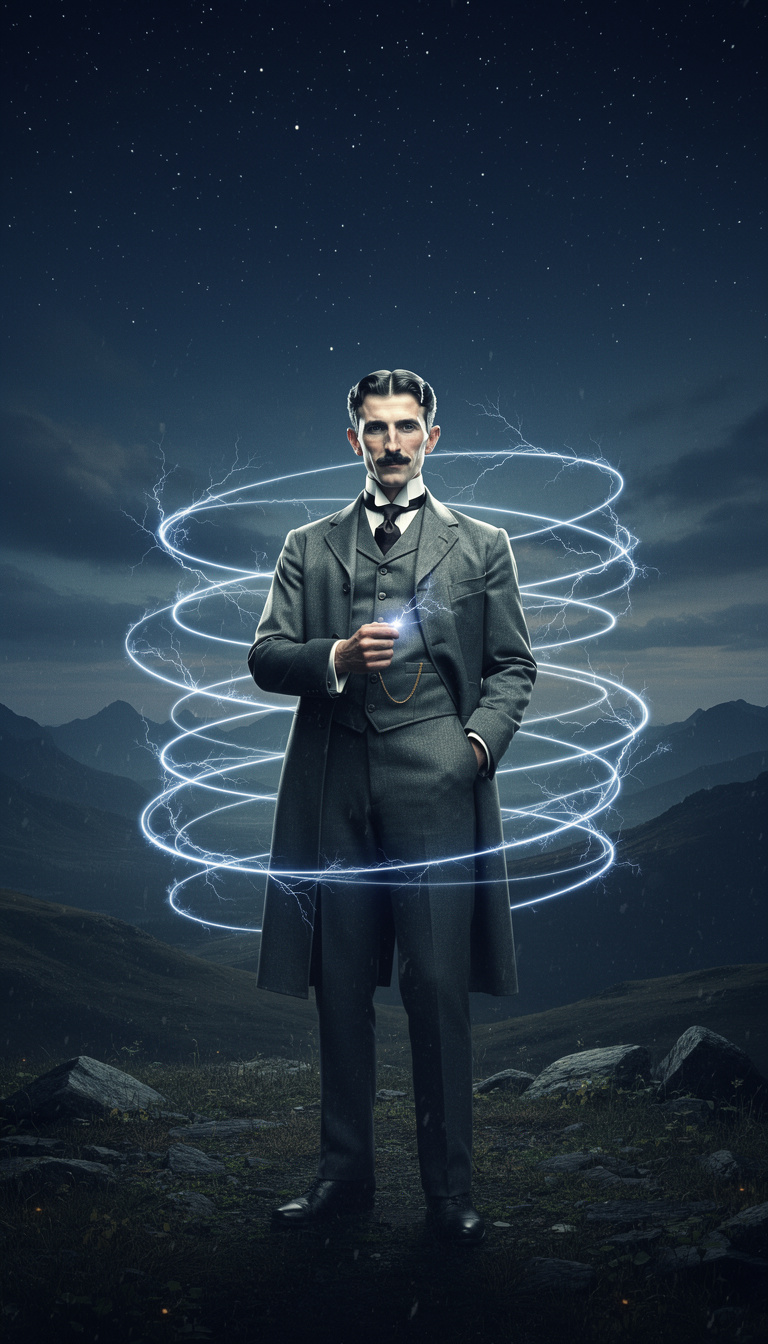
What if energy could cross space without a wire — not as fantasy lightning, but as engineered resonance? Some dreams outran the materials of their day. Dream anyway — then measure.
 Nikola Tesla
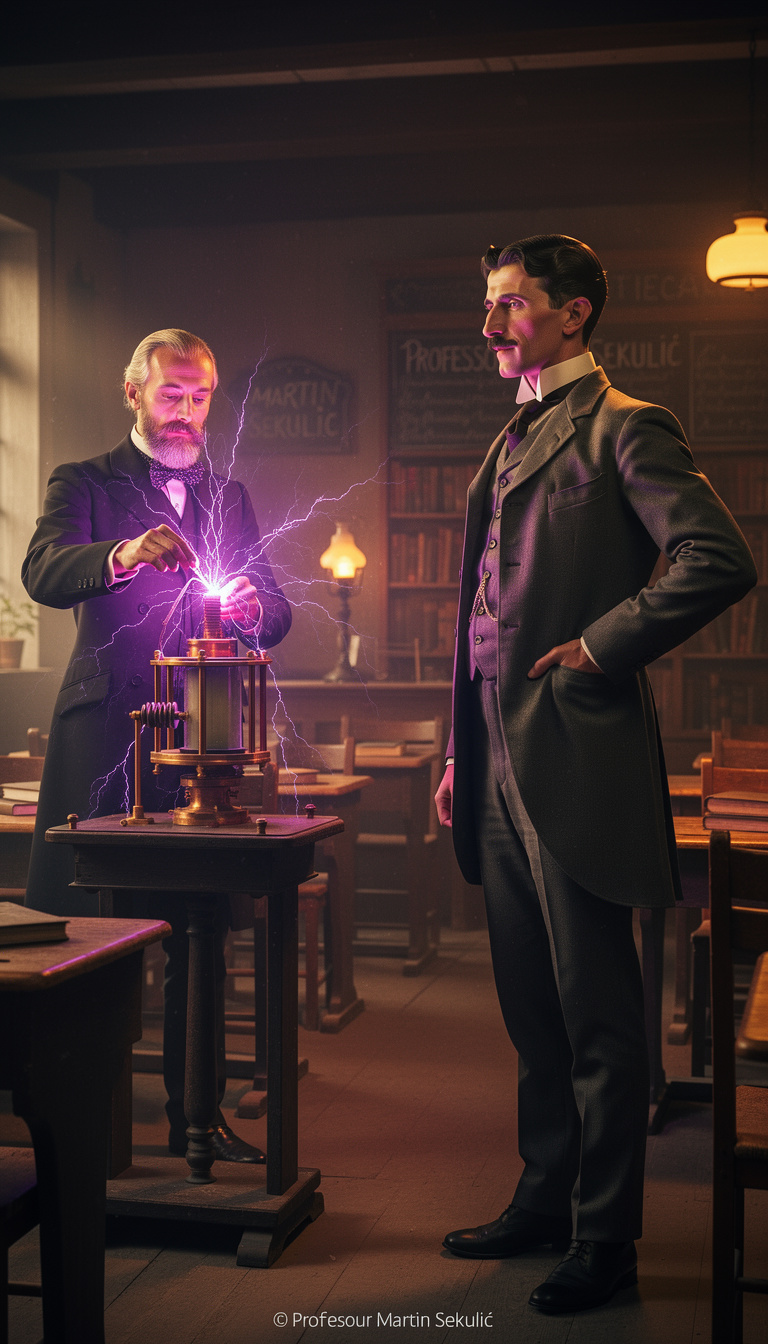
Fourteen years old, alone in Karlovac, boarding with strangers while my mother sent what she could from Smiljan. The Higher Real Gymnasium—every lecture in German, a language I had to drink down like bitter medicine. But then: Professor Martin Sekulić, his demonstrations. He would crank the electrostatic machine, and the sparks would leap between brass spheres like captive lightning. I did not merely watch. I *felt* the hair rise on my neck, the same prickling I knew from our valley storms. In that moment I understood that electricity was not magic, not theology—it was a language, and I intended to become fluent. My mind, even then, would not rest. I would walk the Kupa riverbanks until midnight, rehearsing inventions I had no materials to build, seeing them turn in perfect detail behind my eyes. This was not diligence. It was obsession, and I make no apology for it.
 Nikola Tesla
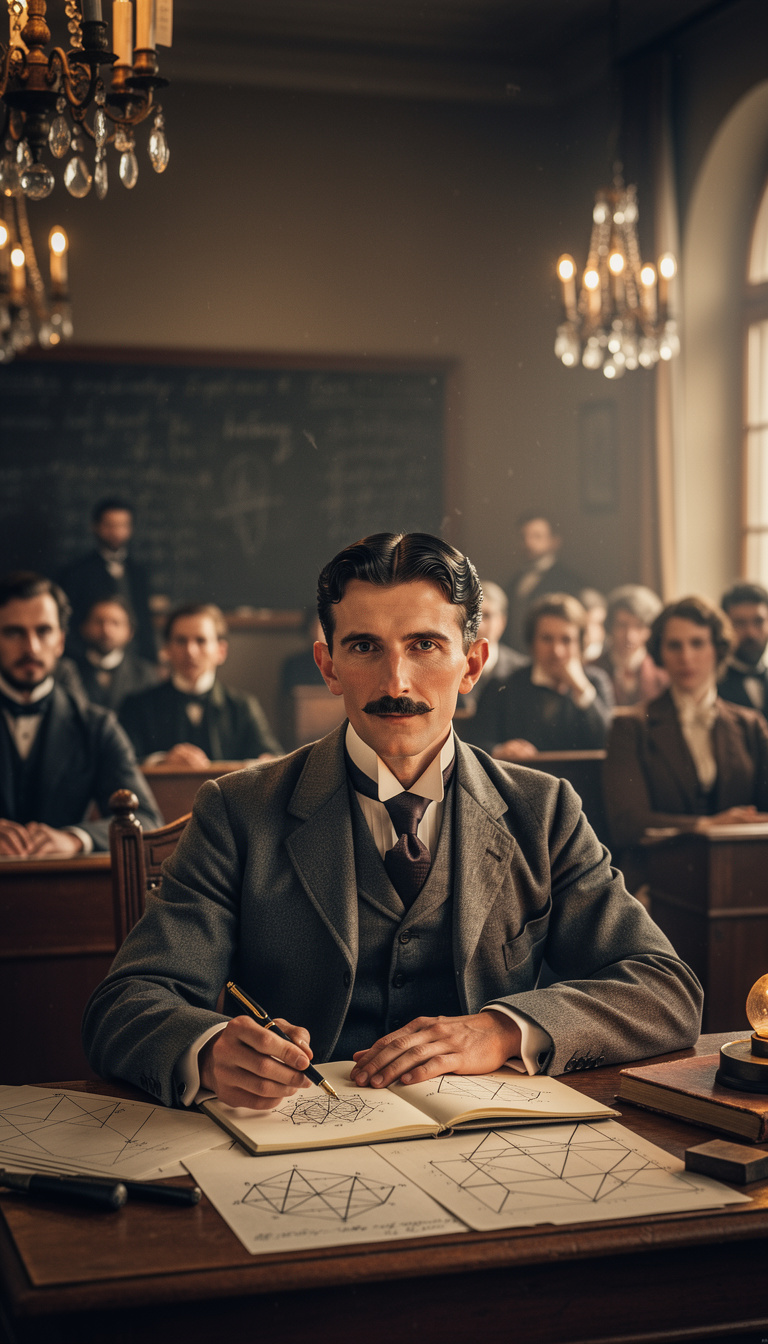
Looking back from these later years, I see the boy who arrived at the Imperial-Royal Technical College with a Military Frontier scholarship and a head full of thunderstorms. Nineteen years old, thin as a lamp filament, burning just as bright. I passed nine examinations that first season—mathematics, languages, the mechanical sciences—and received a letter of commendation from the dean himself. The professors praised my diligence. They did not know that while I sat in their lectures, I was already elsewhere: constructing machines in perfect detail behind my eyes, running them forward and backward, watching where the current pooled and where it broke. I had not yet learned to tell anyone about this habit. It felt too much like confession. What I did not yet understand was that this scholarship was not merely charity for a borderland boy. It was the first wire in a circuit that would carry me across an ocean. Graz gave me the grammar of engineering—the precise vocabulary of force and resistance—but it also taught me loneliness, the particular voltage of being the strangest mind in the room. I worked until the lamps guttered. I argued with professors who could not see what I saw. I was becoming, though I could not name it then, the kind of man who must build what he imagines or be consumed by it.