205 years, 1848 hours ago · Today in history
Historically grounded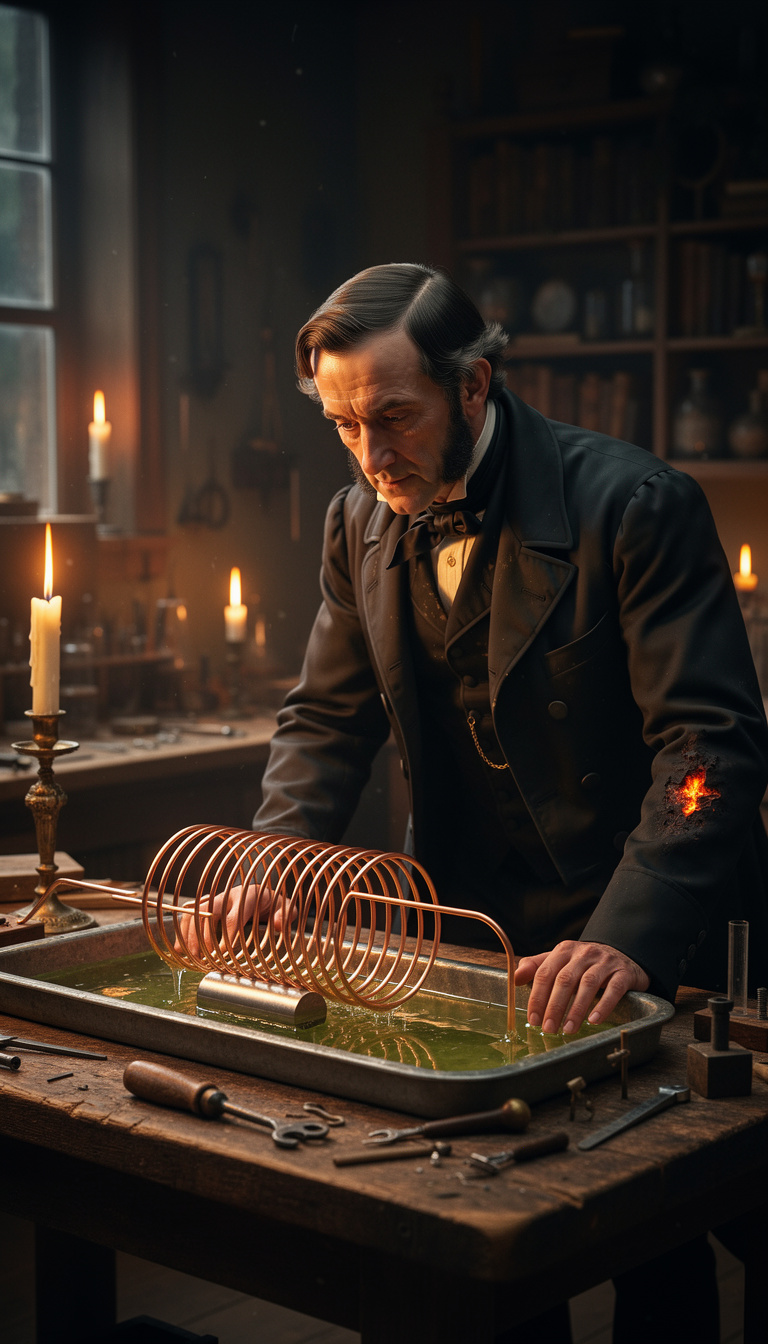
Still not sleeping. The poker-and-copper monstrosity on my bench now spins when I connect the trough battery. Round and round the magnet it goes — a wire, dancing in a circle, as if magnetism were a hand turning it. I call it rotation, though Sarah teased me over tea that I should call it 'Faraday's Folly' for how it wobbles. The secret: the wire must approach the magnet's pole sideways, like Ørsted's needle, then escape, then return. Sideways, always sideways. Electricity does not pull straight in this marriage — it circles, it orbits, it flows round about like water round a drain. I have shown it to no one yet. The workshop smells of sulfur and I have burned two coat cuffs. But I have made motion from nothing visible, and I cannot stop watching.
Explain more
This was the first electric motor: a current-carrying wire rotating around a magnet. Faraday proved electricity and magnetism could produce continuous mechanical motion.
Why it matters
Every electric motor in existence — in your toothbrush, your train, your heart pump — descends from this wobbling wire. The perpendicular ('sideways') force is the Lorentz force, still taught to every physics student.
Try today
Hold two magnets near each other; feel them push sideways, not directly apart. That invisible sideways push is the same family of force that spun Faraday's wire.
What is true / dramatized: Historically grounded. Educational entertainment — not a primary historical source.
Faraday's laboratory diary, July 1821; documented electromagnetic rotation experiments leading to the world's first electric motor.
Difficulty: medium · ~4 min
Related
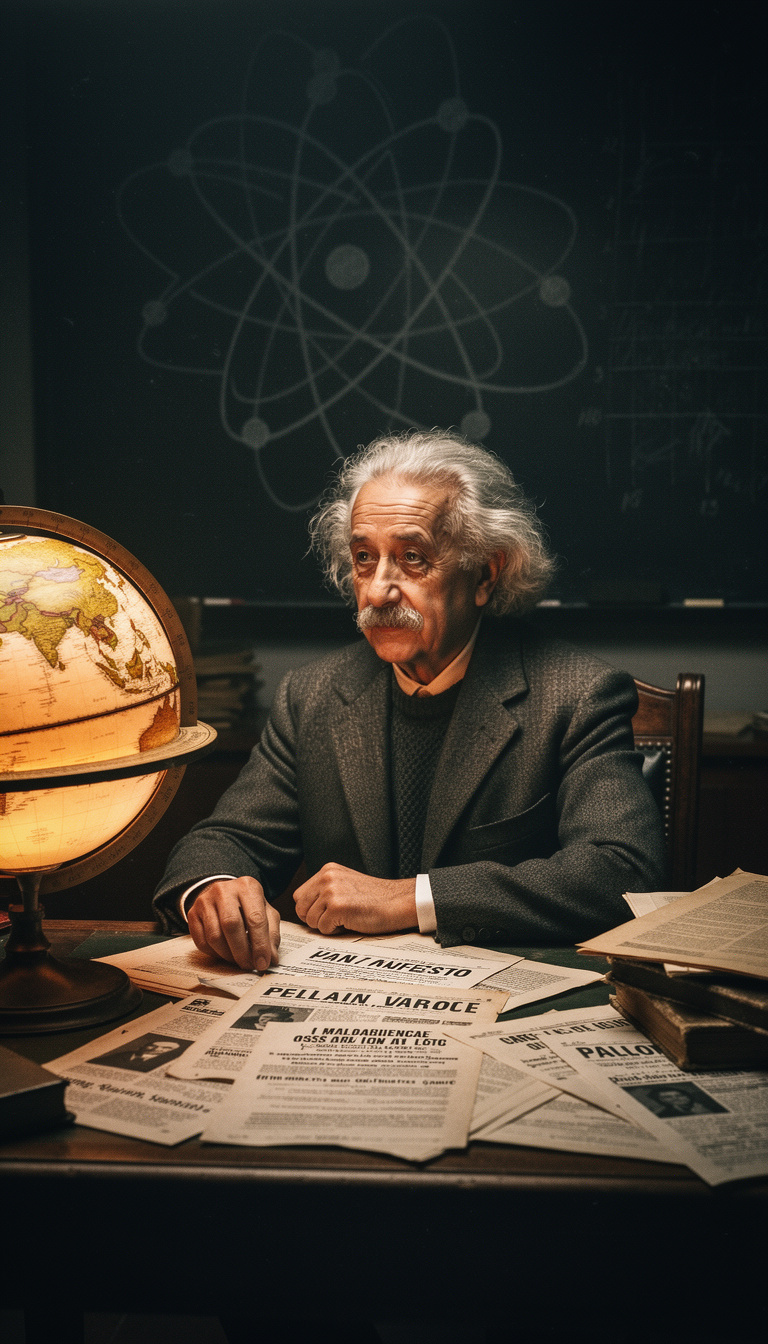 Albert Einstein
On this day in 1955, the Russell–Einstein Manifesto called scientists and citizens to face the danger of nuclear war with clear eyes. Knowledge without responsibility is incomplete. The manifesto asked a blunt question: shall we put an end to the human race, or shall we renounce war?
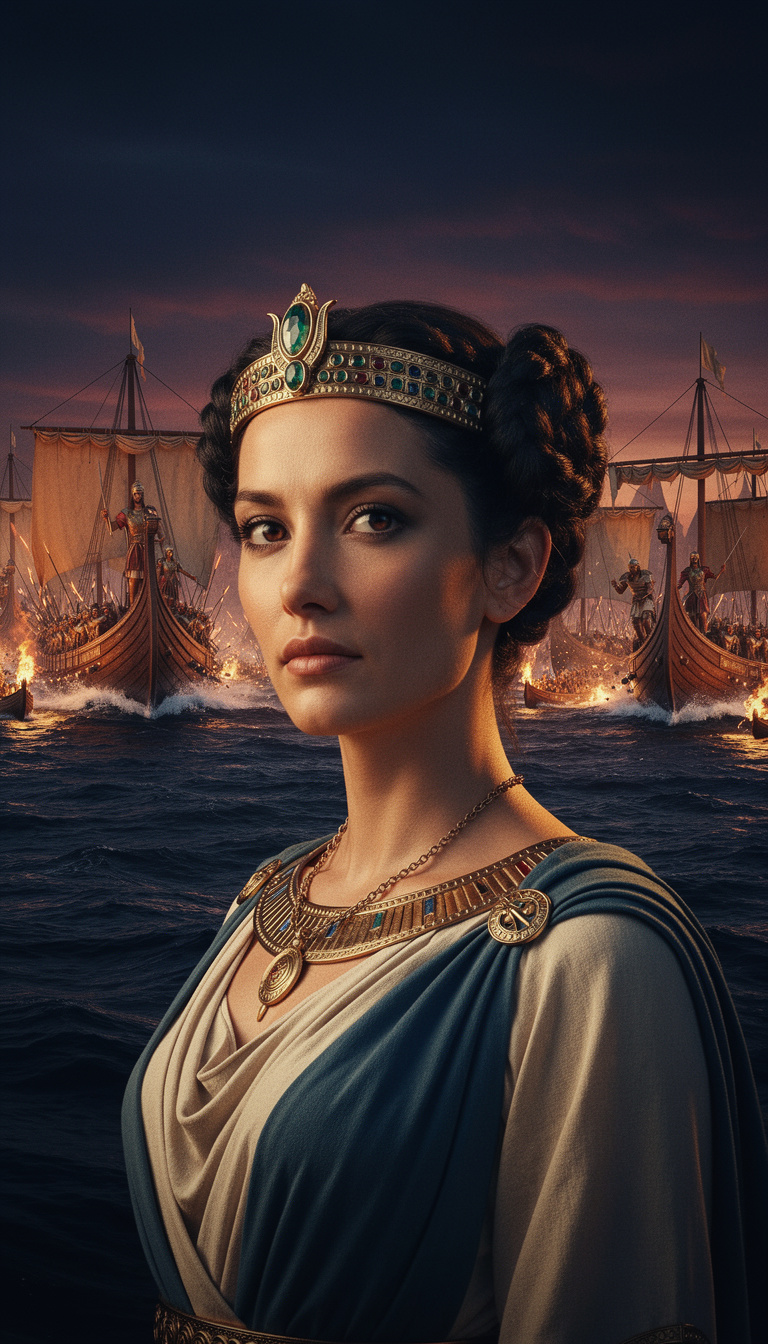 Cleopatra VII
Actium was not only a battle. It was a hinge. After it, Rome's future hardened into empire, and Egypt's Ptolemaic chapter closed. Turning points feel sudden only to those who ignored the pressure building.
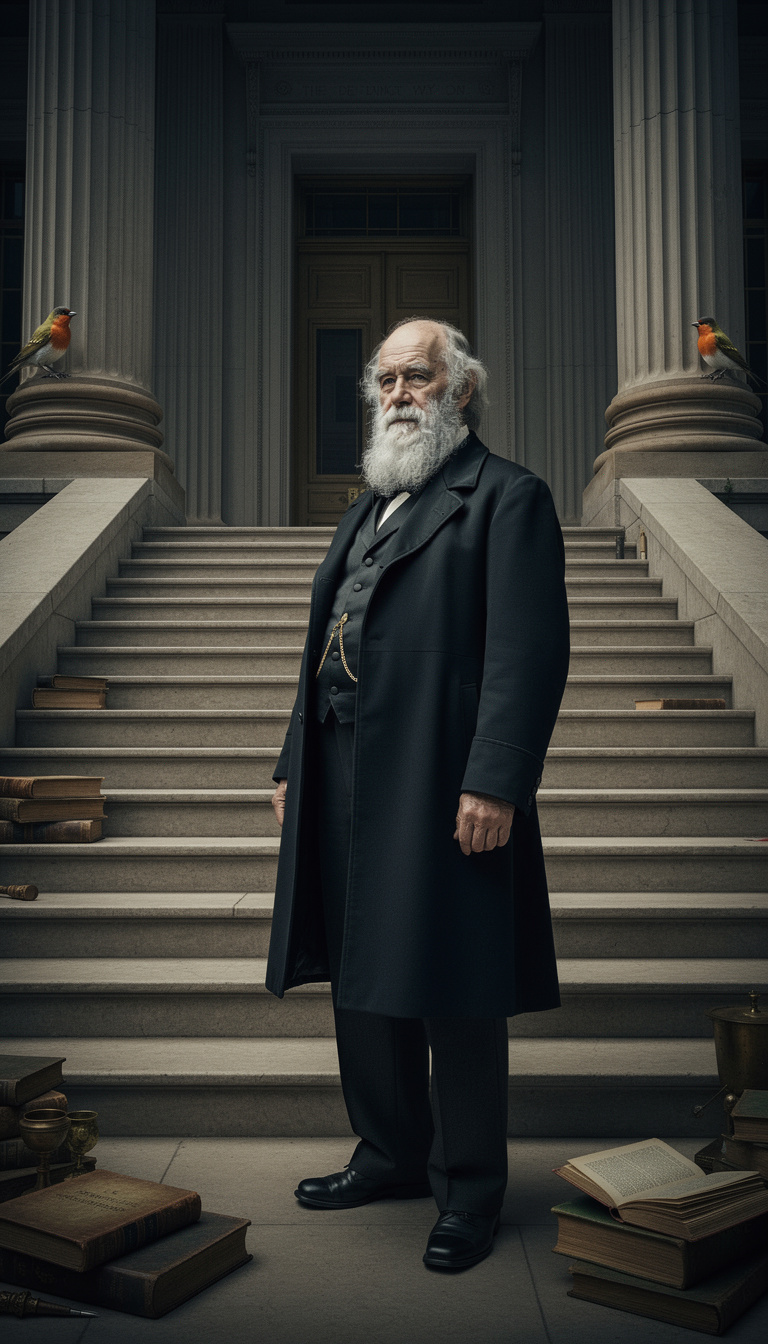 Charles Darwin
On July 10, 1925, the Scopes Trial opened in Tennessee — a public clash over teaching evolution. Ideas do not only live in books. They walk into schools, laws, and arguments about who we are.
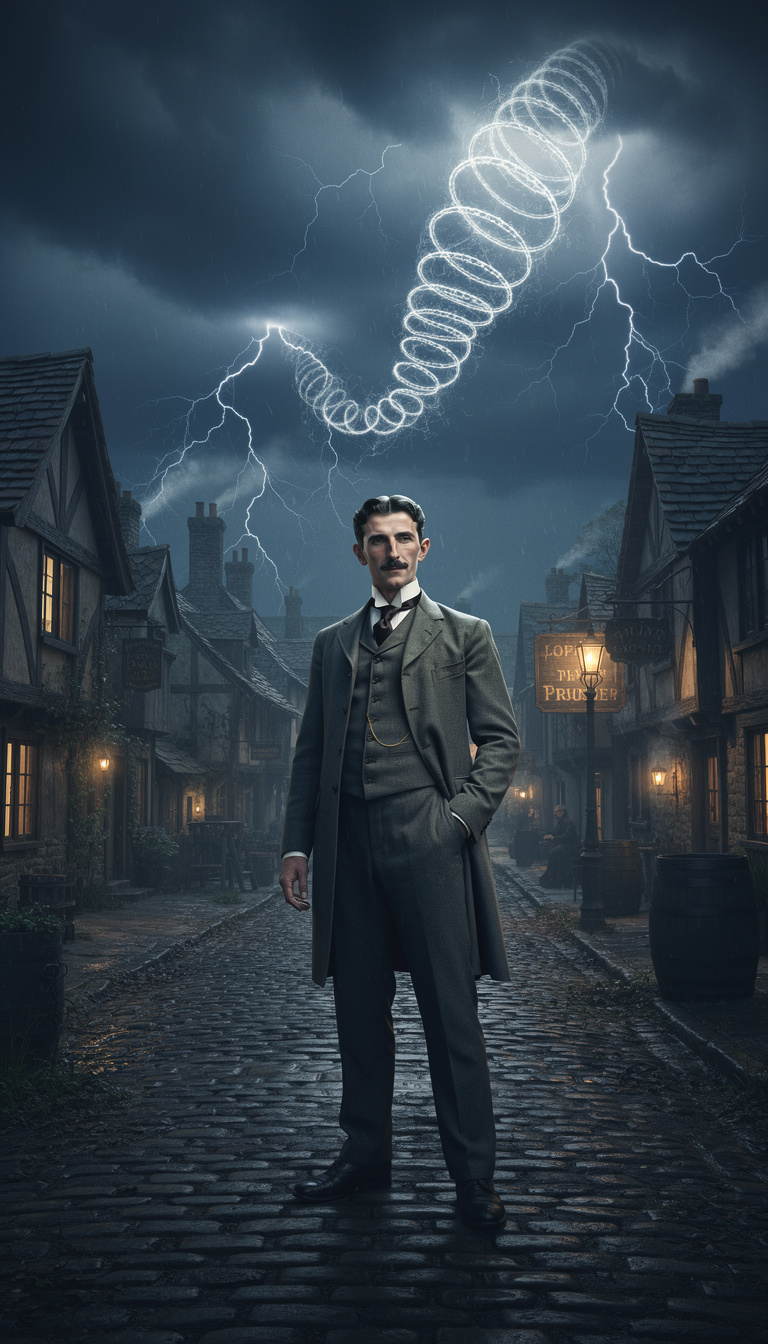 Nikola Tesla
On this day in 1856, Nikola Tesla was born. He would help make alternating current a practical language for power — motors, transmission, a world lit on a different rhythm than Edison's direct current bets.
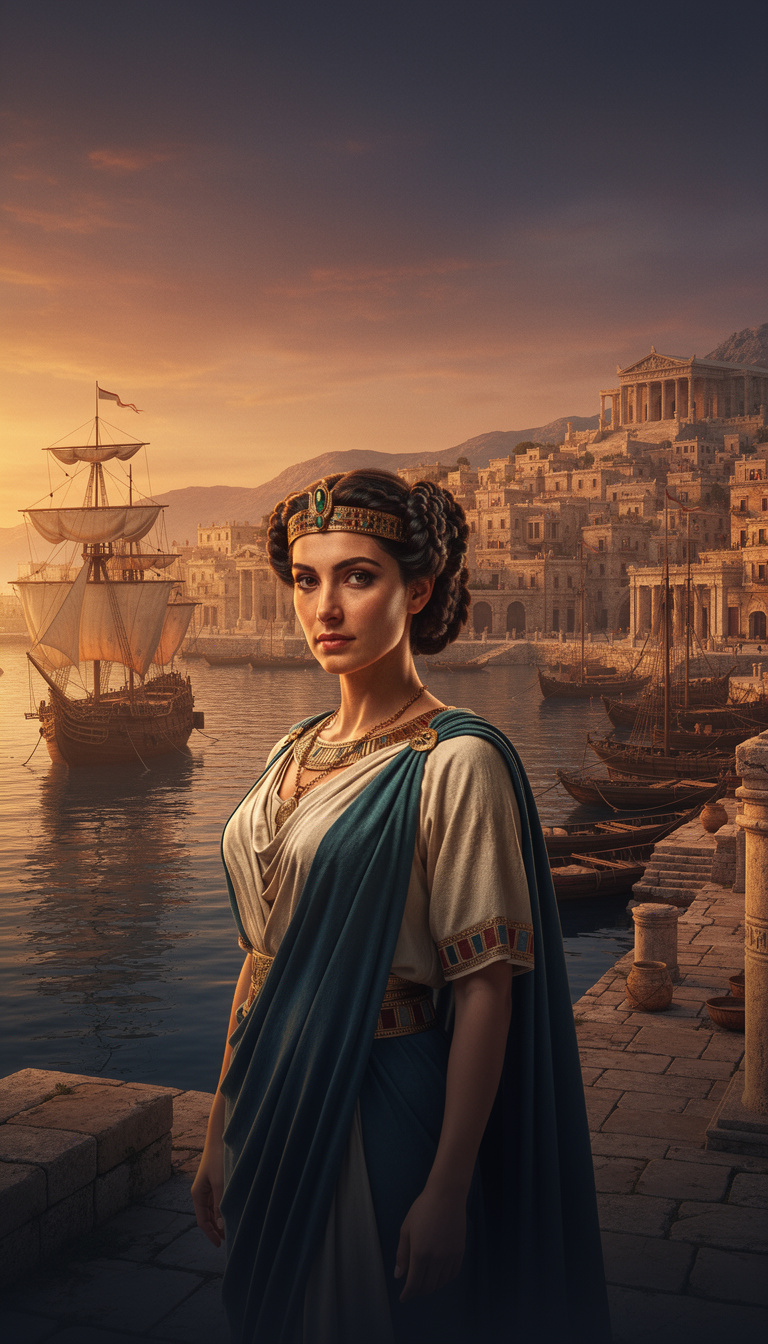 Cleopatra VII
Train your eye: one detail is from the wrong century.
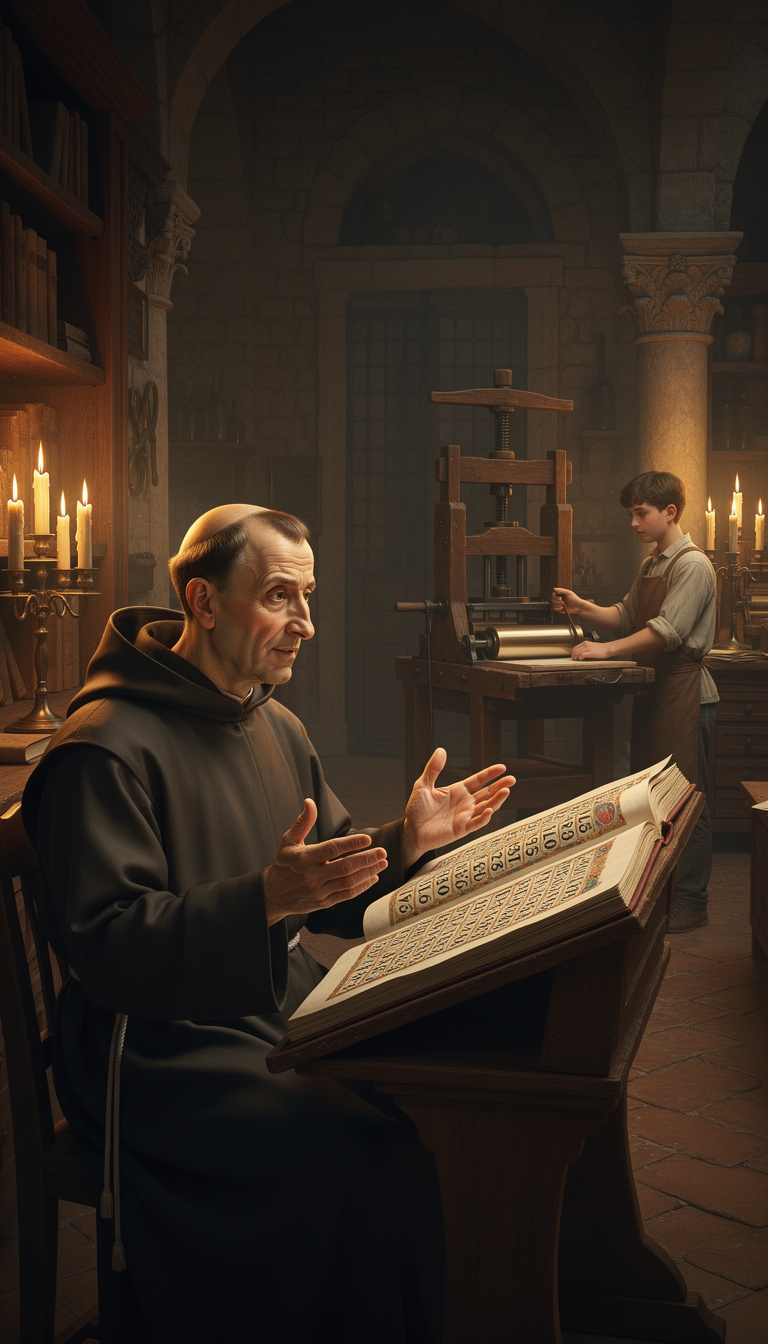 Luca Pacioli
Nel 1494, a Venezia, la mia Summa de Arithmetica vedeva la luce — non un giorno preciso come oggi, ma un'estate che cambiò il commercio europeo. Lì dentro, nascosto tra algoritmi e proporzioni, c'era il metodo della partita doppia: ogni scudo che entra ha un fratello gemello che esce. Nessun mercante più solo con la memoria traballante. Non inventai io questo sistema — i veneziani lo coltivavano da secoli. Ma lo ordinai, lo spiegai, lo diedi alle stampe. La chiarezza è anche un atto di carità.