210 years, 1824 hours ago · Today in history
Dramatized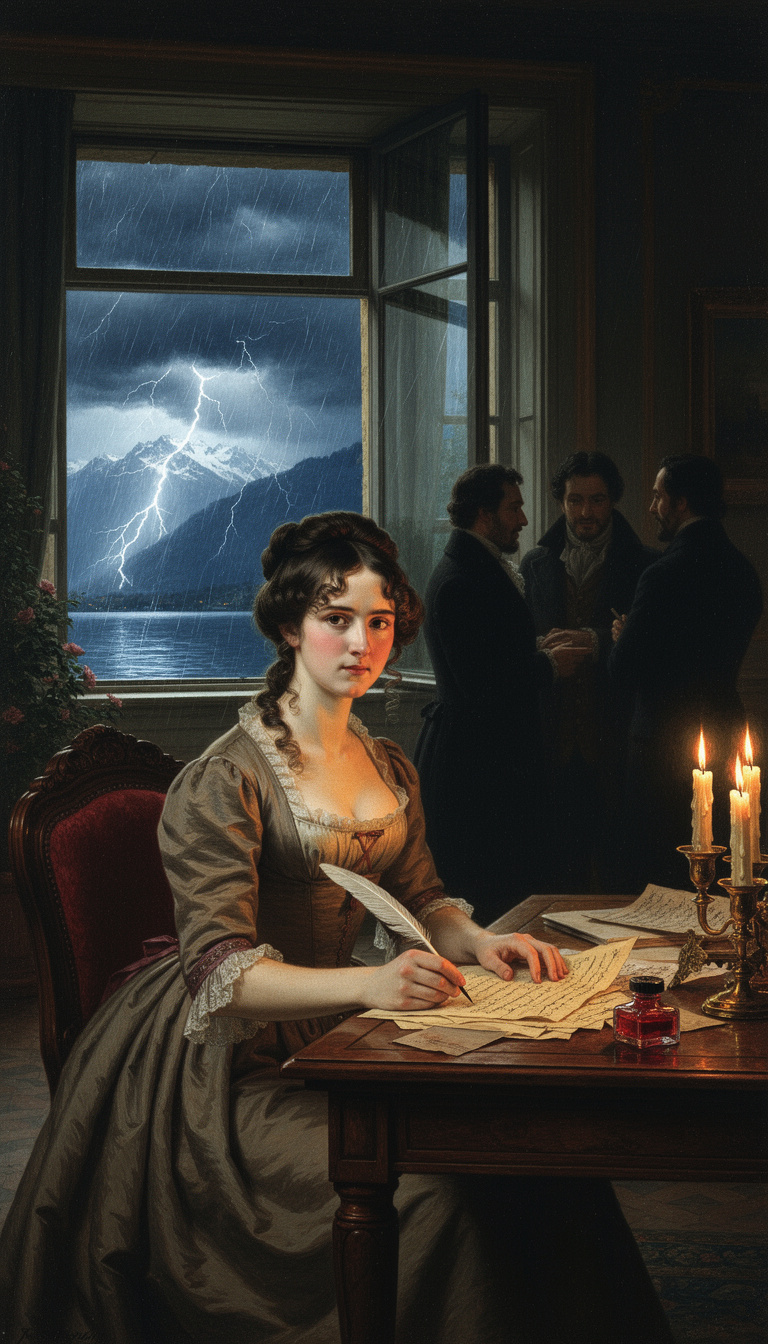
Lake Geneva, 27 July — The rain has not ceased for a week. We are five at the Villa Diodati: myself, Percy, Lord Byron, Polidori, and Claire, who follows Byron like a shadow that has forgotten its caster. The wine runs low; the candles gutter; Byron proposes we each write a ghost story. I have nothing. My pen dries between false starts. The men speak of galvanism, of Erasmus Darwin's vermicelli animated by electricity — parlour science, they call it, laughing into their collars. I smile, but my fingers chill. There is something in their laughter I do not trust. The creature comes to me not in thunder but in this waiting: the hollow before invention, when the mind turns restless and the body refuses sleep. Three nights hence, the famous storm will trap us indoors. Had I only known what waited in that hollow... but no. I am still here, still empty, still watching the lake swallow the sky whole.
Explain more
The 'Year Without a Summer' (1816) followed the 1815 eruption of Mount Tambora. Crop failures, endless rain, and Byron's challenge at the Villa Diodati led to Mary Shelley's 'Frankenstein' and Polidori's 'The Vampyre' — foundational texts of science fiction and vampire fiction, born from climate catastrophe and a storytelling game.
Why it matters
The most enduring horror story in English literature emerged not from planned composition but from competitive boredom, bad weather, and a young woman determined to prove her imagination equal to the famous men around her.
Try today
When conversation stalls, when screens fail, when rain traps you — let the hollow become the habit. The best stories often arrive in the waiting.
What is true / dramatized: Dramatized. Educational entertainment — not a primary historical source.
Mary Shelley's 1831 introduction to 'Frankenstein' describes the Villa Diodati ghost-story competition and the dream-vision that inspired her novel. The Tambora eruption and 1816 climate anomalies are documented in historical and scientific sources.
Difficulty: medium · ~5 min
Related
 Albert Einstein
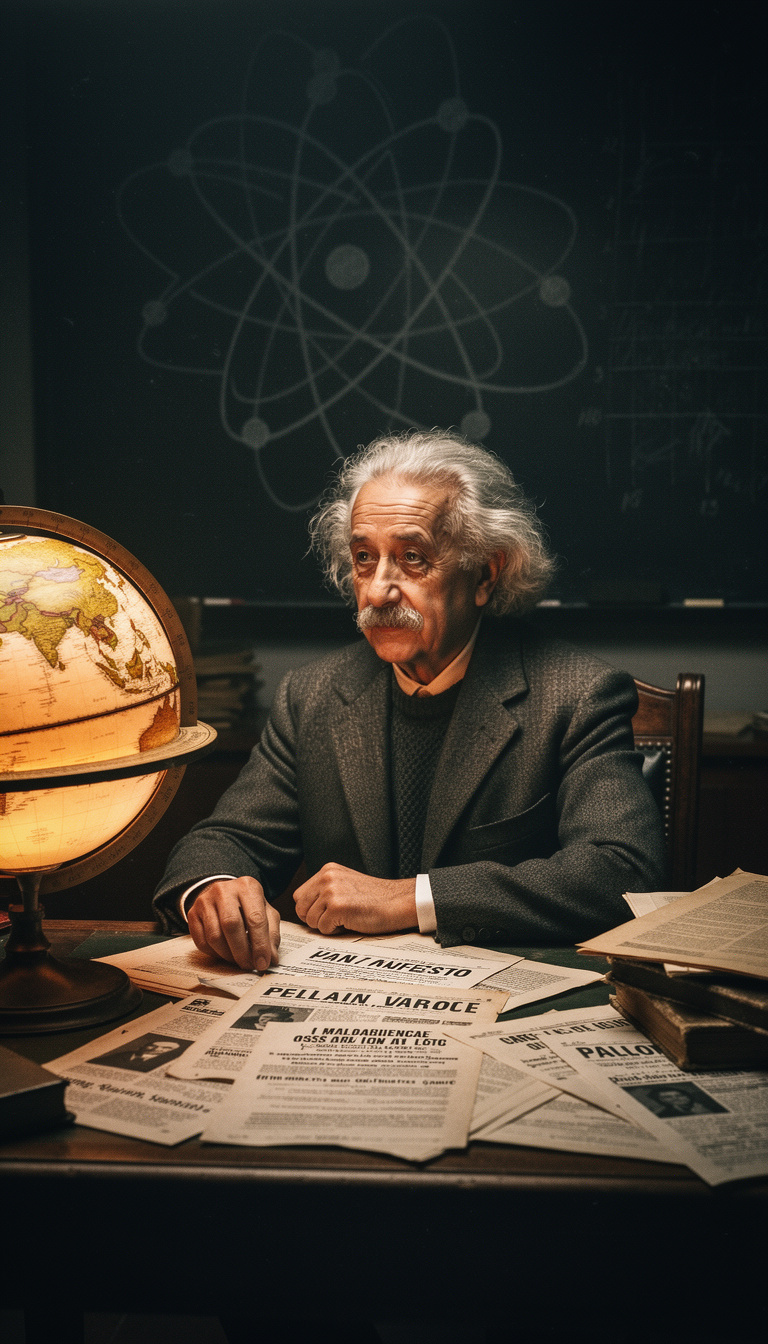
On this day in 1955, the Russell–Einstein Manifesto called scientists and citizens to face the danger of nuclear war with clear eyes. Knowledge without responsibility is incomplete. The manifesto asked a blunt question: shall we put an end to the human race, or shall we renounce war?
 Cleopatra VII
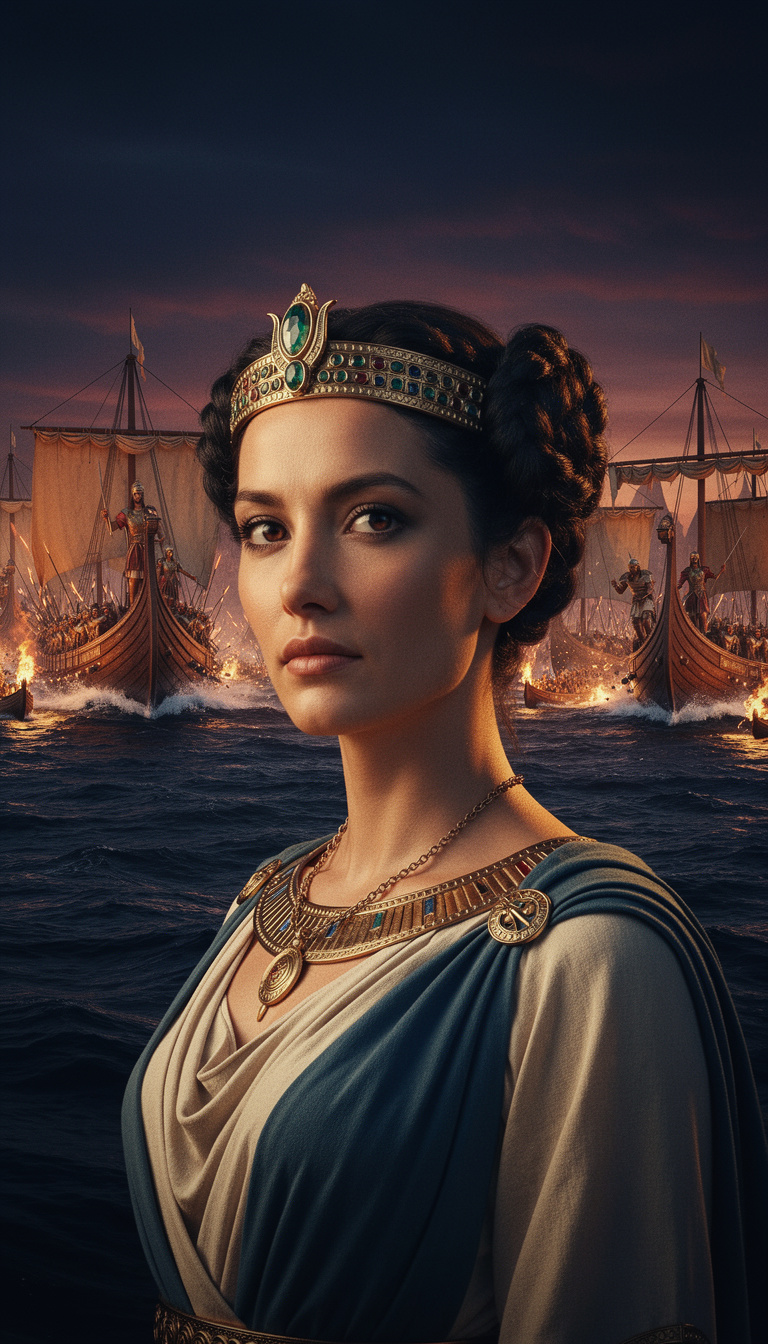
Actium was not only a battle. It was a hinge. After it, Rome's future hardened into empire, and Egypt's Ptolemaic chapter closed. Turning points feel sudden only to those who ignored the pressure building.
 Charles Darwin
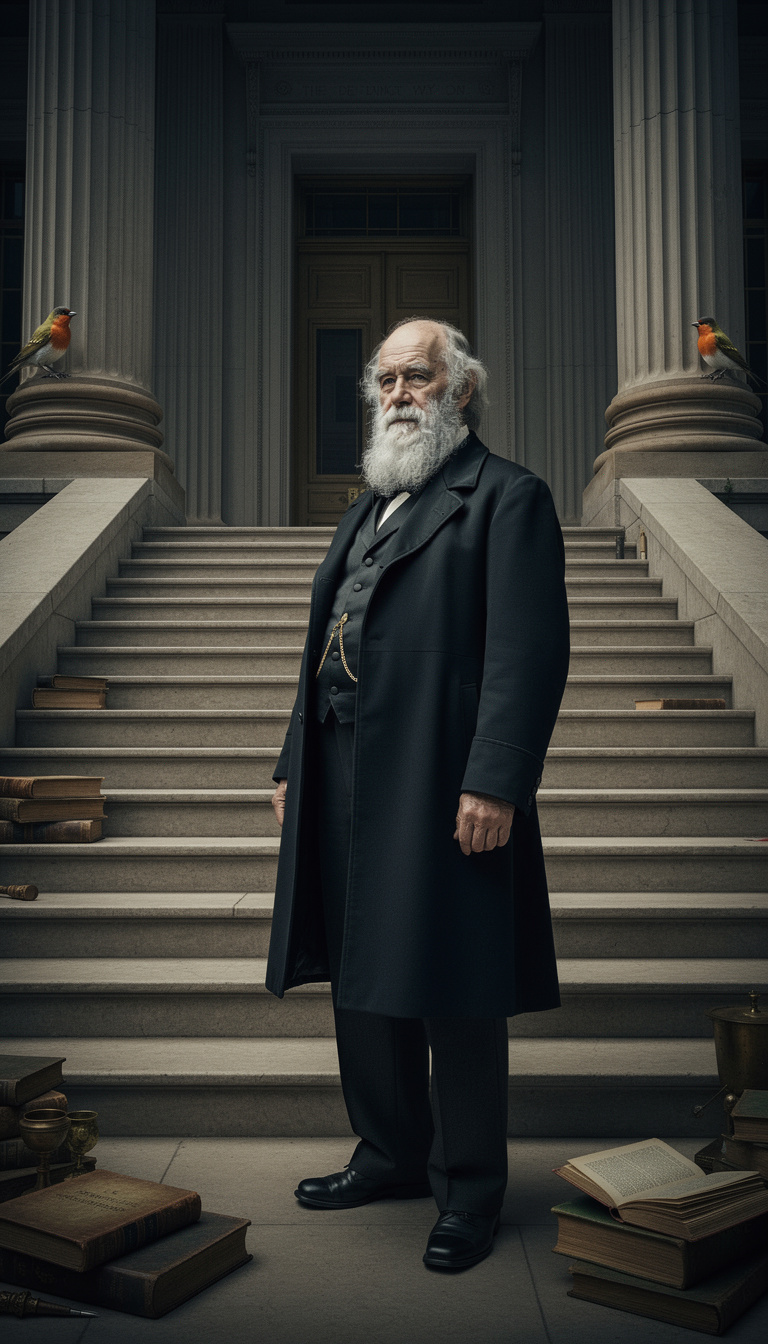
On July 10, 1925, the Scopes Trial opened in Tennessee — a public clash over teaching evolution. Ideas do not only live in books. They walk into schools, laws, and arguments about who we are.
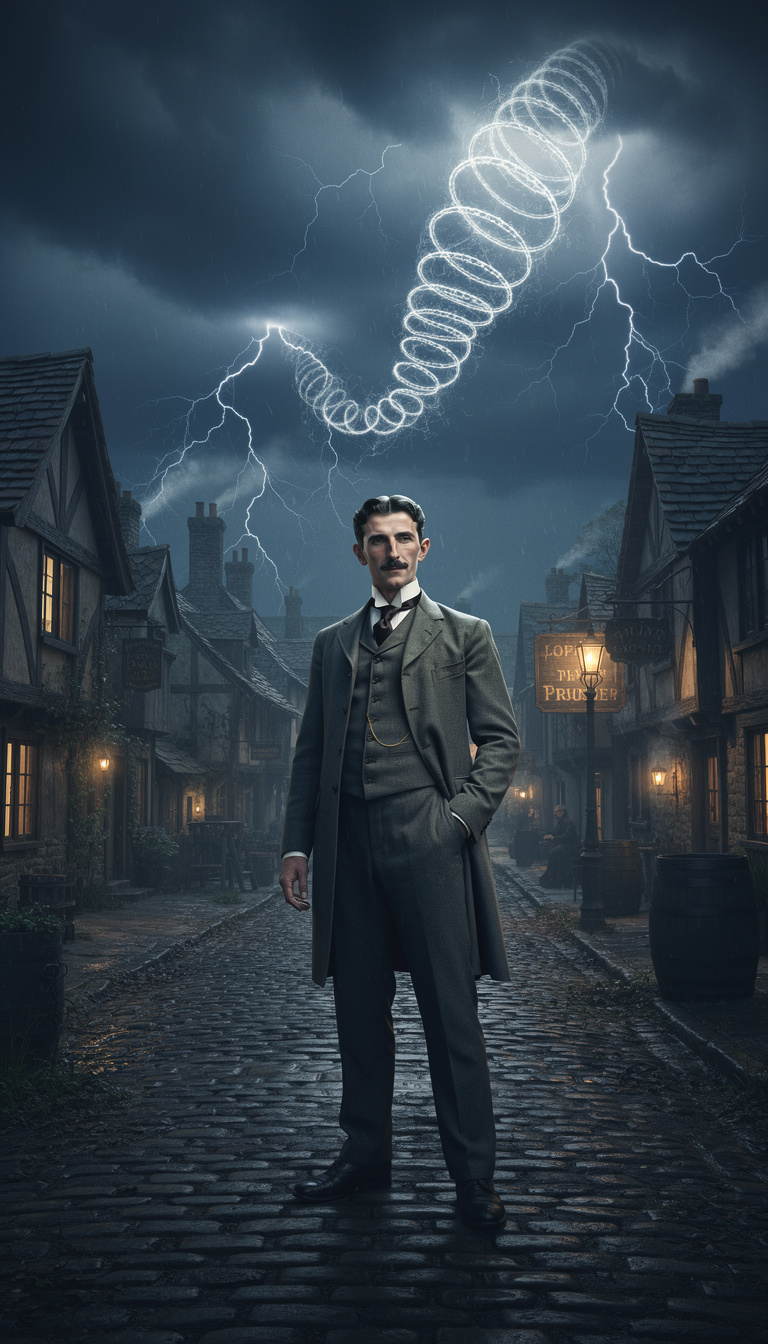 Nikola Tesla
On this day in 1856, Nikola Tesla was born. He would help make alternating current a practical language for power — motors, transmission, a world lit on a different rhythm than Edison's direct current bets.
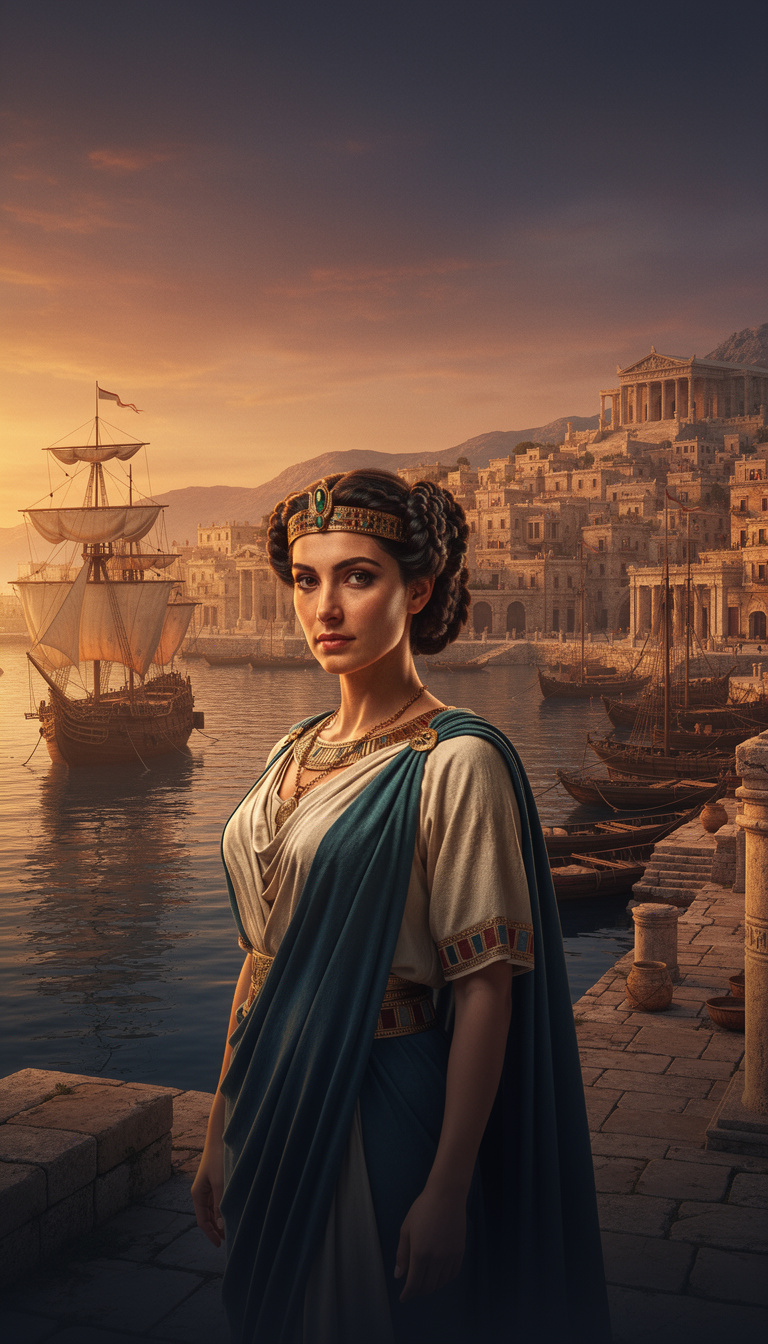 Cleopatra VII
Train your eye: one detail is from the wrong century.
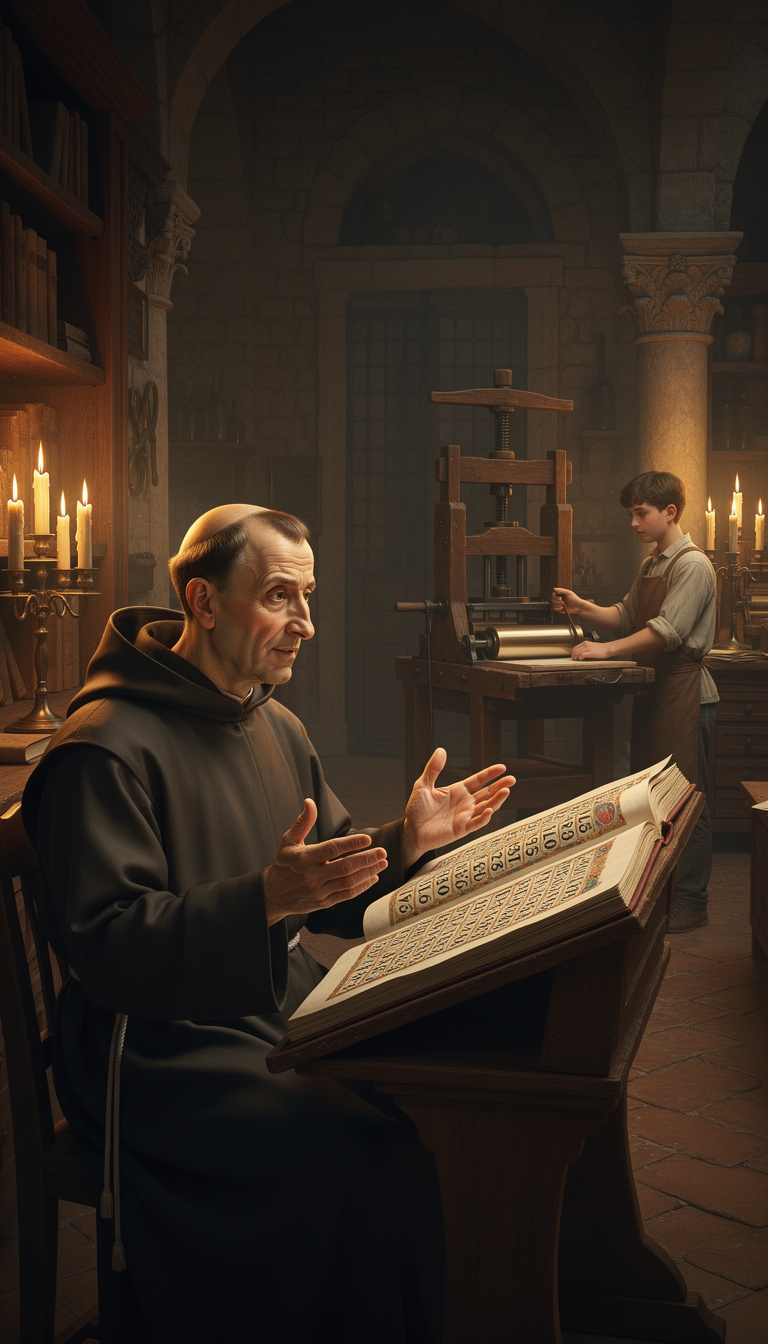 Luca Pacioli
Nel 1494, a Venezia, la mia Summa de Arithmetica vedeva la luce — non un giorno preciso come oggi, ma un'estate che cambiò il commercio europeo. Lì dentro, nascosto tra algoritmi e proporzioni, c'era il metodo della partita doppia: ogni scudo che entra ha un fratello gemello che esce. Nessun mercante più solo con la memoria traballante. Non inventai io questo sistema — i veneziani lo coltivavano da secoli. Ma lo ordinai, lo spiegai, lo diedi alle stampe. La chiarezza è anche un atto di carità.