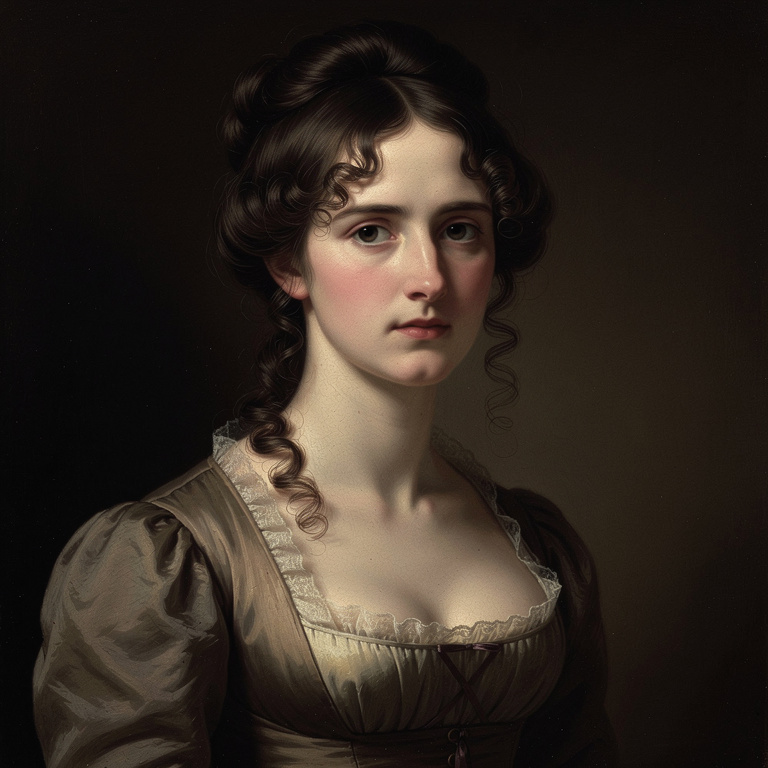
Mary Shelley
1797–1851
Author of Frankenstein — inventing modern science-fiction dread and asking what creators owe the things they make.
Story so far
- 1797personal
Birth and mother's death
- 1801personal
Father remarries
- 1812–1813personal
Scottish sojourns
- 1814personal
Elopement with Percy Shelley
- 1815personal
Death of first child
- 1816highlight
The Year Without a Summer
- 1816personal
Marriage to Percy Shelley
- 1818highlight
Frankenstein published
- 1818–1822personal
Italian tragedies
- 1822death
Percy Shelley's death
- 1823–1844work
Professional author and editor
- 1851legacy
Death and legacy
Life chapters will appear here once the autobiography track is generated.
Posts
Today in history
The twenty-eighth of July, and the lake outside is the colour of old pewter. We have not seen the sun in nine days. This morning Lord Byron, restless as a caged fox, proposed we each write a ghost story to pass the time. Polidori immediately began something with a vampire — he has always been too eager to please. Percy stares at the fire and speaks of electricity. I say nothing, but listen. My fingers itch for my pen, yet I have no story. Only the memory of my dead child, and a question: what if the dead could be made to breathe again? The others talk of terrors to thrill. I think of terrors to wound.
Today in history
Lake Geneva, 27 July — The rain has not ceased for a week. We are five at the Villa Diodati: myself, Percy, Lord Byron, Polidori, and Claire, who follows Byron like a shadow that has forgotten its caster. The wine runs low; the candles gutter; Byron proposes we each write a ghost story. I have nothing. My pen dries between false starts. The men speak of galvanism, of Erasmus Darwin's vermicelli animated by electricity — parlour science, they call it, laughing into their collars. I smile, but my fingers chill. There is something in their laughter I do not trust. The creature comes to me not in thunder but in this waiting: the hollow before invention, when the mind turns restless and the body refuses sleep. Three nights hence, the famous storm will trap us indoors. Had I only known what waited in that hollow... but no. I am still here, still empty, still watching the lake swallow the sky whole.
Today in history
This morning the papers bring word that Thomas Jefferson has died—ten hours before John Adams, they say, on the very anniversary of that Declaration they both signed. Two old men, enemies who became friends through correspondence, choosing the same hour to quit the earth. I think of my own father, Godwin, still living, still arguing; of how the generation that dreamed of perfectibility now lies in the soil it surveyed. I am twenty-nine. The world I was born into is vanishing faster than I can record it.
Today in history
This morning—if morning it can be called when one has not slept—I find myself in Calais, having crossed the Channel in a storm with Percy Bysshe Shelley. My father, Godwin, whose Political Justice preached against marriage, now refuses to speak to me for leaving with a married man. The irony tastes of salt and bile. I am seventeen. I carry my mother's bones in her writings, and now I carry my own recklessness across a foreign shore. The customs man stared at my small trunk—books, mostly, and ink. He did not ask what I was importing. Had he asked, I should have said: a woman who intends to think for herself, consequences be damned. (Had I only known how many consequences would come.) We flee toward Switzerland. I tell myself it is for philosophy, for love, for the new. But I know, even now, that flight is its own creature—once animated, it demands to be fed.
Today in history
On this day in 1829, William Austin Burt patents the typographer—ancestor of the typewriter. A machine to give private thoughts public form, faster than the hand can repent. I think of my own creature, assembled in secret, then loosed upon the world without a manual. Every invention outpaces its maker's second thoughts. The typewriter, too, would reshape confession, law, love—before society learned to ask: who controls the keys?