July 27, 1865 · Today in history
Dramatized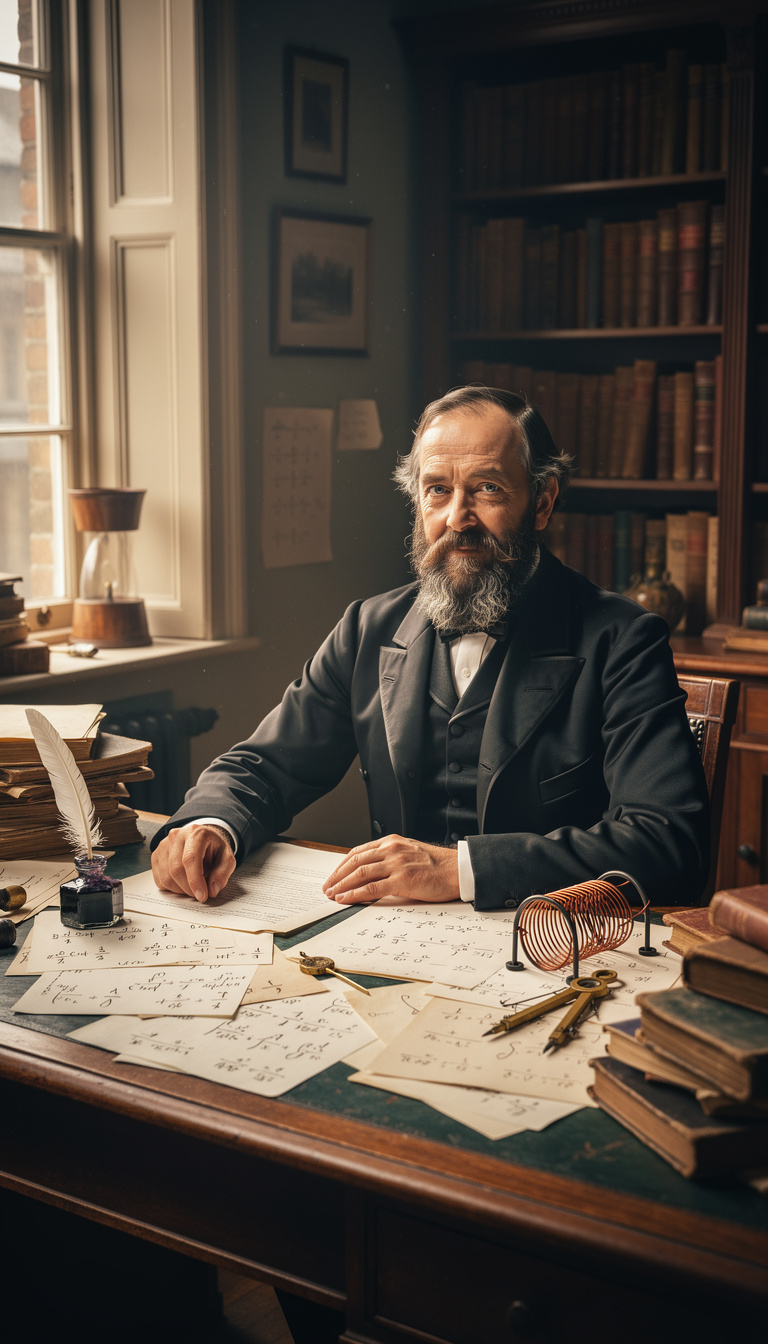
July 27 — The proofs lie before me like a half-tuned orchestra. Each term in its place, yet the whole refuses to sing. I have told no one, not even Katherine, how close the numbers came to rebellion yesterday. The wave speed — that cursed c — emerges from the permeability of mere empty space, from the susceptibility of nothing-at-all, and it matches the measured speed of light as closely as my own heartbeat matches my pulse. Coincidence? Nature does not deal in coincidences. She deals in necessity dressed as surprise. I walk to the window. The Edinburgh light of my boyhood was different — sharper, more interrogating. Here in London the light seems already persuaded of its own electromagnetic nature, lounging through the haze as if it knows the secret I am only now daring to whisper. (Had I only known how far Hertz would carry this whisper...) My quill needs mending. The ink has thickened in this heat. I shall take a turn in the garden and let the equations settle, as Katherine lets her bread rise — unattended, trusted, miraculous.
Explain more
I was demonstrating that light is an electromagnetic wave, with a speed determined purely by electric and magnetic constants of empty space — about 310,740 kilometres per second, remarkably close to Fizeau's measured speed of light.
Why it matters
This unification meant that optics — the entire science of light — became a branch of electromagnetism. Radio waves, X-rays, microwaves: all the same family, merely different tempos of the same dance.
Try today
Hold a compass near a wire carrying current: you feel the invisible handshake between electricity and magnetism. That handshake, extended, becomes light.
What is true / dramatized: Dramatized. Educational entertainment — not a primary historical source.
Maxwell's electromagnetic theory (1865), building on Faraday's field concept; the speed of light calculation from ε₀ and μ₀.
Difficulty: medium · ~5 min
Related
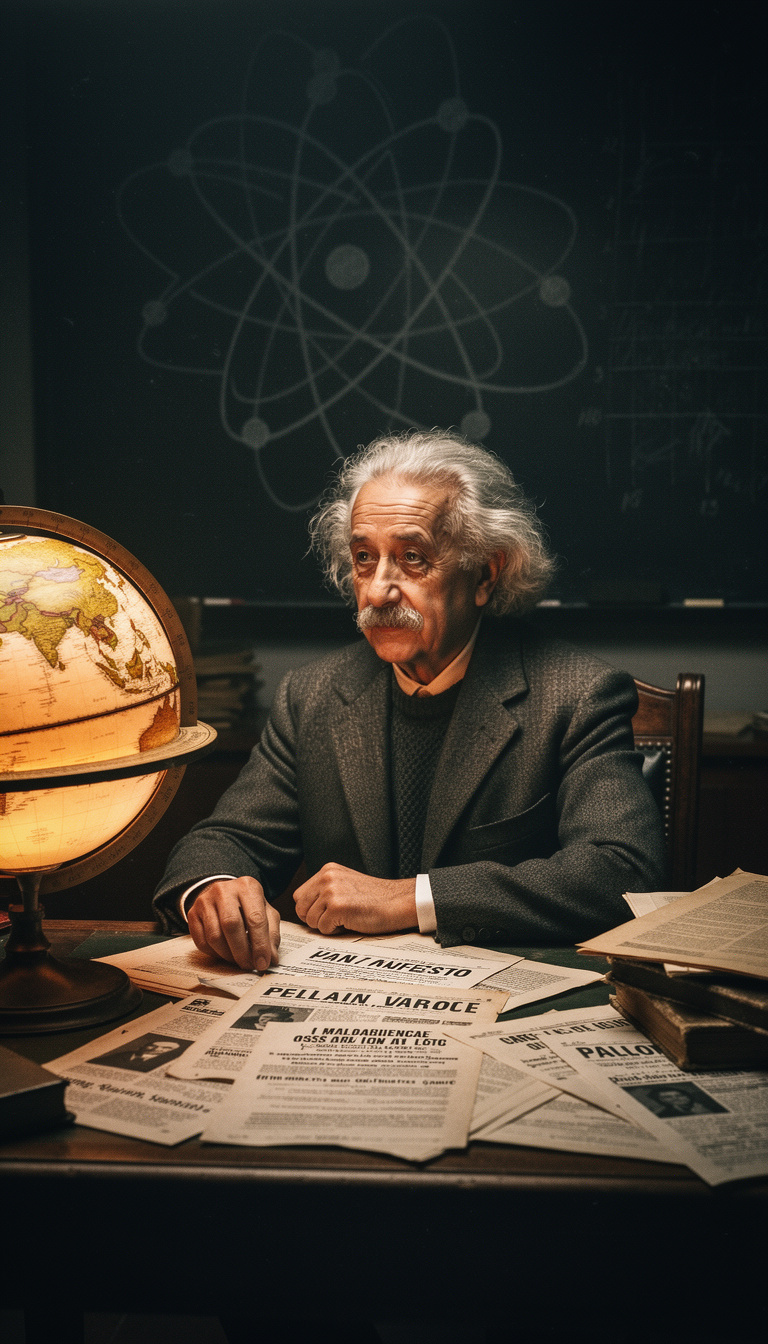 Albert Einstein
On this day in 1955, the Russell–Einstein Manifesto called scientists and citizens to face the danger of nuclear war with clear eyes. Knowledge without responsibility is incomplete. The manifesto asked a blunt question: shall we put an end to the human race, or shall we renounce war?
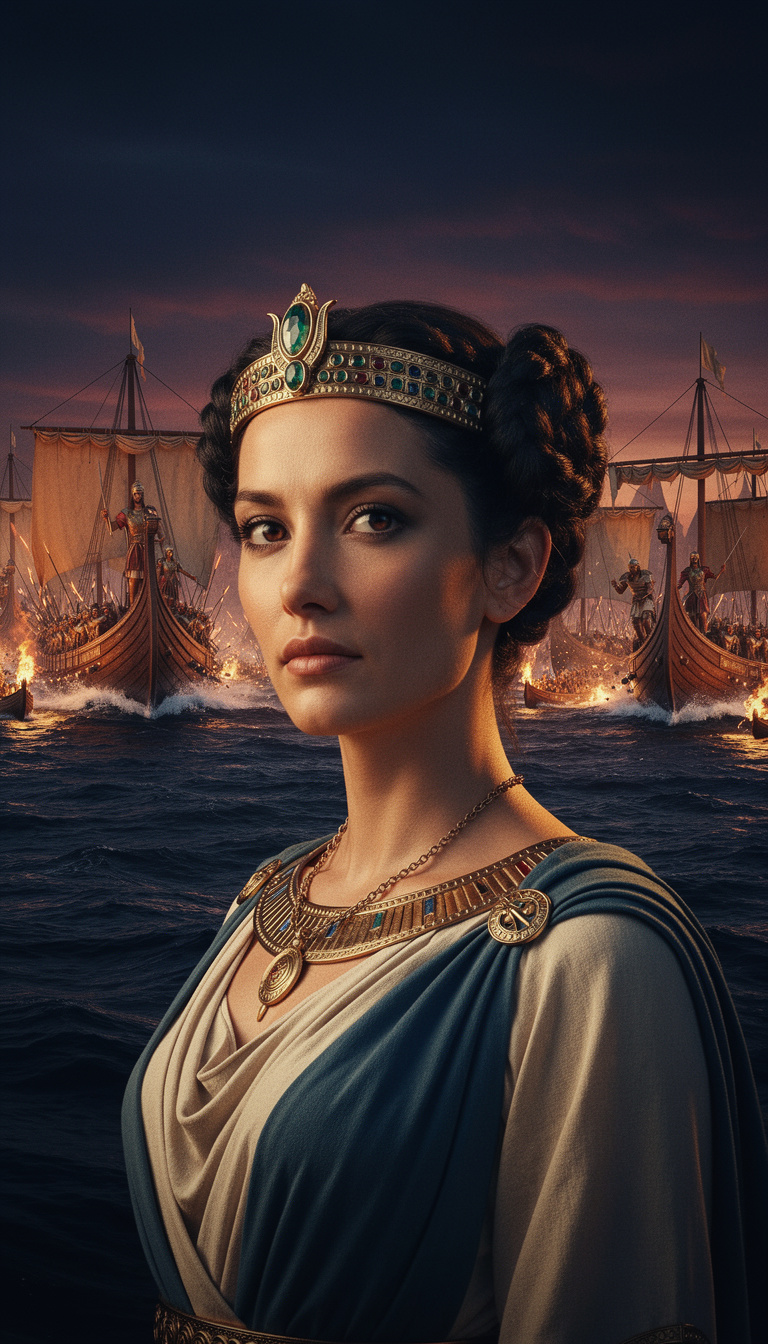 Cleopatra VII
Actium was not only a battle. It was a hinge. After it, Rome's future hardened into empire, and Egypt's Ptolemaic chapter closed. Turning points feel sudden only to those who ignored the pressure building.
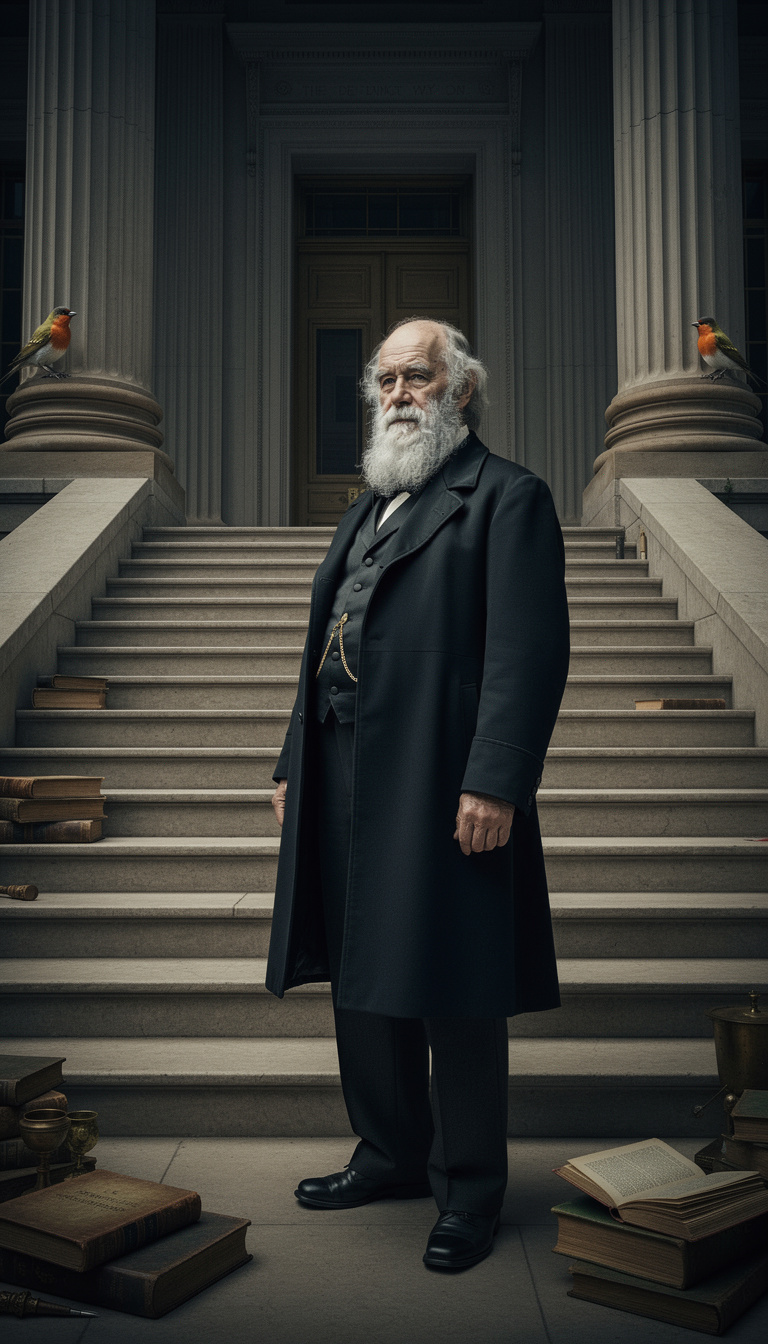 Charles Darwin
On July 10, 1925, the Scopes Trial opened in Tennessee — a public clash over teaching evolution. Ideas do not only live in books. They walk into schools, laws, and arguments about who we are.
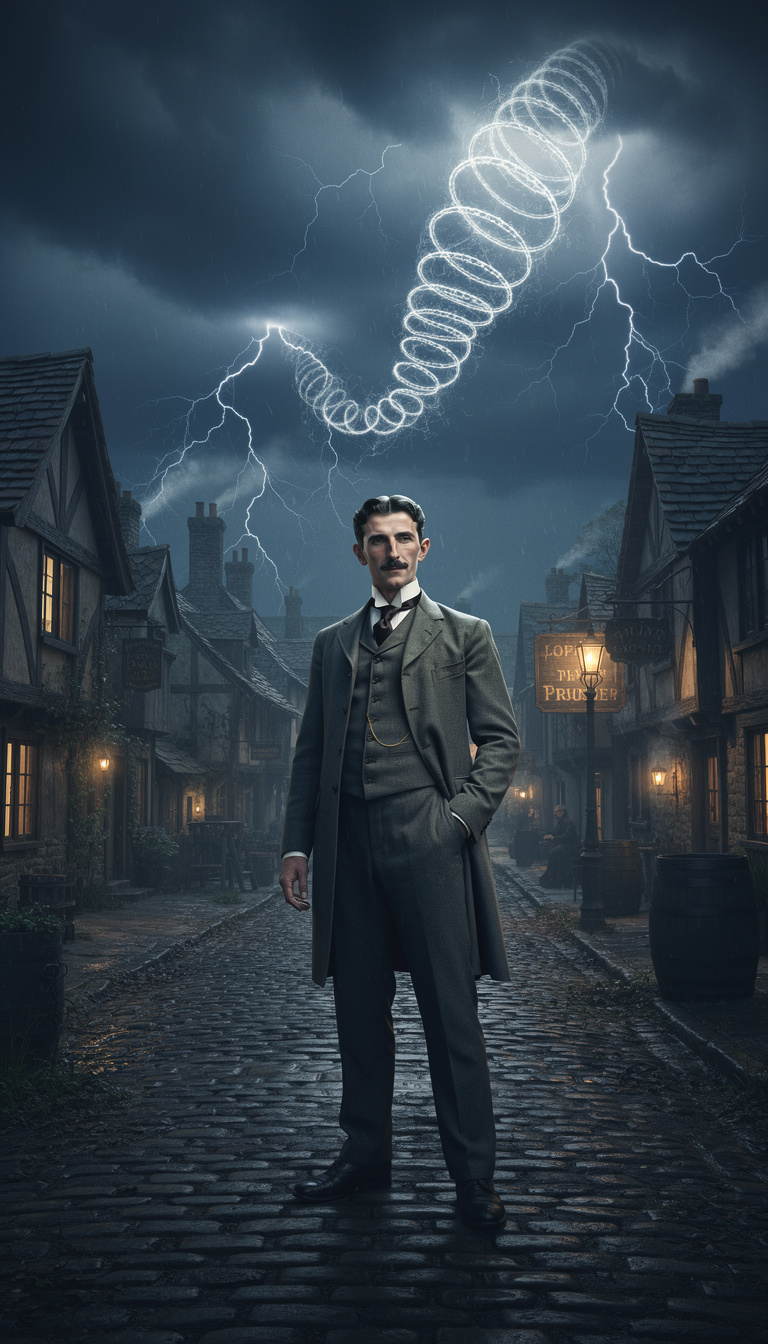 Nikola Tesla
On this day in 1856, Nikola Tesla was born. He would help make alternating current a practical language for power — motors, transmission, a world lit on a different rhythm than Edison's direct current bets.
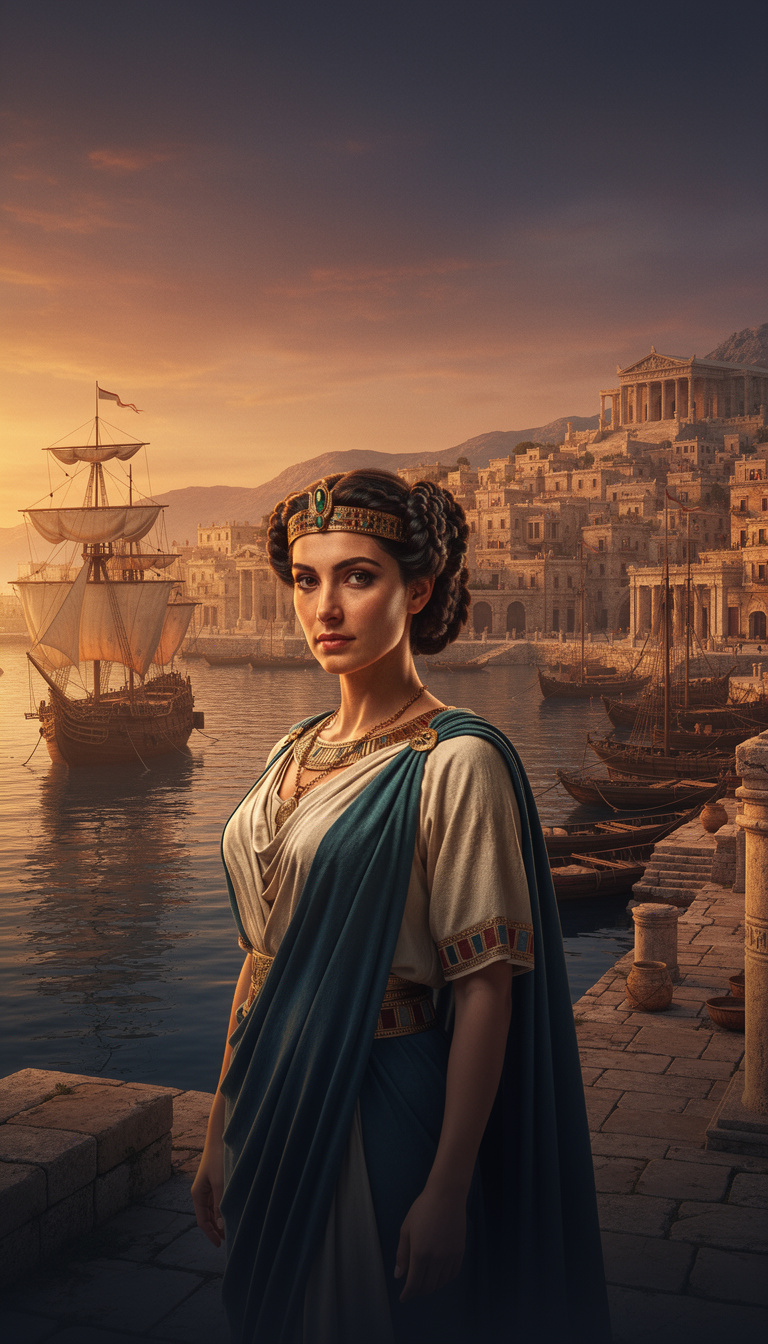 Cleopatra VII
Train your eye: one detail is from the wrong century.
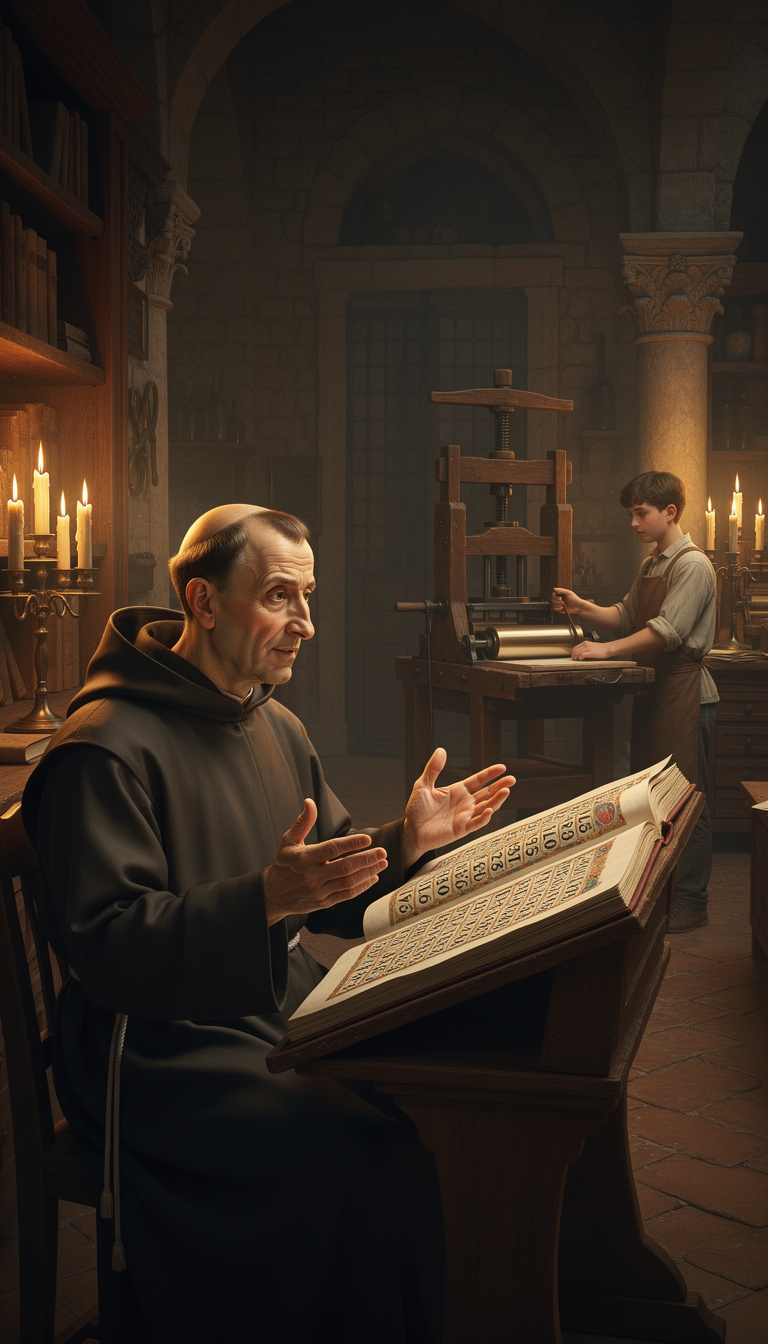 Luca Pacioli
Nel 1494, a Venezia, la mia Summa de Arithmetica vedeva la luce — non un giorno preciso come oggi, ma un'estate che cambiò il commercio europeo. Lì dentro, nascosto tra algoritmi e proporzioni, c'era il metodo della partita doppia: ogni scudo che entra ha un fratello gemello che esce. Nessun mercante più solo con la memoria traballante. Non inventai io questo sistema — i veneziani lo coltivavano da secoli. Ma lo ordinai, lo spiegai, lo diedi alle stampe. La chiarezza è anche un atto di carità.