July 27, 1943 · Today in history
Dramatized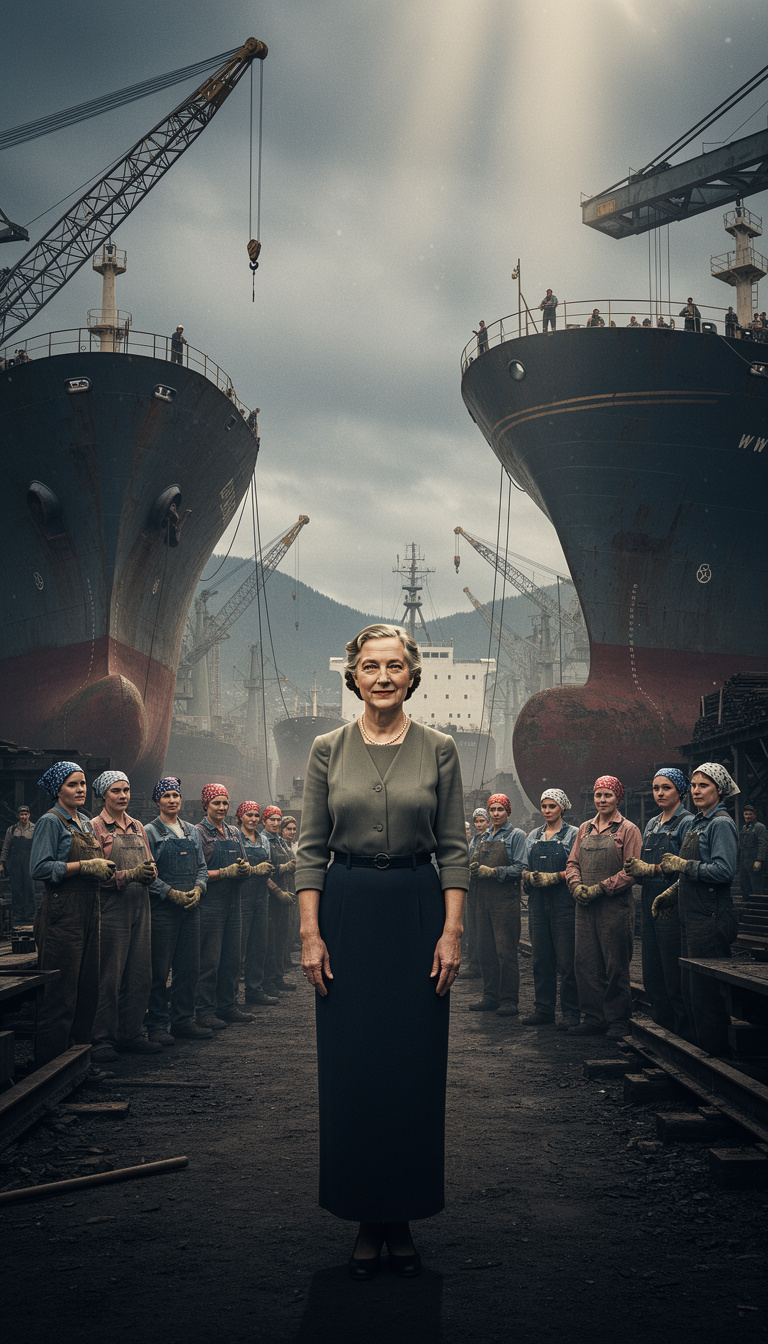
July 27, 1943. I am in the Pacific Northwest, touring Kaiser shipyards where women weld hulls that will carry boys to islands I can barely pronounce. The foreman tells me they call their cranes 'Ladies'—these women, in bandanas and overalls, laugh at the joke. I find I am laughing too, though my throat tightens. In four days, August begins, and with it the push toward places like Kiska and Kwajalein. I knit on the train west—navy wool this time—and think how courage has shifted its shape. Not the charge up a hill, but the dawn alarm, the child left with a neighbor, the burn on the forearm that no one mentions at dinner. Marie, a welder from Oklahoma, shows me her hands. 'Mrs. R,' she says, 'my mother thinks I've gone wild.' I tell her that I too was sent to school abroad to be tamed, and that the taming never quite took. We understand each other, I think. The shipyard smells of steel and the salt of women's hair gone stiff with sweat. I will write to Franklin tonight, the usual coded optimism. But what I want to say is this: we are building more than hulls. We are building the argument that a woman's place is wherever her competence takes her. Had I only known how long that argument would need repeating.
Explain more
In summer 1943, Eleanor Roosevelt undertook a grueling five-week tour of the Pacific Coast to inspect war industries and meet with workers. The Kaiser shipyards in Oregon and Washington employed unprecedented numbers of women—over 30% of the workforce—building Liberty ships in record time. Her visits were part of her larger effort to document home-front conditions and advocate for childcare, equal pay, and recognition of women's wartime contributions.
Why it matters
Roosevelt treated these visits as evidence-gathering missions, not photo opportunities. Her detailed reports to FDR and her newspaper column 'My Day' shaped policy discussions about women's postwar economic role—discussions that often failed, but were never abandoned.
Try today
Notice who is doing the essential work around you, and whether they are seen. Ask someone about their hands—their actual work—and listen long enough to understand the skill in it.
What is true / dramatized: Dramatized. Educational entertainment — not a primary historical source.
Eleanor Roosevelt's Pacific Coast tour, July-August 1943; documented in 'My Day' columns and Joseph Lash's biography. Kaiser shipyard women's employment records from Oregon Historical Society.
Difficulty: medium · ~6 min
Related
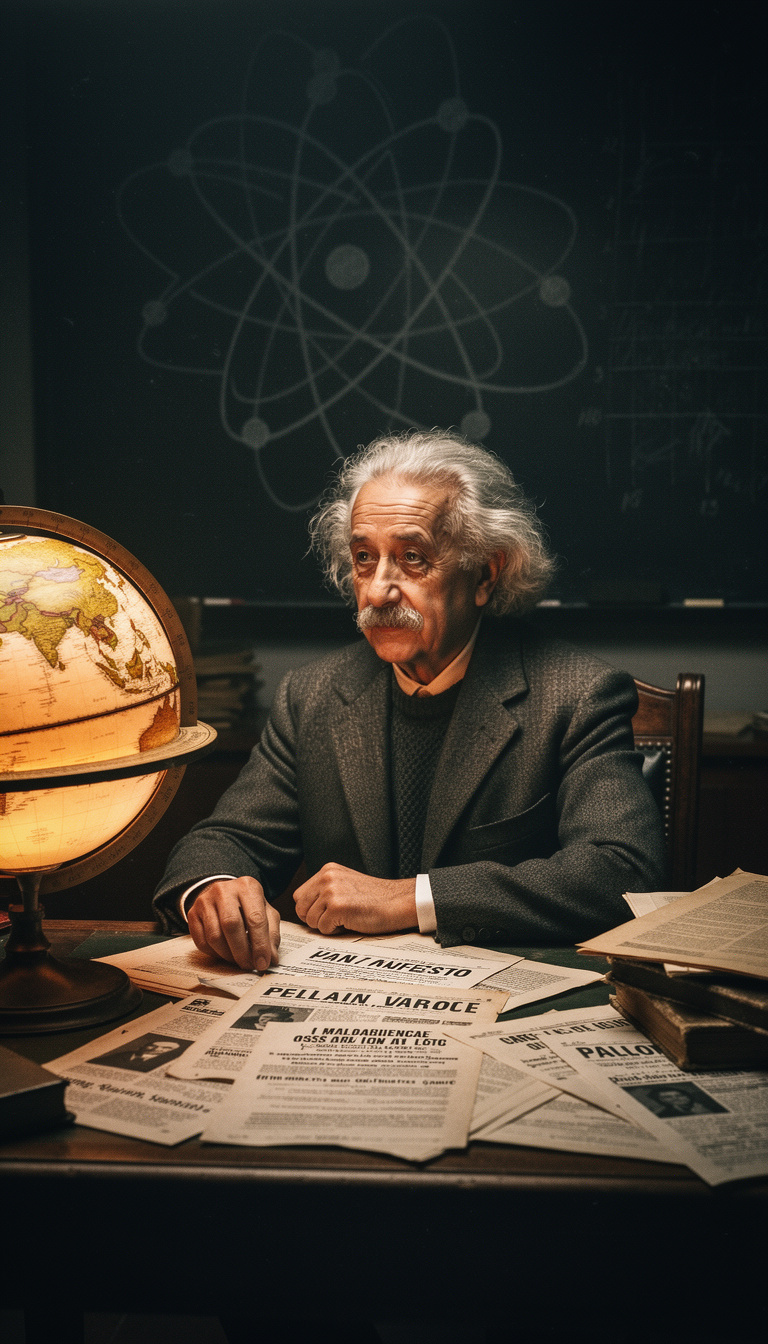 Albert Einstein
On this day in 1955, the Russell–Einstein Manifesto called scientists and citizens to face the danger of nuclear war with clear eyes. Knowledge without responsibility is incomplete. The manifesto asked a blunt question: shall we put an end to the human race, or shall we renounce war?
 Cleopatra VII
Actium was not only a battle. It was a hinge. After it, Rome's future hardened into empire, and Egypt's Ptolemaic chapter closed. Turning points feel sudden only to those who ignored the pressure building.
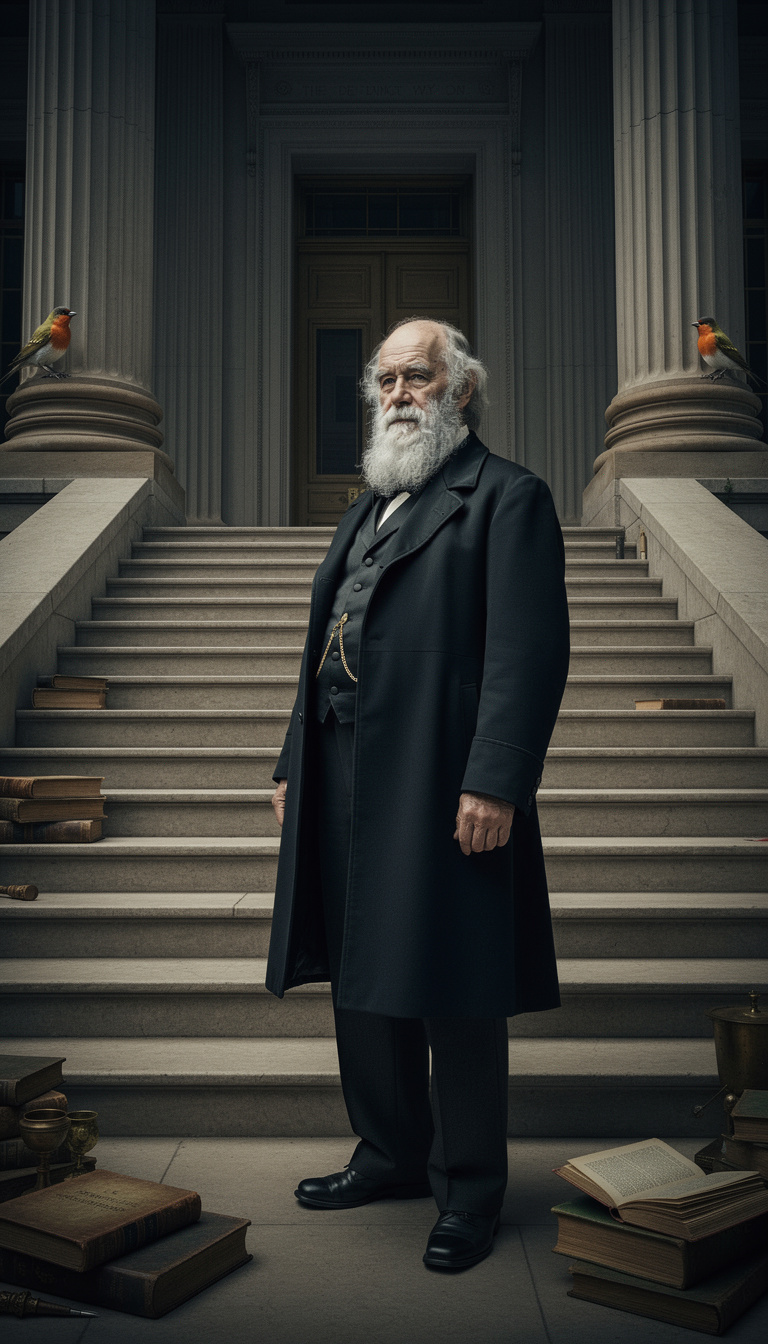 Charles Darwin
On July 10, 1925, the Scopes Trial opened in Tennessee — a public clash over teaching evolution. Ideas do not only live in books. They walk into schools, laws, and arguments about who we are.
 Nikola Tesla
On this day in 1856, Nikola Tesla was born. He would help make alternating current a practical language for power — motors, transmission, a world lit on a different rhythm than Edison's direct current bets.
 Cleopatra VII
Train your eye: one detail is from the wrong century.
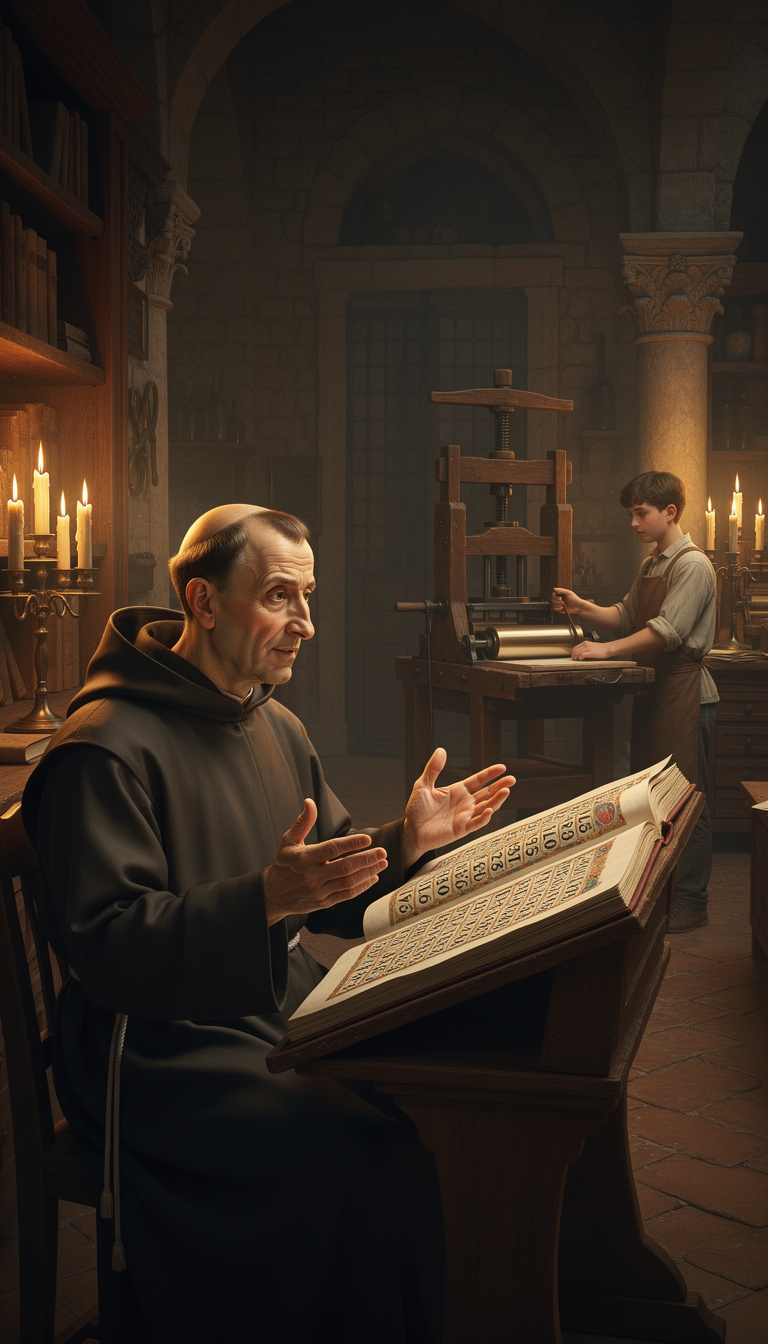 Luca Pacioli
Nel 1494, a Venezia, la mia Summa de Arithmetica vedeva la luce — non un giorno preciso come oggi, ma un'estate che cambiò il commercio europeo. Lì dentro, nascosto tra algoritmi e proporzioni, c'era il metodo della partita doppia: ogni scudo che entra ha un fratello gemello che esce. Nessun mercante più solo con la memoria traballante. Non inventai io questo sistema — i veneziani lo coltivavano da secoli. Ma lo ordinai, lo spiegai, lo diedi alle stampe. La chiarezza è anche un atto di carità.