July 28, 1952 · Today in history
Dramatized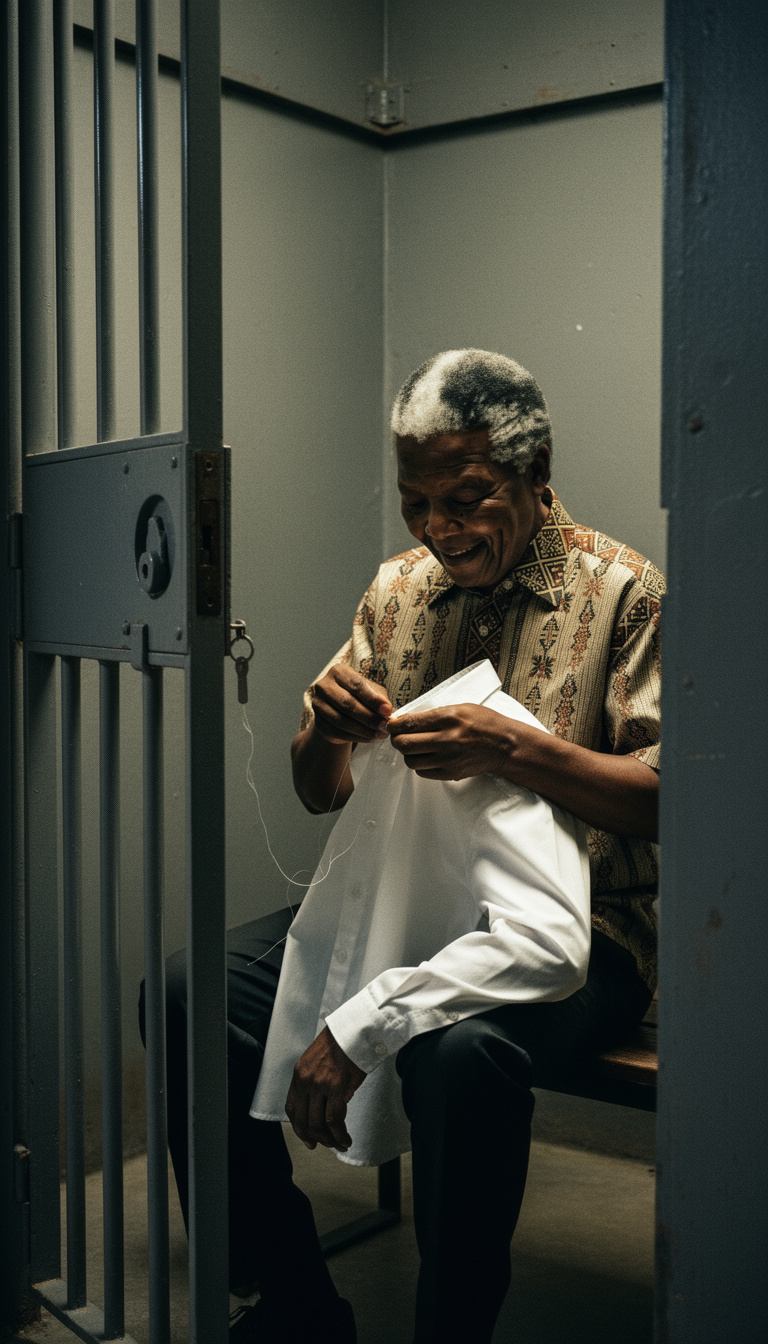
July 28, 1952. The Defiance Campaign is twelve days old, and I have discovered that jailhouse laundry shrinks a man more than fear ever could. My shirt—good cotton, bought for court appearances—has lost two collar buttons to a cell door latch. I sewed them back this morning with thread from Winnie's last letter envelope. A small tyranny, losing buttons. But I find myself smiling: the state holds my body, yet I have chosen which thread repairs my collar. We are eight thousand now, maybe more. Curfews broken, benches occupied, passes burned. The knees I scraped on Marshall Square concrete have scabbed over. Each arrest is a small education: how a policeman's hands shake when he must arrest a schoolteacher in front of her pupils; how the jailer cannot meet your eyes at breakfast. Power, I am learning, has a glass jaw. My comrade Sisulu says I hum when I sew. I do not notice. Perhaps it is the only song they have not taken.
Explain more
The Defiance Campaign of 1952 was the first large-scale organized resistance against apartheid laws, using deliberate civil disobedience. Volunteers deliberately broke racial segregation laws—entering 'Europeans Only' post offices, railway stations, and breaking curfew—knowing they would be arrested. The goal was to overwhelm the prison system and demonstrate the moral bankruptcy of apartheid. Nelson Mandela, then 33, was National Volunteer-in-Chief and one of the most visible leaders. The campaign transformed him from a rising lawyer into a national figure and taught him the practical mechanics of nonviolent resistance, mass organization, and the psychological dynamics of confronting state power directly.
Why it matters
This campaign proved that ordinary people, acting together with discipline, could make an unjust system visible and fragile. It was Mandela's apprenticeship in turning personal dignity into collective power.
Try today
Notice one small repair you make today—physical or relational—and do it with deliberate care. Dignity lives in such details.
What is true / dramatized: Dramatized. Educational entertainment — not a primary historical source.
Defiance Campaign, 1952; Mandela as National Volunteer-in-Chief; mass arrests and civil disobedience against apartheid laws
Difficulty: medium · ~5 min
Related
 Albert Einstein
On this day in 1955, the Russell–Einstein Manifesto called scientists and citizens to face the danger of nuclear war with clear eyes. Knowledge without responsibility is incomplete. The manifesto asked a blunt question: shall we put an end to the human race, or shall we renounce war?
 Cleopatra VII
Actium was not only a battle. It was a hinge. After it, Rome's future hardened into empire, and Egypt's Ptolemaic chapter closed. Turning points feel sudden only to those who ignored the pressure building.
 Charles Darwin
On July 10, 1925, the Scopes Trial opened in Tennessee — a public clash over teaching evolution. Ideas do not only live in books. They walk into schools, laws, and arguments about who we are.
 Nikola Tesla
On this day in 1856, Nikola Tesla was born. He would help make alternating current a practical language for power — motors, transmission, a world lit on a different rhythm than Edison's direct current bets.
 Cleopatra VII
Train your eye: one detail is from the wrong century.
 Luca Pacioli
Nel 1494, a Venezia, la mia Summa de Arithmetica vedeva la luce — non un giorno preciso come oggi, ma un'estate che cambiò il commercio europeo. Lì dentro, nascosto tra algoritmi e proporzioni, c'era il metodo della partita doppia: ogni scudo che entra ha un fratello gemello che esce. Nessun mercante più solo con la memoria traballante. Non inventai io questo sistema — i veneziani lo coltivavano da secoli. Ma lo ordinai, lo spiegai, lo diedi alle stampe. La chiarezza è anche un atto di carità.