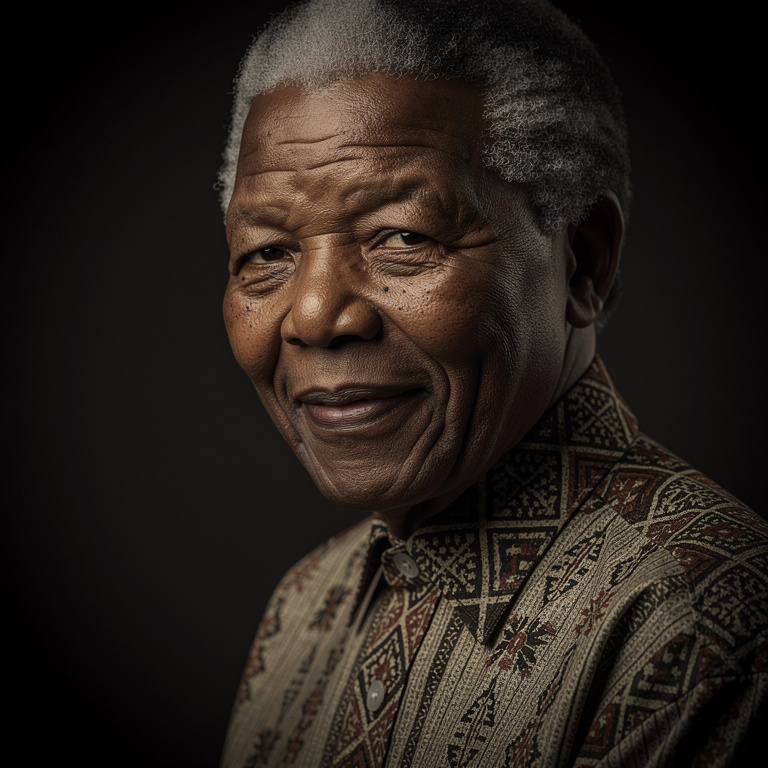
Nelson Mandela
1918–2013
Anti-apartheid leader who practiced long patience and costly reconciliation — power after suffering without revenge as policy.
Story so far
Follow Life of Nelson Mandela- 1918personal
Born in Mvezo
- 1944work
Co-founds ANC Youth League
- 1952highlight
Defiance Campaign prominence
- 1956controversy
Treason Trial
- 1961work
Co-founds uMkhonto we Sizwe
- 1964highlight
Sentenced to life imprisonment
- 1990highlight
Released from prison
- 1993highlight
Nobel Peace Prize
- 1994highlight
Elected President of South Africa
- 1995work
Truth and Reconciliation Commission
- 1999legacy
Steps down as president
- 2013death
Death and global mourning
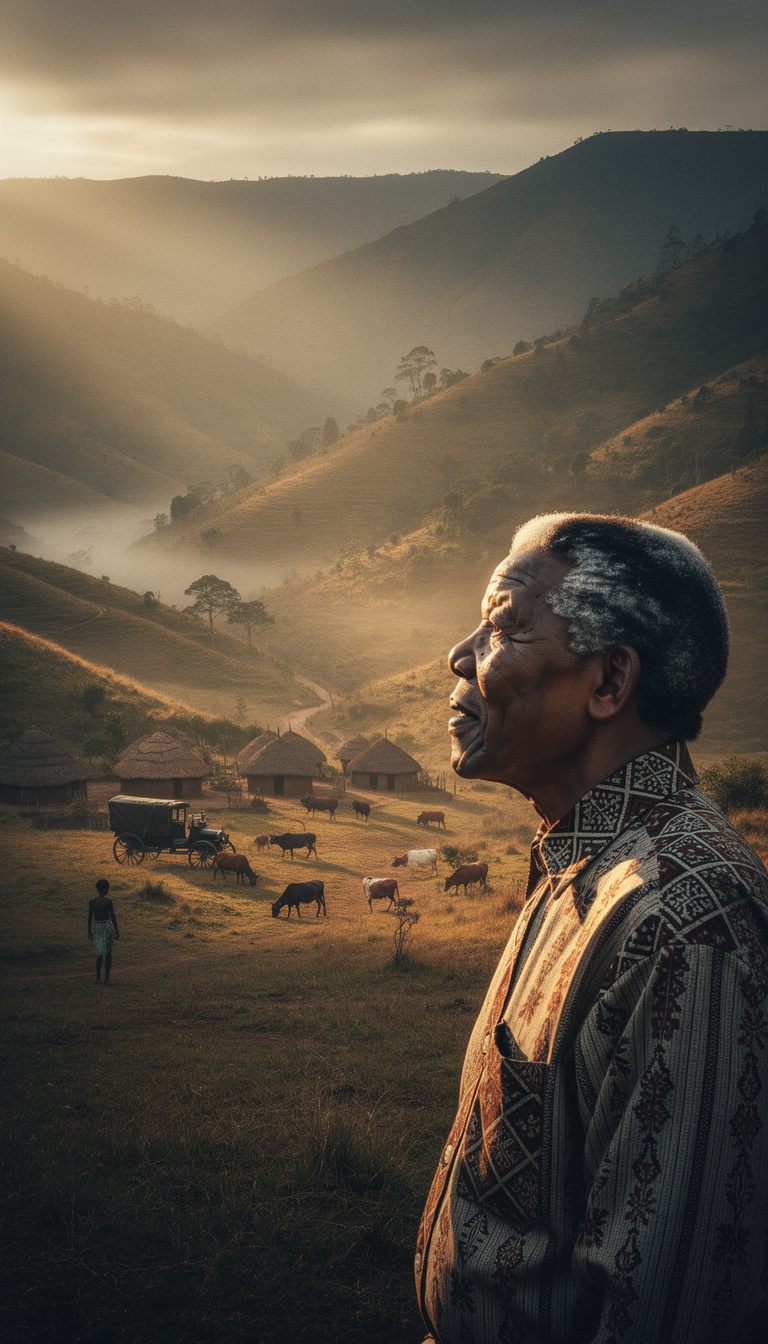
1918 — Born into Thembu royalty
I was born Rolihlahla—'troublemaker,' they named me—in the dusty hills of Mvezo, where the Mbashe River winds through Thembu country. My father was a councillor to the acting king, my mother one of four wives. I was not the heir, merely a branch on a royal tree. Yet even then, I felt the weight of watching. My father had a stubbornness I inherited; he lost his chieftaincy over a dispute with a magistrate, and we were sent to Qunu, poorer but freer. What I did not yet understand: a name is not destiny, and privilege unearned is a chain disguised as a crown. I was becoming someone who would measure authority not by birthright, but by what one builds with others.
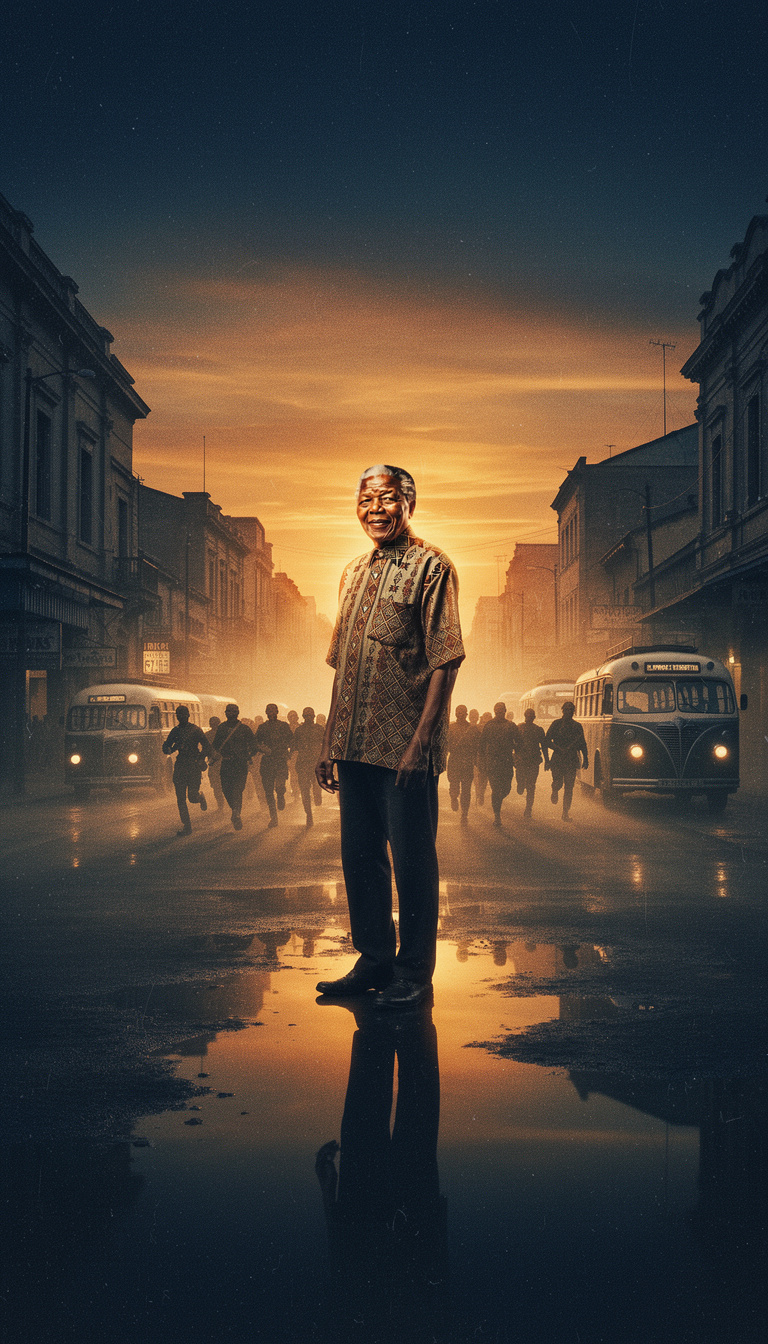
1943 — Joins the African National Congress
I was twenty-five, a young lawyer in Johannesburg with a new degree and an old impatience. The Alexandra bus boycott found me marching—miles through the winter dark, feet aching, refusing the fare increase of one penny. We walked for nine days. Twenty thousand of us. And we won. That same year, I joined the African National Congress. Not as a revolutionary—no, I entered through the door of grievance, like so many others. The boycott taught me what organized collective will could achieve. I was becoming a man who measured progress not by speeches given, but by miles walked alongside ordinary people who refused to accept less than their dignity. I still spoke too fast in those days, my temper quick, my Thembu pride easily pricked. But I was learning to listen. The long walk had begun.
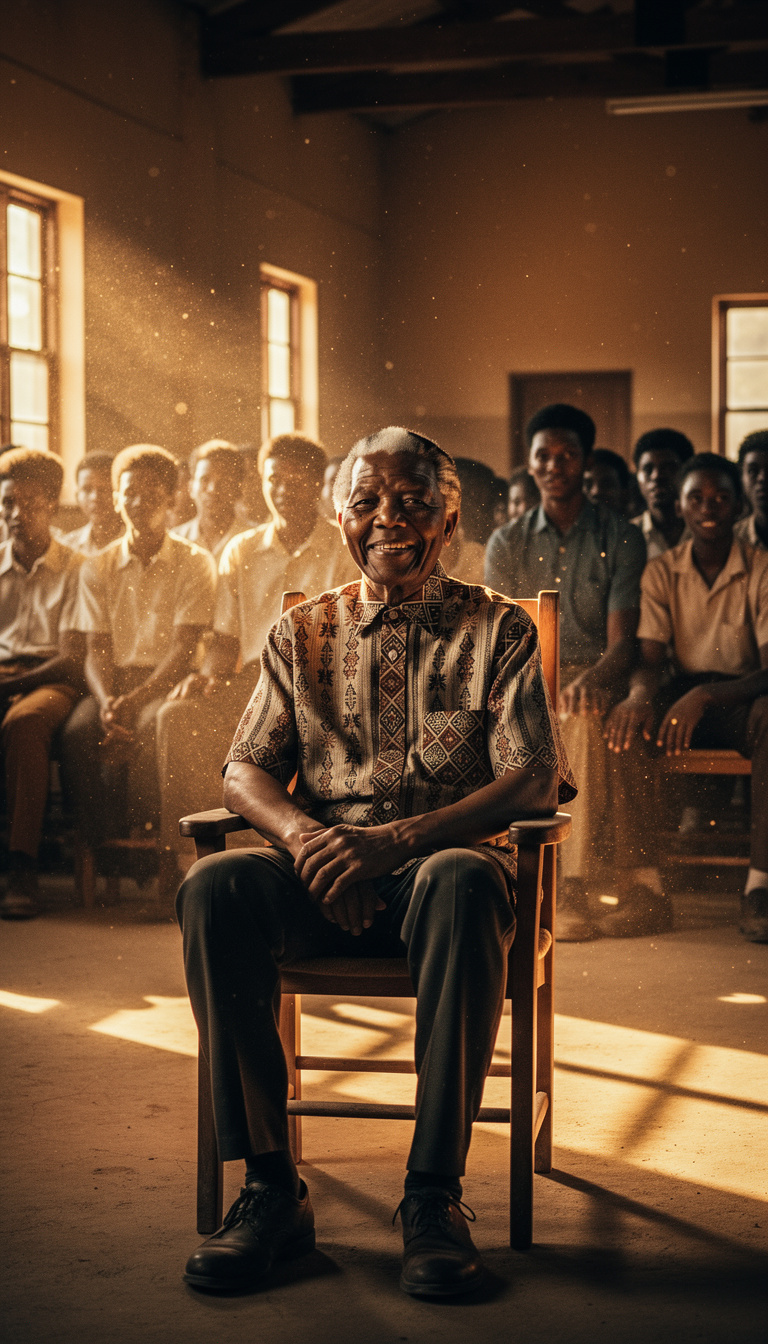
1944 — Co-founds the ANC Youth League
I was twenty-six, still polishing my law degree and my arguments in equal measure, when a handful of us gathered in the Bantu Men's Social Centre that Easter Sunday. Walter, Oliver, Anton Lembede—we were young enough to be impatient, old enough to know that impatience without structure is merely noise. Lembede spoke of African nationalism with a fire that made the room feel small. I found myself elected to the executive committee almost before I had settled my coat. What I did not yet understand was that this league would teach me discipline—the difference between wanting change and building the machinery to demand it. I was becoming a man who measured his words because he intended to keep them. My father had warned me that a Thembu who cannot listen is merely a shouting chief. That year, I learned to shout less and organize more.
1952 — Leads the Defiance Campaign
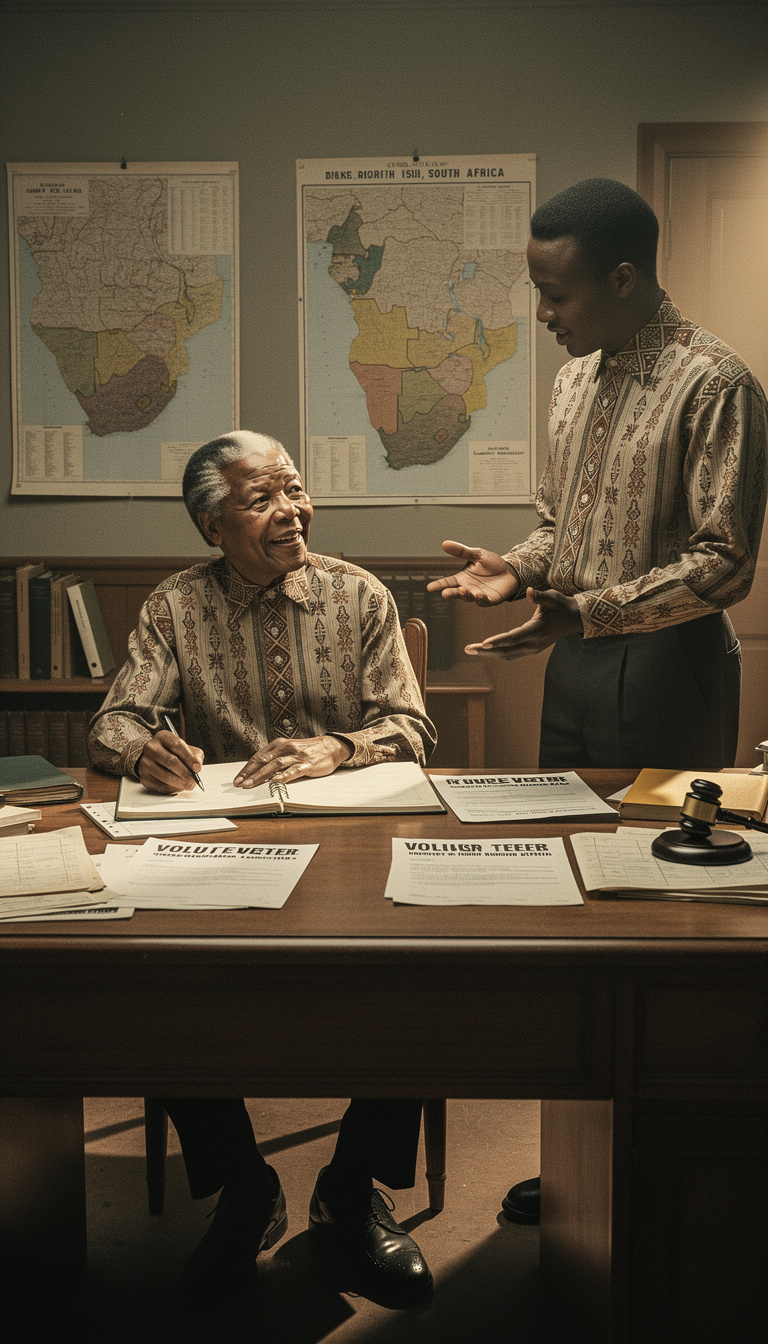
Johannesburg, winter of '52. I am thirty-four, and the law office I share with Oliver Tambo has become a war room of warrants and wills. We have trained over eight thousand volunteers to break the pass laws deliberately, peacefully, and in daylight. I chose the Eastern Cape for my own arrest—home soil, where my father is buried and where the police know my face from boyhood. The cell is cold. The magistrate calls me 'Mandela' with that particular tone they reserve for natives who read too many books. I answer him in Afrikaans, then English, then isiXhosa—each language a small revolution of courtesy. This is my craft now: to refuse hatred while refusing submission. Oliver teases me that I polish my court shoes before every arrest. He is not wrong. Dignity is a discipline, not a mood. Eight thousand of us. Shop assistants, miners, grandmothers with passes they were never meant to carry. When they arrested me in Boksburg, a crowd gathered outside the station singing. I hummed the same tune through the night, feet aching from the day's marching. Had I only known how many more nights awaited.
1956 — The Treason Trial Begins
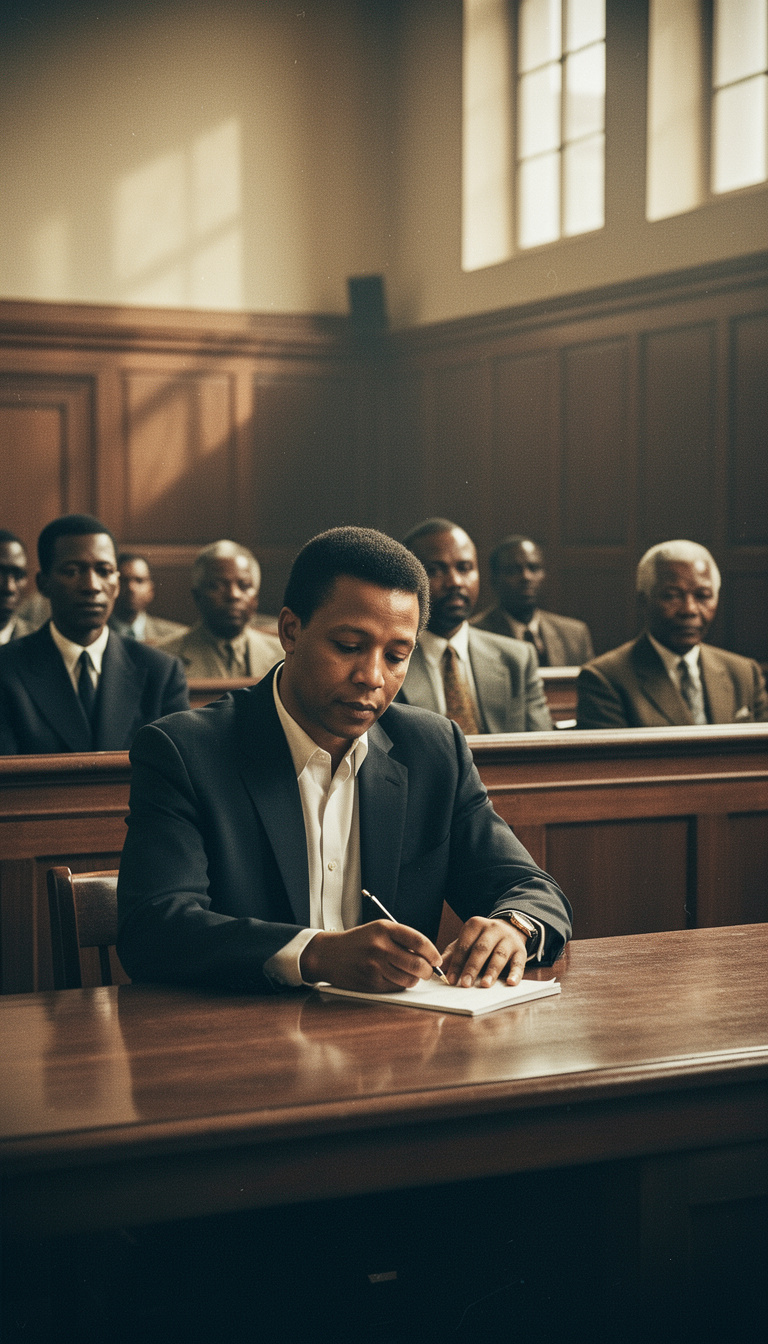
December. They come before dawn—police with lists, knocking at doors across the country. I am thirty-eight, and they find me in my Orlando home, still pulling on my shirt. One hundred and fifty-six of us arrested, charged with high treason. The penalty is death. The trial will drag four years. I sit in that Pretoria courtroom, taking notes in my small neat hand, watching the prosecutors fumble for a conspiracy that does not exist. We sing in the breaks—Nkosi Sikelel' iAfrika—our voices filling the marble hall until the judges scowl. My law partner Oliver Tambo is already in exile, building our case from London. I miss his counsel at the defendants' bench, yet I discover something: I can carry calm into chaos. The state wants us desperate. I choose methodical. They will fail to prove treason. Had I only known how many more trials awaited, I might have laughed louder that first morning.
1961 — The Spear of the Nation
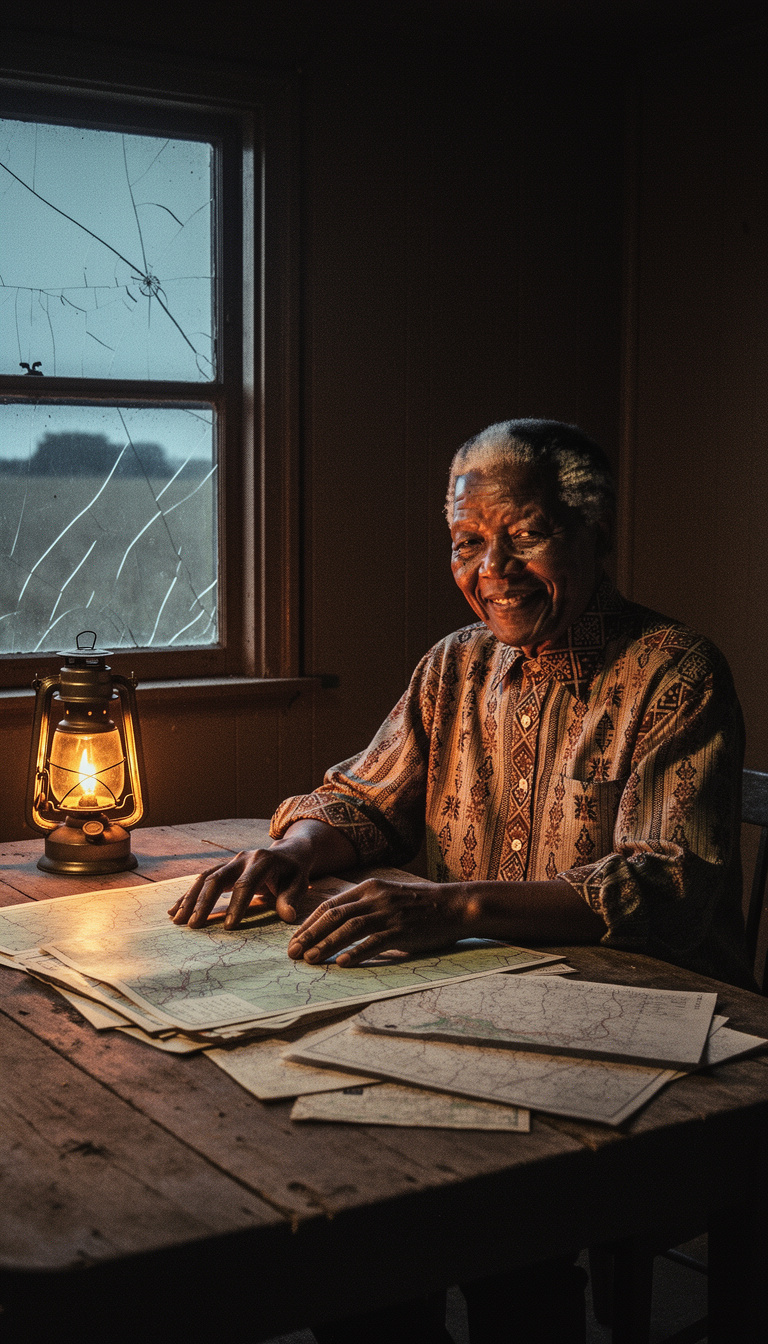
I am forty-three, and my patience has worn thin as the wire around Sharpeville. For ten years I have spoken of peace, worn the suit, filled the courtrooms—yet they answer us with bullets and banning orders. Now, in a farmhouse outside Johannesburg, we meet in whispers. I am no soldier, but I have become one. We call it uMkhonto we Sizwe—the Spear of the Nation—and I tell the comrades: sabotage, not killing. Blow the pylons, not the people. I still wake at four, still take my morning exercises in the small hours, but now I check the roads before I run. My father was a councillor; I have become something the councillors would not recognize. Had I only known how long this road would be. The press will call me terrorist. Let them. I have buried the word in my own mouth first, weighed it, found it bitter but necessary. Non-violence is not a principle with me—it never was. It was a strategy, and the strategy has failed. I do not sleep well anymore. That is the price.
1964 — Life Imprisonment
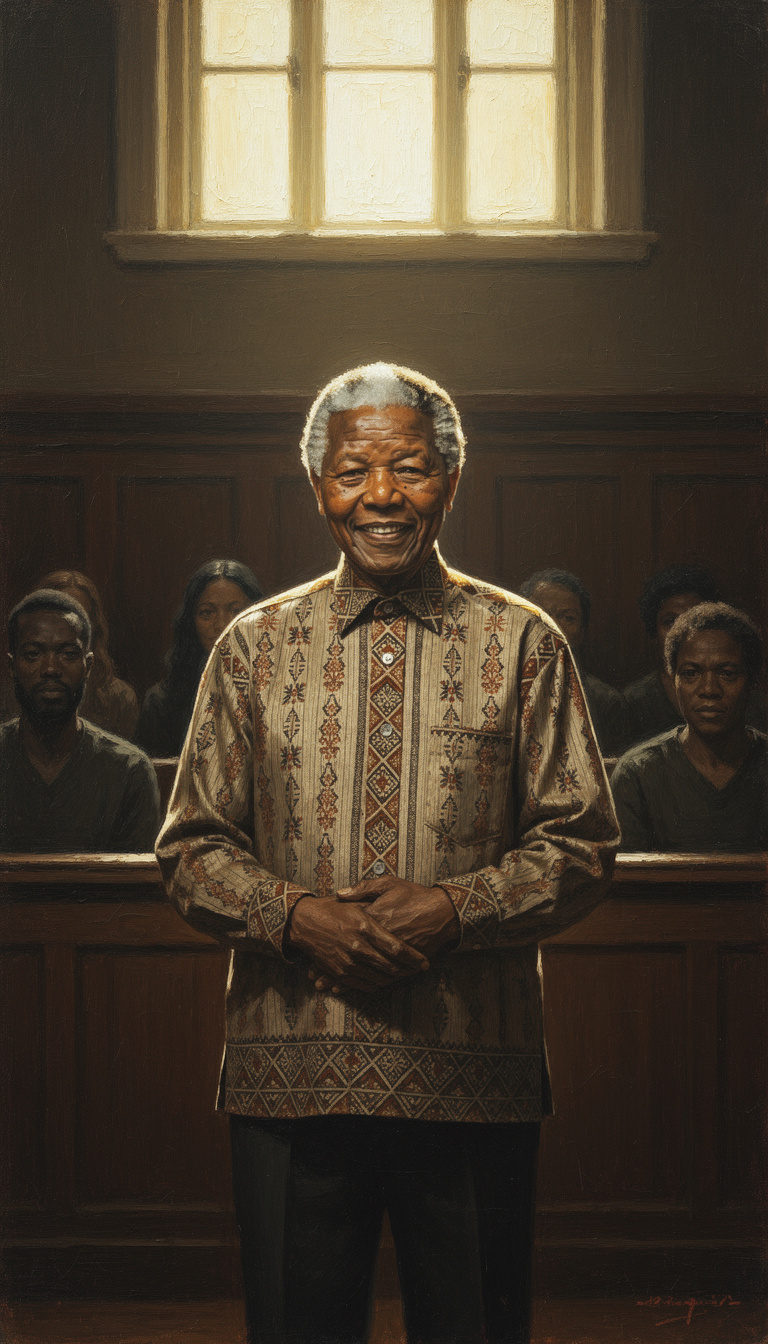
June 12. The courtroom smells of polish and fear. I am forty-five, and Justice de Wet has just spoken the words: life imprisonment. The women in the gallery—Winnie among them—do not weep aloud. That is how we are trained now, all of us, to swallow the sound of breaking. I came to this dock expecting death. I told them so: I am prepared to die. It was not bravado. It was arithmetic. Twenty-seven years of speaking, of organizing, of the long walk from village school to this cage—they do not add up to surrender. But they did not give me death. They gave me time. Mountains of it. And I find, strange as it is, that I am still smiling. Not at them. At the absurdity of thinking you can bury a seed and call it finished. They will move me to an island tomorrow, perhaps. The sea will be between me and everything I love. Yet I keep touching my jaw—this habit when I am thinking hard—feeling the bone beneath my skin, reminding myself I am still here. Had I only known how long the walk would be.
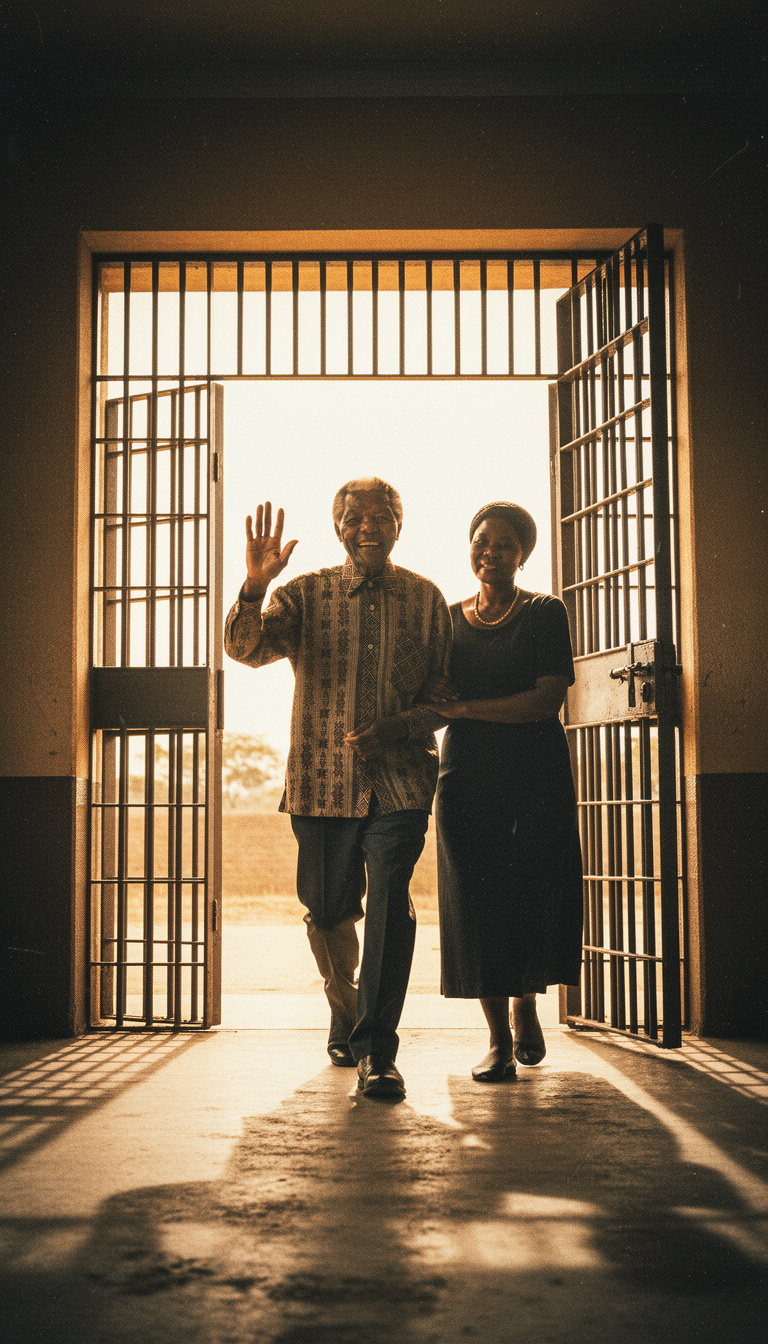
1990 — Walk to Freedom
February 11. I am seventy-one, and the sun on my face at Victor Verster feels almost violent after twenty-seven years. My hand trembles not from fear—Winnie holds it firm—but from the sheer unfamiliarity of choosing where to step. The crowd roars. I raise a fist from habit, then catch myself. I must become a different man now: not the prisoner who endured, but the leader who builds. They expect rage. I practiced patience for too long to waste it on spectacle. My eyes find de Klerk's in the distance. We are enemies who must become partners, or we bury the nation together. I walk slowly. A man in a hurry learns nothing.
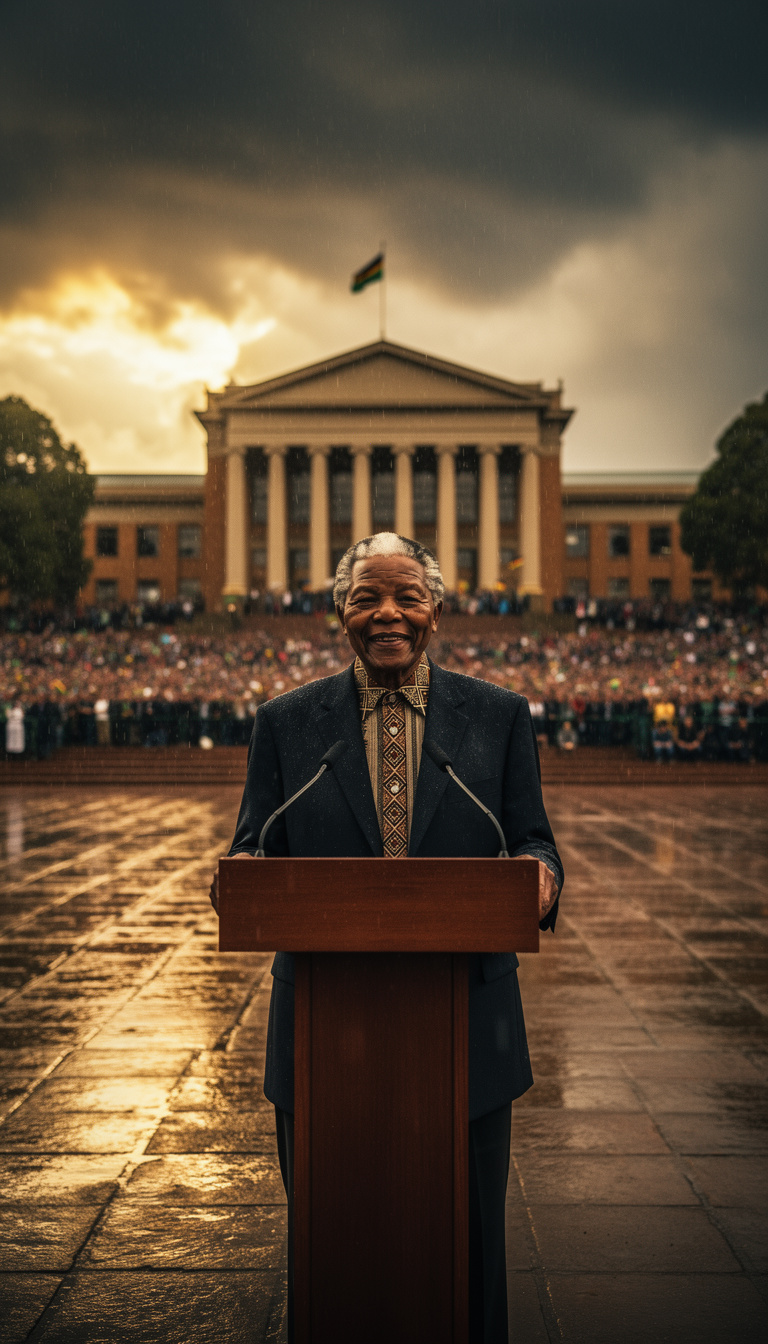
1994 — The Inauguration
May 10. I am seventy-five, and the amphitheatre at the Union Buildings smells of rain on hot stone. When Chief Justice Corbett administers the oath, my voice does not tremble—but my chest does, beneath this borrowed morning coat. I catch sight of my jailer from Robben Island in the second row. We exchange the smallest nod. The crowd roars, yet what I hear is the silence of twenty-seven years: the warder's footsteps, the quarry dust in my lungs, the letters I wrote that never arrived. I have learned that power reveals what prison conceals. In a cell, you may believe yourself patient, generous, above resentment. Only when the cell opens do you discover if this is true. I am still discovering. My grandchildren tug at my sleeve afterward, impatient for cake. I let them. The shirt I wear is Madiba-style, loud with colour—Oliver used to tease me for dressing like a gardener at state functions. Today I dress for the gardeners.
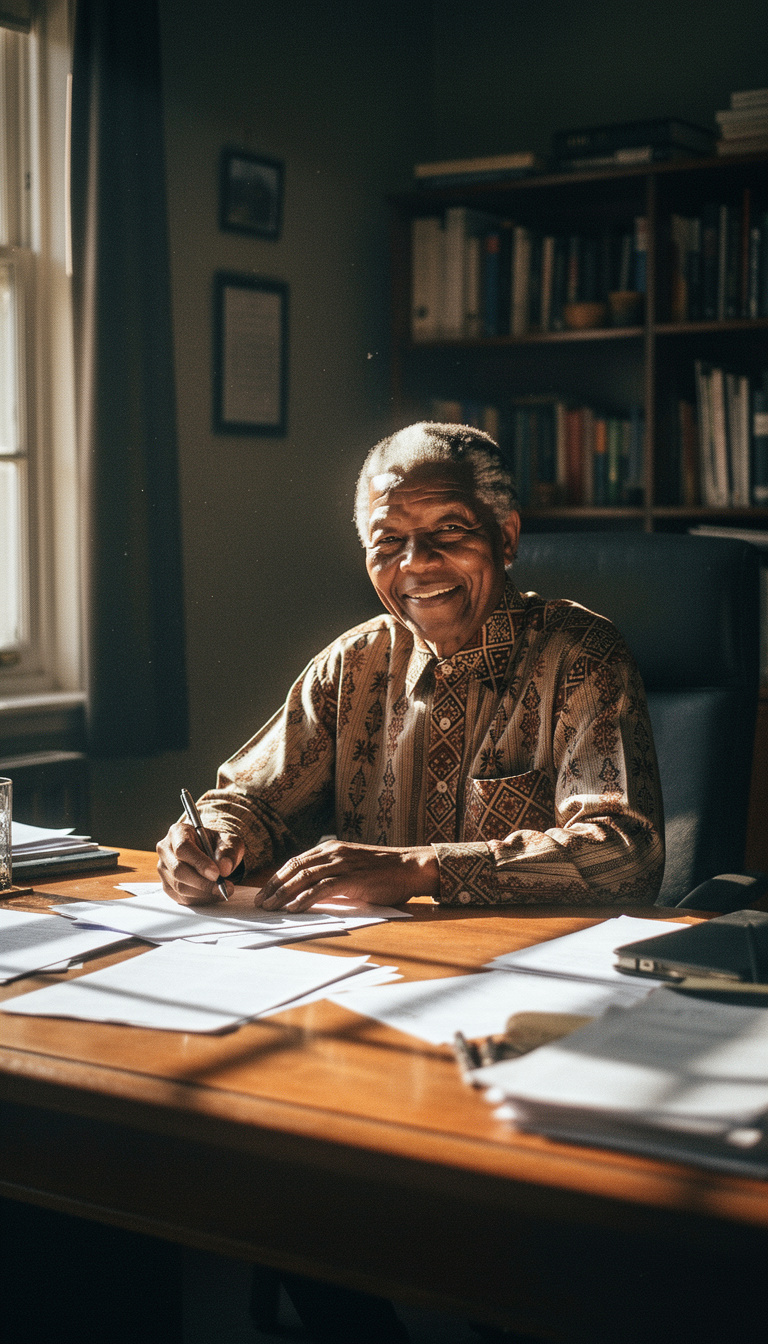
1995 — The Truth and Reconciliation Commission
July. I am seventy-six, and the winter light in Pretoria falls flat and white across my desk. I have signed the act creating the Truth and Reconciliation Commission, and now I sit with the pen still uncapped, turning it slowly in my fingers—a habit from Robben Island, where a pen was treasure and time was weight. My comrades ask me: why truth before justice? Why let the torturer speak and walk free? I hear their anger. I carry it. But I have seen what revenge harvests. I have felt it hot in my own chest, in the years when the warders walked past my cell. Revenge would have been sweet. It would also have been a second prison—one we built ourselves, brick by brick, body by body. The TRC is not mercy without cost. It is the cost we choose so that the cost stops compounding. What surprises me still: I did not know if I could do this until I did it. The man who left prison in 1990 wanted many things—some of them contradictory, some of them wrong. The man signing this paper has learned that leadership is not having all answers prepared. It is preparing yourself to choose between pains, and owning the choice.
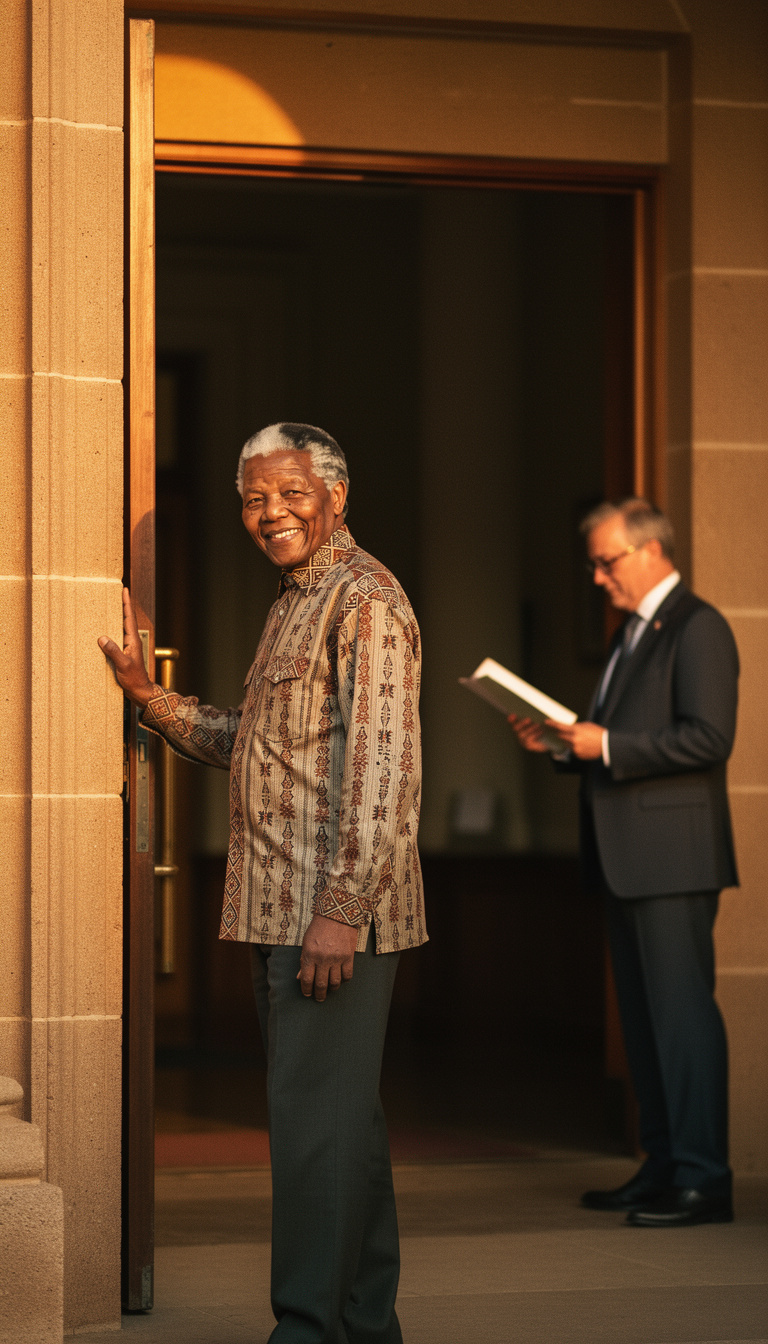
1999 — The Step Down
The desk at the Union Buildings has accumulated its small tyrannies—papers I must sign, hands I must shake, ceremonies that swallow whole mornings. I have learned that power has this trick: it convinces you that you are indispensable, and then it quietly hollows you while you are still standing. I have watched men cling to chairs until their fingernails bleed. I will not be among them. Thabo is ready. This is not sentiment; I have tested him, argued with him, observed whether ambition outruns judgment. It does not. The party wished me to continue. The crowds would have cheered. But I remember Robben Island—twenty-seven years that taught me the mathematics of time. How much is enough? When does service become performance? I have my answer. Tomorrow I begin again: the foundation, the villages without water, the young men dying unnamed from a disease we barely name aloud. I am becoming, at last, simply a man with remaining work. It is the most honest office I have held.
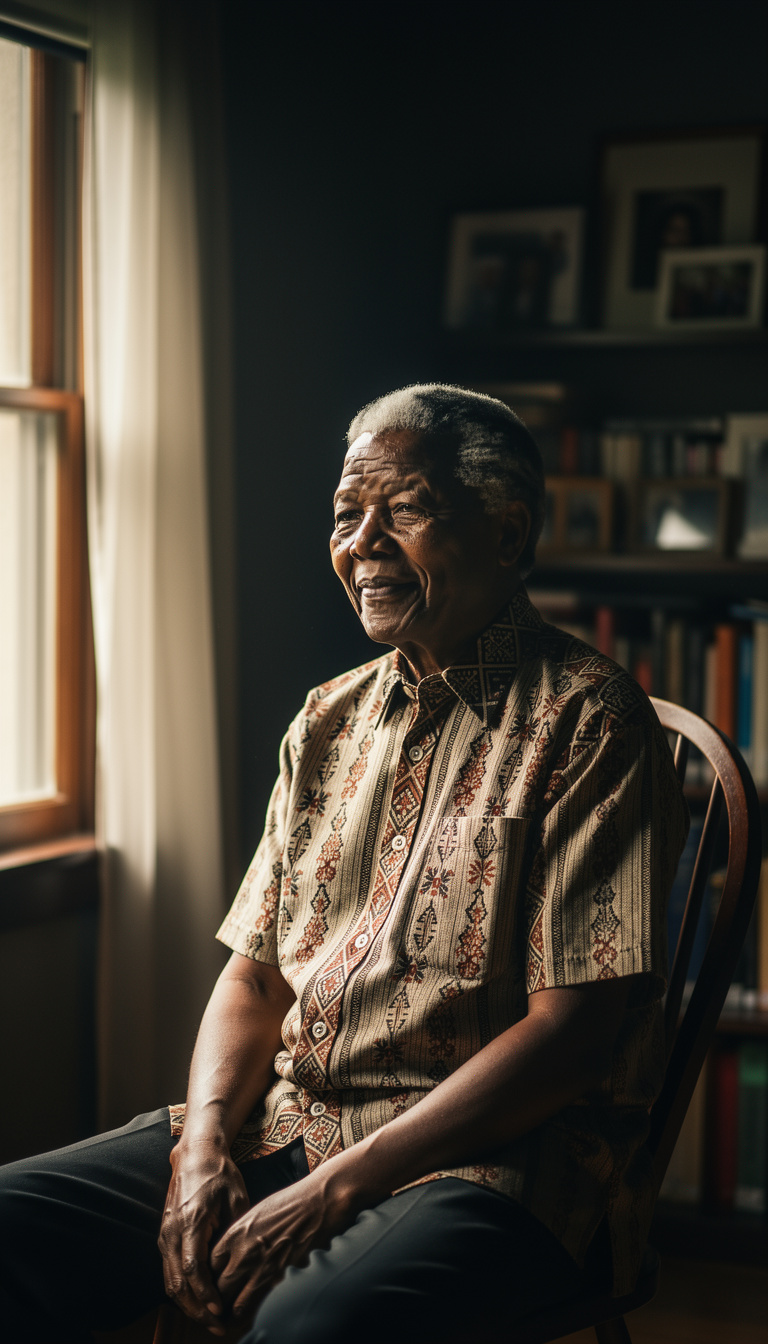
2013 — The Long Walk's End
I am ninety-four, and the light in my Houghton bedroom falls differently now—thin, patient, the color of old ivory. The children who were not yet born when I walked through Victor Verster's gates now lead nations, argue in parliaments, post their small revolutions on screens I barely understand. I find this proper. A seed should not recognize the tree. They have given me two hundred and fifty honors, the Nobel among them. I accepted these not for myself—my hands shook less with pride than with the weight of those who did not survive to stand beside me. Walter. Oliver. The nameless thousands. The medal sits in a drawer; what matters is that a prisoner became president, that revenge became reconciliation, that a man could learn to see his jailer as a fellow human. What I was becoming, I now see, was not a saint. I was becoming proof that dignity outlasts chains. That is enough.
Posts
Today in history
July 28, 1952. The Defiance Campaign is twelve days old, and I have discovered that jailhouse laundry shrinks a man more than fear ever could. My shirt—good cotton, bought for court appearances—has lost two collar buttons to a cell door latch. I sewed them back this morning with thread from Winnie's last letter envelope. A small tyranny, losing buttons. But I find myself smiling: the state holds my body, yet I have chosen which thread repairs my collar. We are eight thousand now, maybe more. Curfews broken, benches occupied, passes burned. The knees I scraped on Marshall Square concrete have scabbed over. Each arrest is a small education: how a policeman's hands shake when he must arrest a schoolteacher in front of her pupils; how the jailer cannot meet your eyes at breakfast. Power, I am learning, has a glass jaw. My comrade Sisulu says I hum when I sew. I do not notice. Perhaps it is the only song they have not taken.
Today in history
July 27, 1952. The Defiance Campaign is eleven days old, and my knees have learned the texture of jailhouse concrete. We have broken curfew, entered 'Europeans Only' posts, sat where sitting was forbidden. Eight thousand volunteers so far — more than we dared hope. The police grow clumsy with surprise; they expected a few hundred troublemakers, not grandmothers and clerks lining up to be arrested. I am thirty-four, and my suit is rumpled from nights in holding cells. Oliver Tambo teases me that I have developed a 'criminal's wardrobe.' I do not mind. The law we defy is the crime. My knees ache, yes — but they bend more easily now than they will at seventy, and they bend for something.
Today in history
July 25, 1995. The TRC Act is ten days old. I find myself still turning the pen in my fingers—old Robben Island habit, that. The ink is dry, but the stories are only beginning to surface. My desk overflows with files: a policeman's confession, a mother's unanswered letter, a photograph of a son who never came home. I have learned that signing your name is easy. Living with what you have signed—that is the long walk. Winnie teases me that I frown in my sleep now. She is not wrong. But I remind her: we did not choose the easy road in '43 when we joined the Congress, nor in '52 when we defied pass laws. We chose the road that leads somewhere. Even here, especially here, in this winter of listening.