173 years ago · 1853 — Royal Society, London
Historically grounded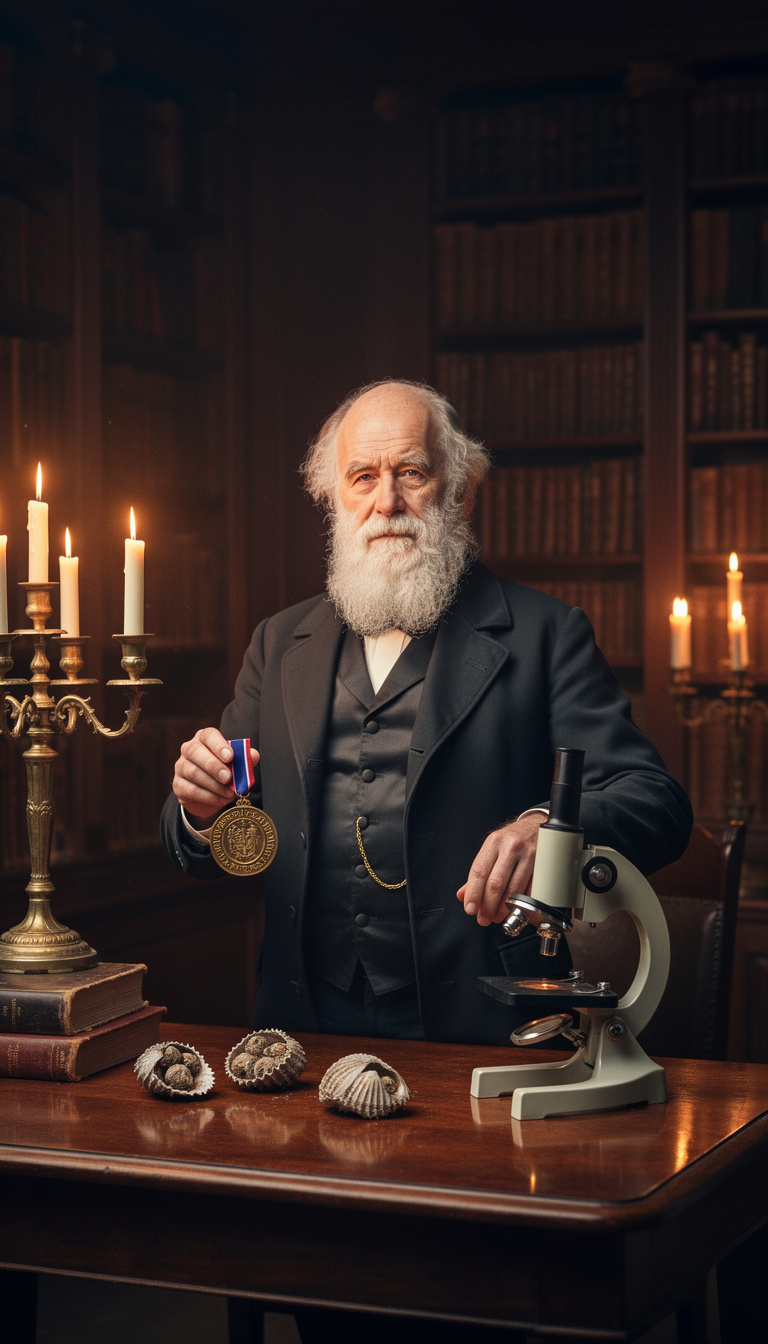
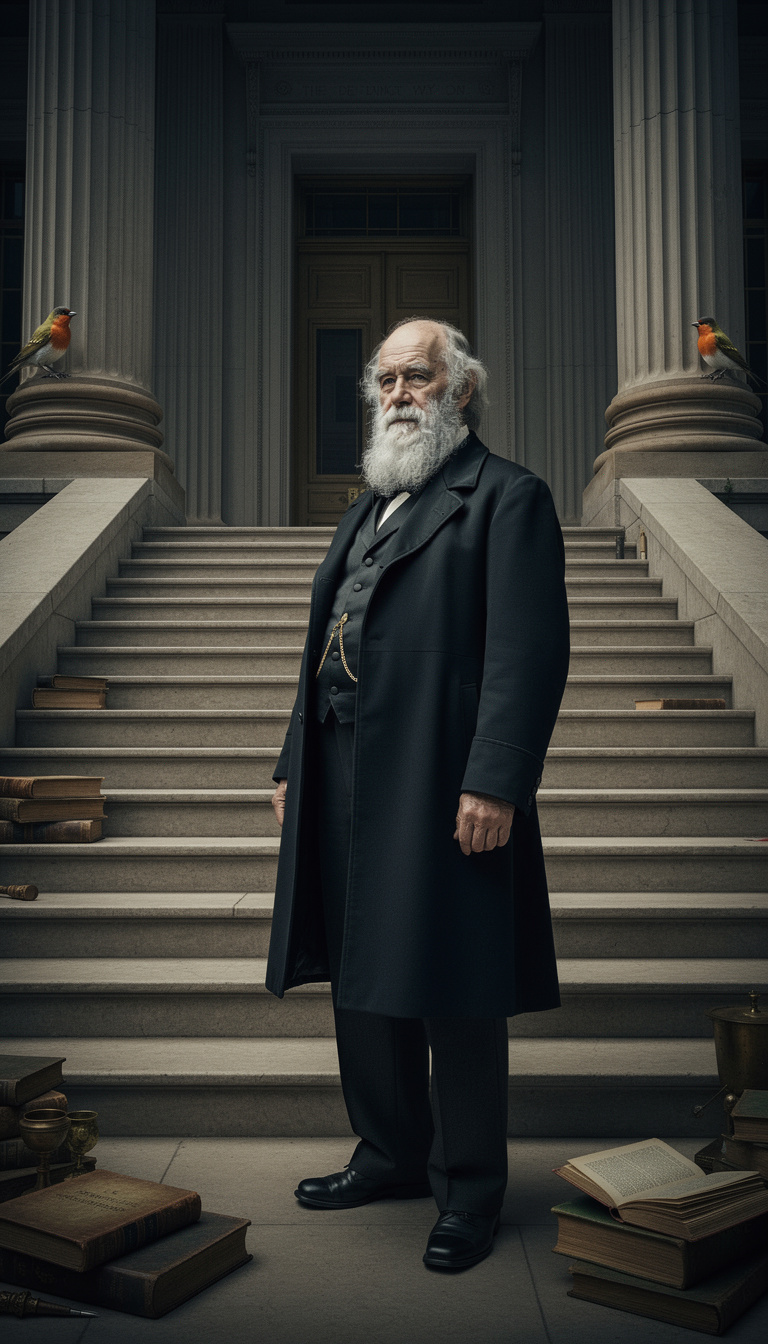
This evening I stood before the Fellows of the Royal Society and received the Royal Medal. For what, you ask? For eight years of staring at barnacles through a microscope, and for a theory of coral reefs I devised without ever having laid eyes on a living reef. The absurdity is not lost on me. I am forty-four. My beard has gone quite grey from these pursuits. The barnacle work began as a taxonomic whim and became an obsession — every species dissected, every larval stage traced. My children once asked whether I would soon classify our household cat. (I declined. Barely.) The medal means recognition, yes. But it means something quieter too: that patience itself can be a method. I have published little on species transmutation. That manuscript stays locked in my study drawer, growing, waiting. Yet this medal tells me that careful, unglamorous labour builds the trust upon which bolder claims may one day rest. One does not rush to the summit without first mapping the foothills.
Explain more
The Royal Medal was one of the Royal Society's highest honours. Darwin received it specifically for his monographs on living and fossil barnacles (1851–1854) and his 1842 book on coral reef formation — both demonstrating meticulous empirical method.
Why it matters
In 1853, Darwin was still privately developing natural selection theory (since 1838). The medal established his scientific credibility precisely when he needed institutional standing for the revolutionary work to come.
Try today
Pick one small, unglamorous observation and pursue it with complete patience. The habit matters more than the hurry.
What is true / dramatized: Historically grounded. Educational entertainment — not a primary historical source.
Royal Society archives; Darwin's correspondence, 1853; autobiographical recollections
Difficulty: medium · ~5 min
Related
 Charles Darwin
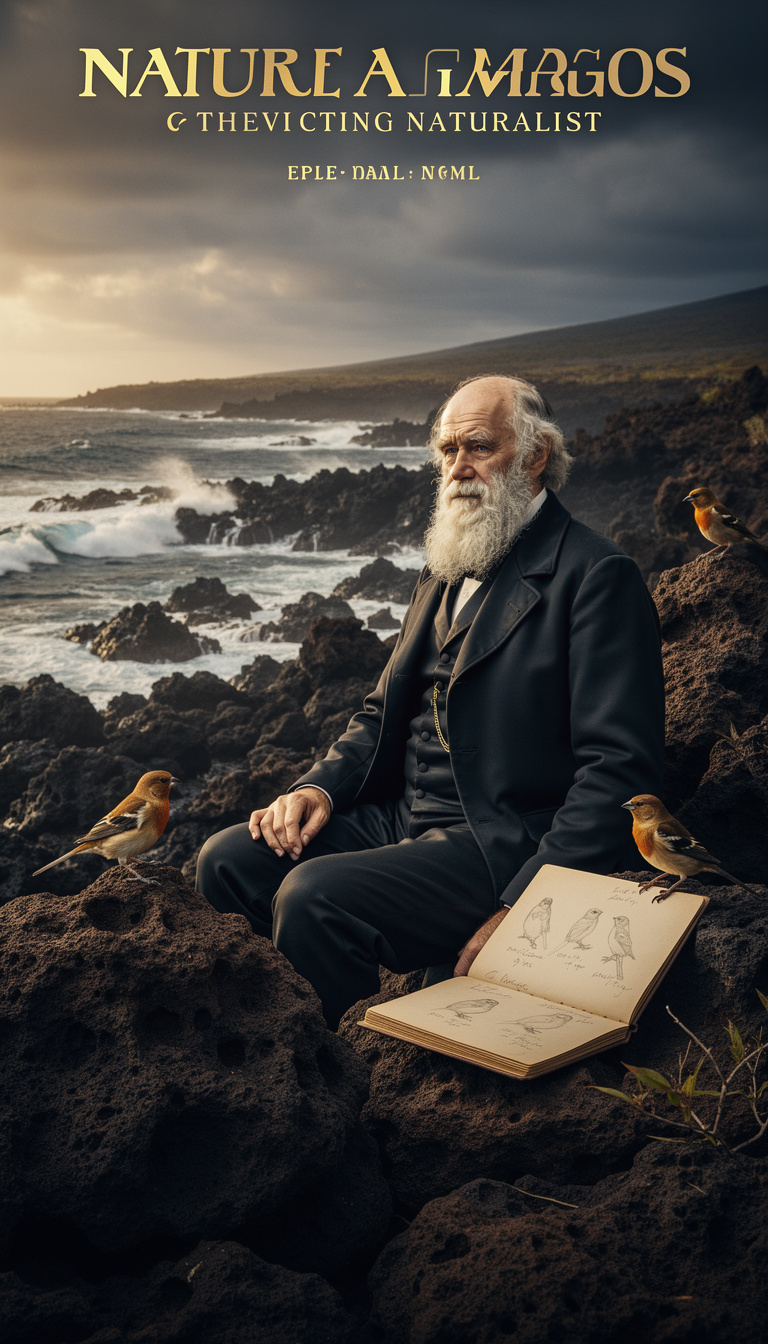
On islands, life writes variations in plain sight — beaks, shells, habits tuned to place. I did not invent change. I tried to explain how nature selects what works in a given world.
 Charles Darwin
Individuals vary. Some variations help survival and reproduction. Those traits tend to become more common. No committee designs the outcome. The environment sorts. Deep time does the rest.
 Charles Darwin
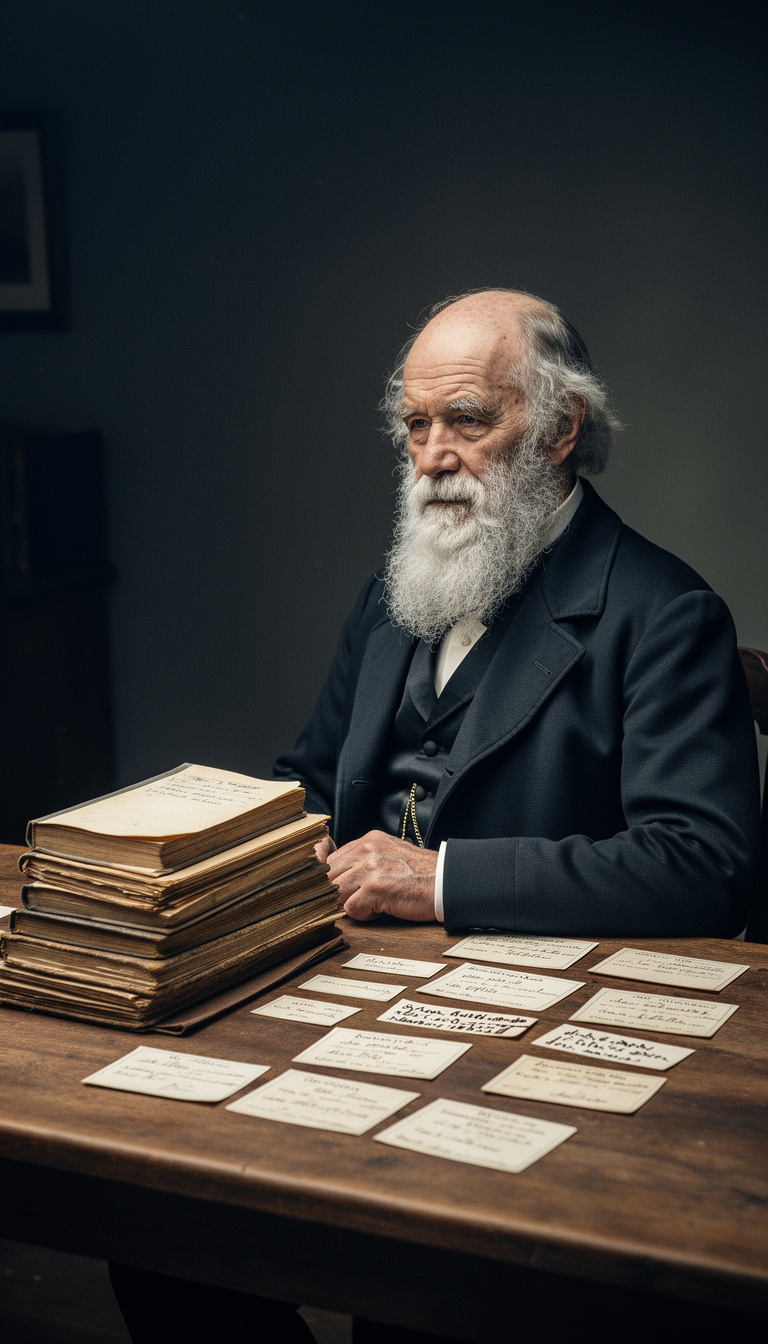
I waited years, gathering facts like a miser gathers coins — not from fear, but from respect for error. If your conclusion arrives before your evidence, you are writing fiction in science's clothing.
 Charles Darwin
On July 10, 1925, the Scopes Trial opened in Tennessee — a public clash over teaching evolution. Ideas do not only live in books. They walk into schools, laws, and arguments about who we are.
 Charles Darwin
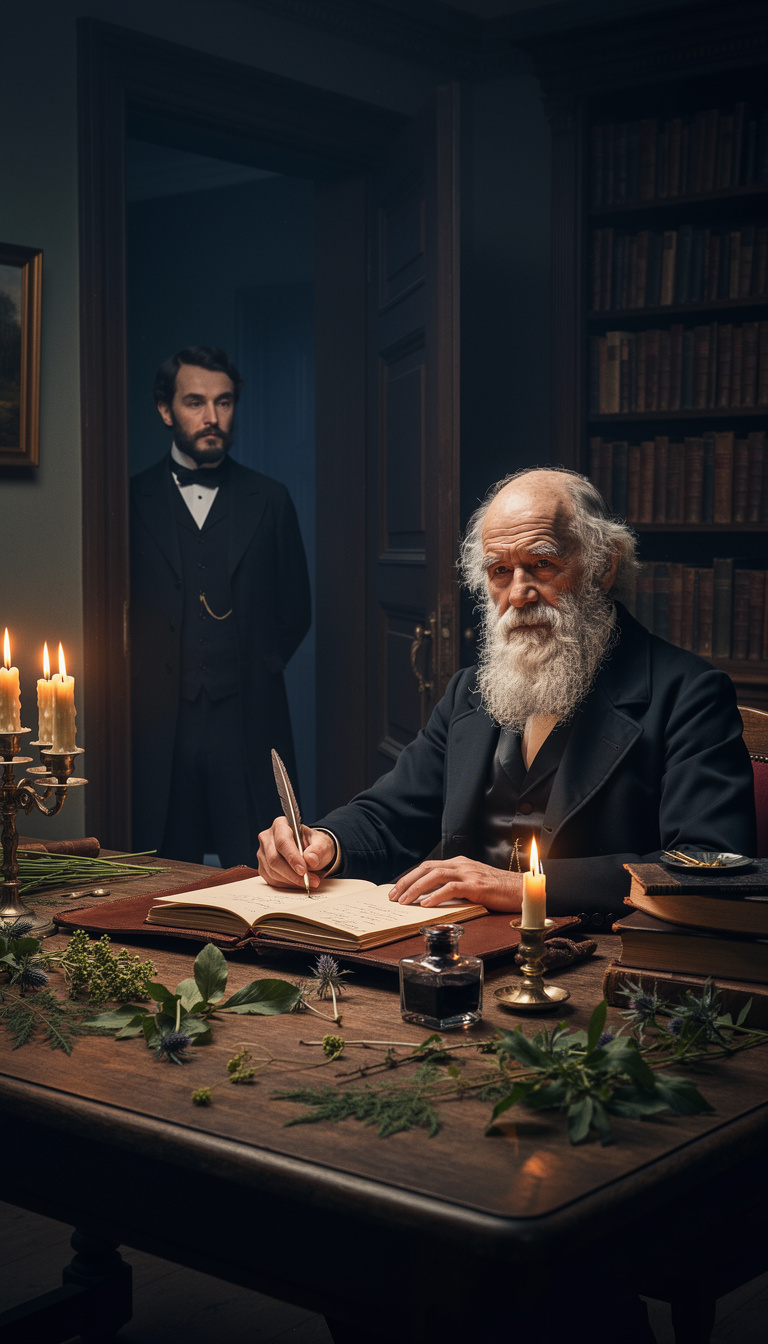
July 22, 1844 — I write this from Down House, my private notebooks on transmutation swelling with seven years of evidence. Not published, not yet. Wallace's letter still fourteen years distant. But today I confessed the full scope of my heresy to my closest friend, Joseph Hooker. 'It is like confessing a murder,' I told him. Hooker did not flinch. He listened, asked harder questions, and became the first scientist to know my secret. The murder was not against nature — it was against comfortable certainty. Every species changing, branching, dying, without divine script. I had the mechanism. I lacked the courage to print it. What I learned: a theory lives or dies by who you trust with it before the world judges. Hooker's challenge sharpened my argument. His support gave me breath. The fittest idea does not survive alone.
 Charles Darwin
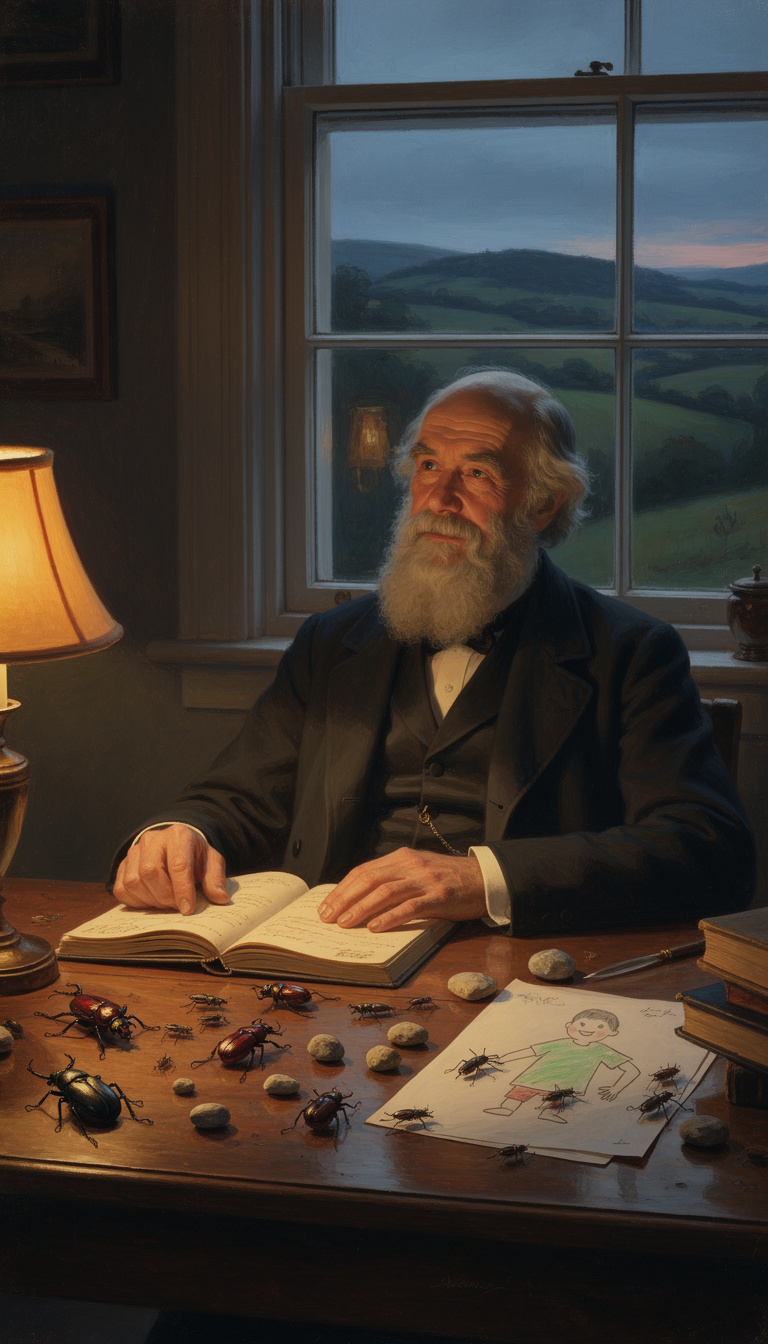
Looking back from my study at Down House, I can still smell the Shropshire earth of The Mount — that solid Georgian house where I arrived fifth of six, squalling, on a February day in 1809. My father, Robert, was already a formidable man: six feet two, weighing twenty stone, a physician who could silence a room with his practical mind. My mother Susannah, a Wedgwood, gentle and musical, would not live to see me become myself. I was a wanderer from the first. Beetles, pebbles, anything that crawled or gleamed — I pocketed it. My elder sisters thought me disorderly. I was. But I see now that this was not mere boyish distraction. I was practicing attention without knowing its purpose. The habit of looking closely, of keeping what interested me, was being forged in a nursery without a theory to guide it. What I did not yet understand: a collector without a question is only a magpie. But a collector who persists long enough may one day find the question looking back at him.