167 years ago · 1859 — Down House, Kent
Dramatized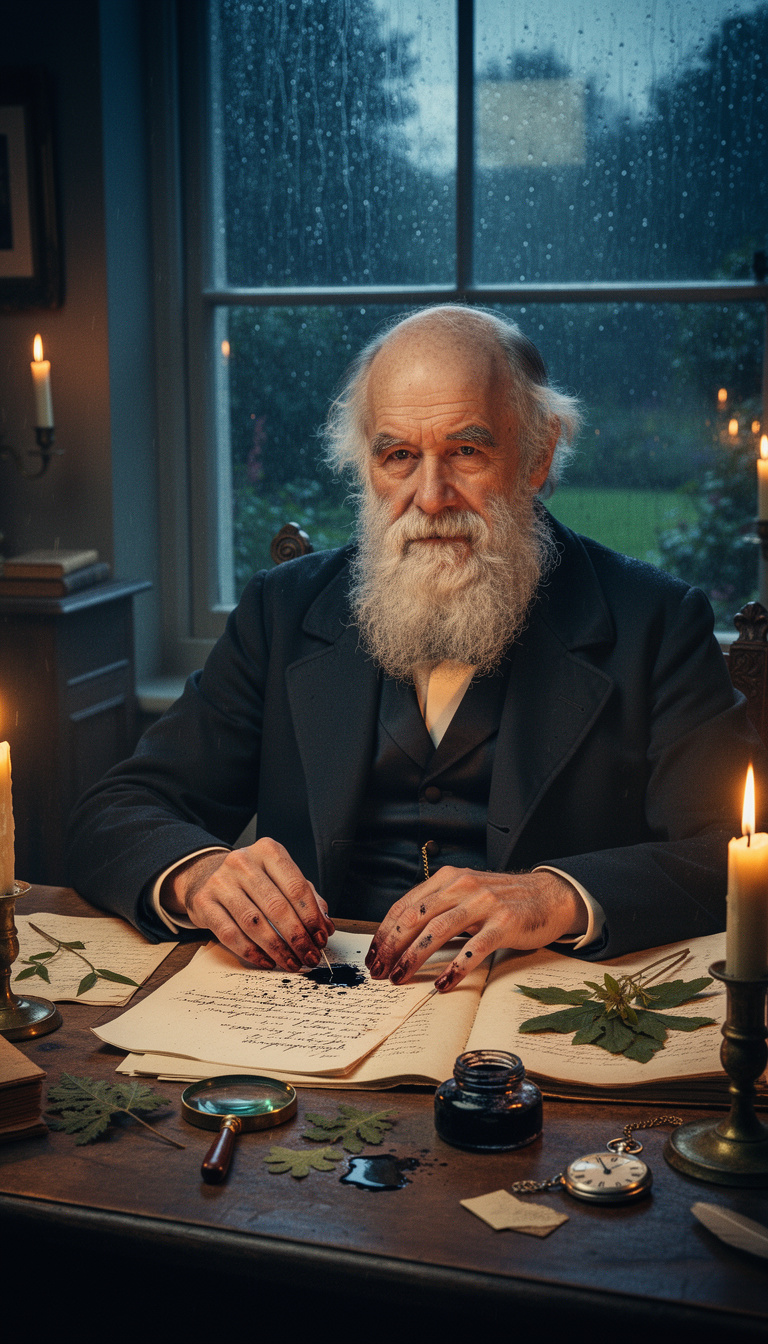
November 24. Murray's shop in Albemarle Street has it now. I paced the Sandwalk this morning — thirteen circuits, my usual — and could not settle to anything. The post brought word that all 1,250 copies are gone to booksellers. I had promised myself I would feel relief. Instead: a peculiar hollowness, as when one finishes preserving a specimen and the desk lies empty. The title grew longer than I wished. On the Origin of Species by Means of Natural Selection. I had wanted simply 'Abstract of an Essay' — my private joke, for this 'abstract' runs 490 pages. But Murray would not hear it. The word 'evolved' appears only once, at the very end. I could not bring myself to use it sooner; too many associations with that progressive, upward-marching nonsense. I speak of descent with modification, not ascent toward perfection. My fingers still smell of the ink I spilled checking the final sheets. Emma says I must eat something. I cannot yet.
Explain more
The first edition of 1,250 copies sold out to booksellers on the day of publication. Darwin had been gathering evidence since 1838, and had drafted a 230-page 'sketch' in 1842 — but delayed publication, famously, for two decades.
Why it matters
This book presented natural selection as a mechanism for evolution with extensive evidence from artificial selection, biogeography, comparative anatomy, embryology, and the fossil record. It shifted biology from describing nature's order to explaining its diversity.
Try today
Notice one thing in your surroundings that seems 'designed' for its purpose. Now ask: what simpler form might have preceded it, and what intermediate steps could bridge them?
What is true / dramatized: Dramatized. Educational entertainment — not a primary historical source.
Published On the Origin of Species, November 24, 1859, through John Murray. First edition 1,250 copies. Twenty years of accumulated evidence and private anxiety released to public scrutiny.
Difficulty: medium · ~5 min
Related
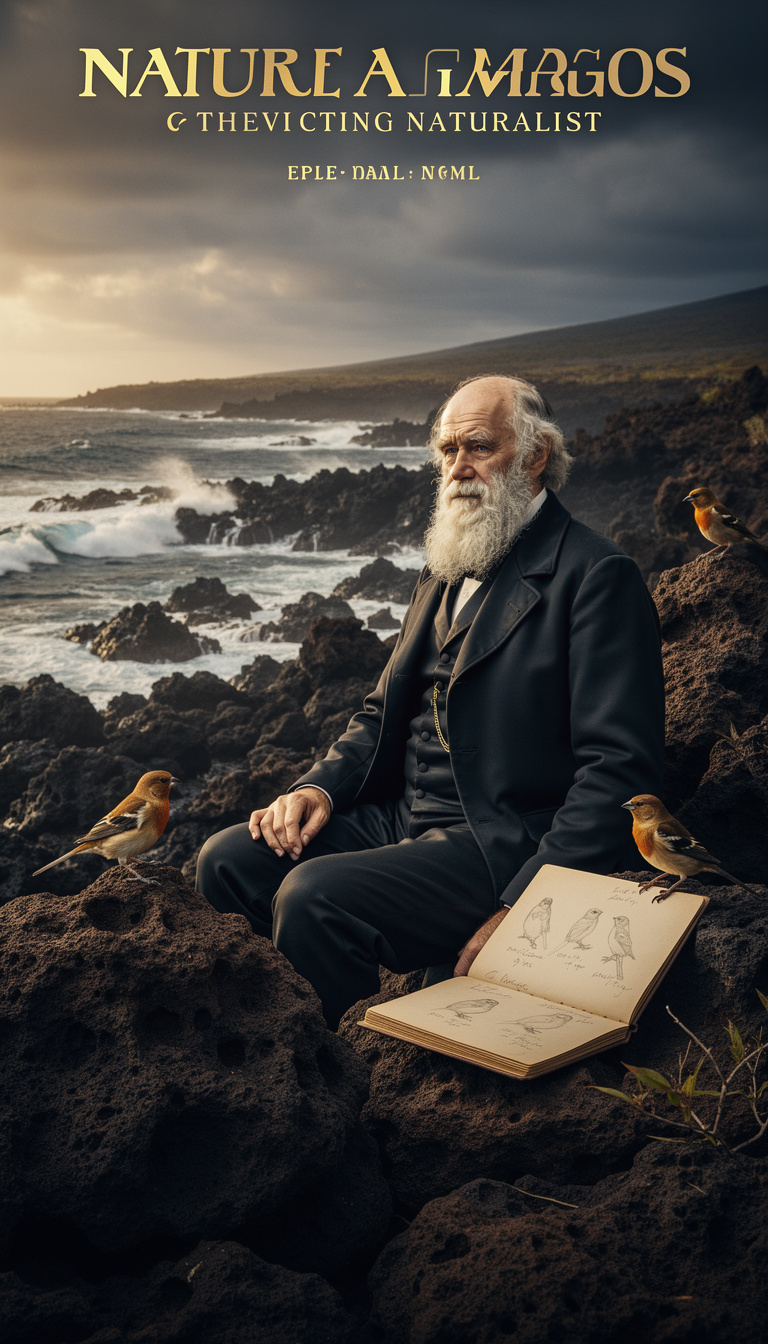 Charles Darwin
On islands, life writes variations in plain sight — beaks, shells, habits tuned to place. I did not invent change. I tried to explain how nature selects what works in a given world.
 Charles Darwin
Individuals vary. Some variations help survival and reproduction. Those traits tend to become more common. No committee designs the outcome. The environment sorts. Deep time does the rest.
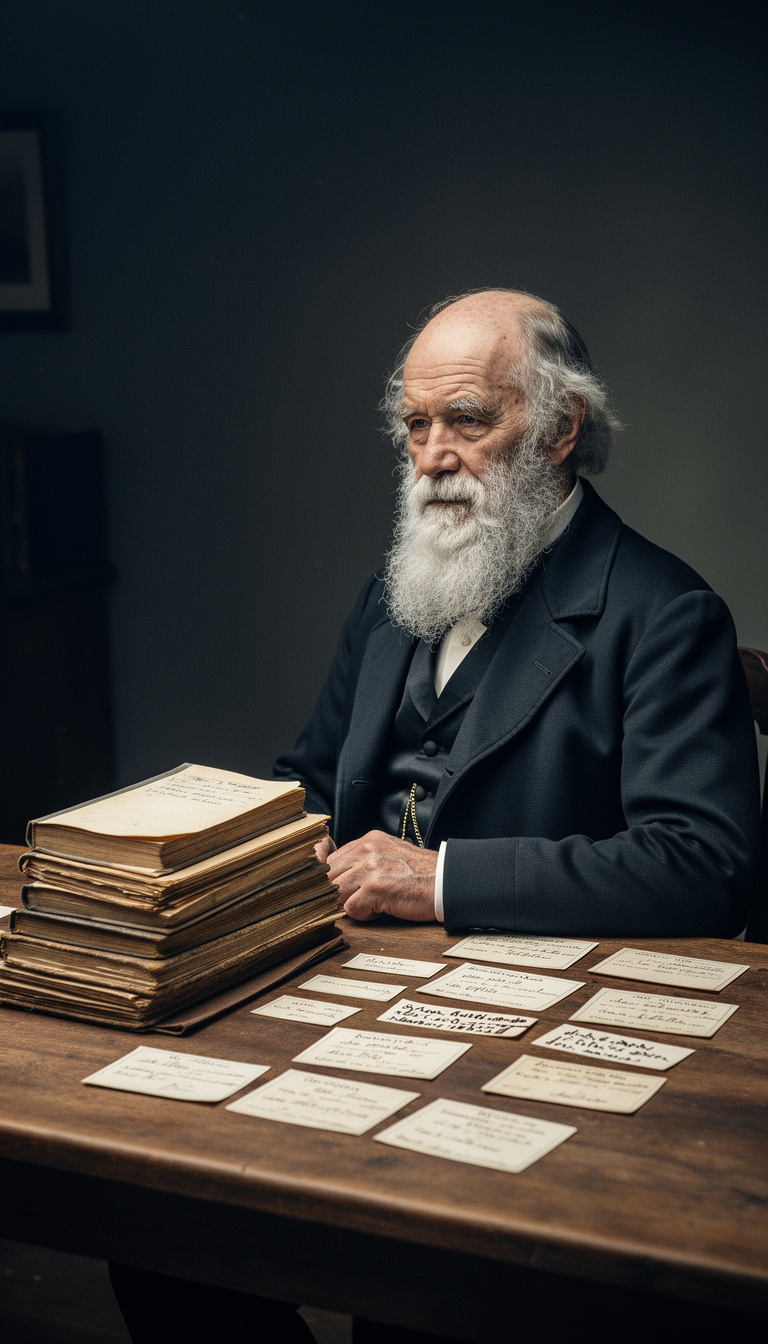 Charles Darwin
I waited years, gathering facts like a miser gathers coins — not from fear, but from respect for error. If your conclusion arrives before your evidence, you are writing fiction in science's clothing.
 Charles Darwin
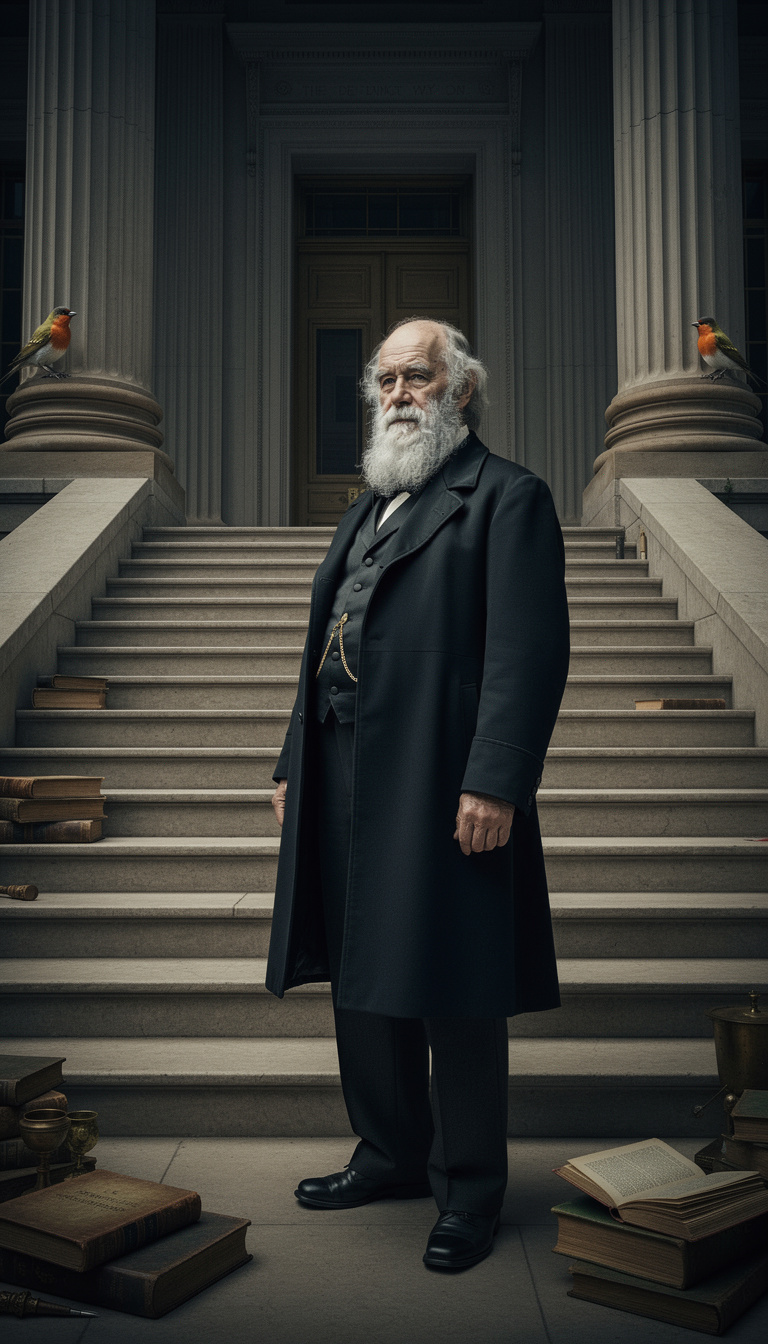
On July 10, 1925, the Scopes Trial opened in Tennessee — a public clash over teaching evolution. Ideas do not only live in books. They walk into schools, laws, and arguments about who we are.
 Charles Darwin
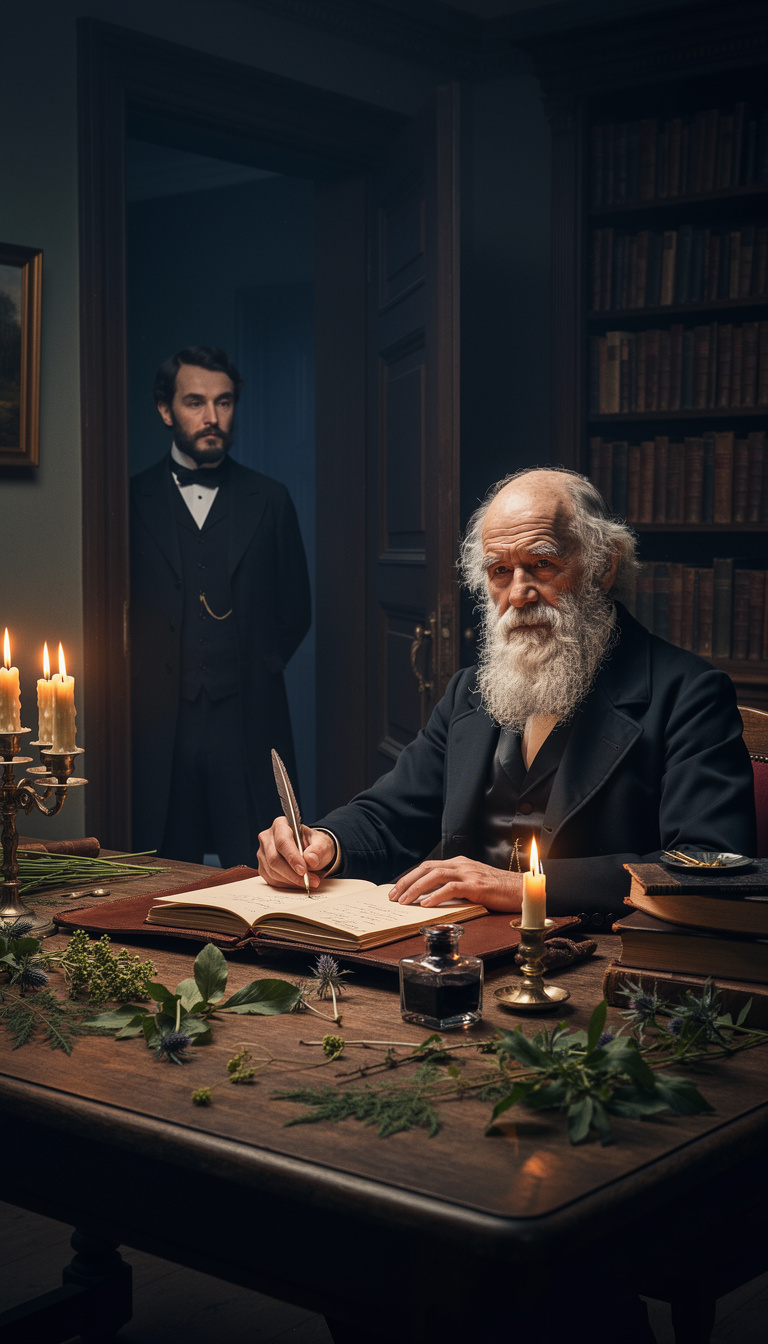
July 22, 1844 — I write this from Down House, my private notebooks on transmutation swelling with seven years of evidence. Not published, not yet. Wallace's letter still fourteen years distant. But today I confessed the full scope of my heresy to my closest friend, Joseph Hooker. 'It is like confessing a murder,' I told him. Hooker did not flinch. He listened, asked harder questions, and became the first scientist to know my secret. The murder was not against nature — it was against comfortable certainty. Every species changing, branching, dying, without divine script. I had the mechanism. I lacked the courage to print it. What I learned: a theory lives or dies by who you trust with it before the world judges. Hooker's challenge sharpened my argument. His support gave me breath. The fittest idea does not survive alone.
 Charles Darwin
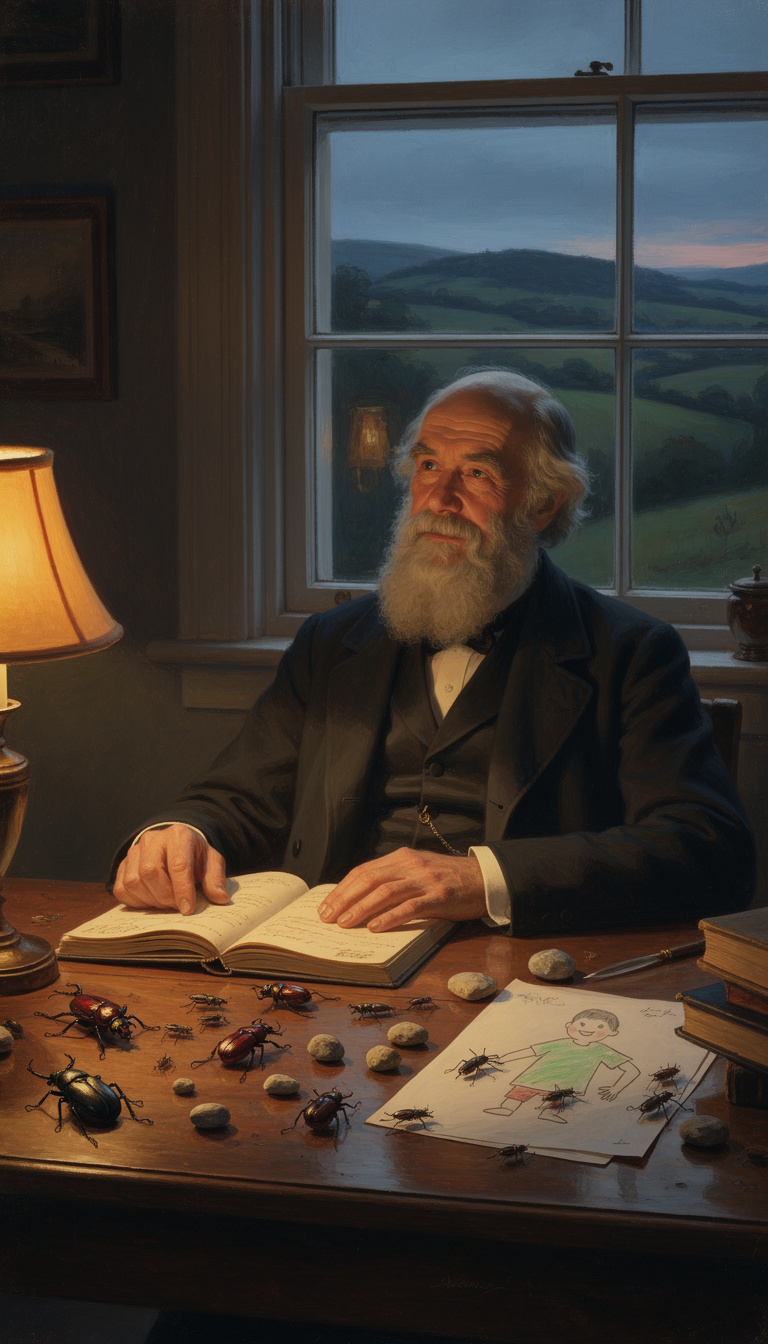
Looking back from my study at Down House, I can still smell the Shropshire earth of The Mount — that solid Georgian house where I arrived fifth of six, squalling, on a February day in 1809. My father, Robert, was already a formidable man: six feet two, weighing twenty stone, a physician who could silence a room with his practical mind. My mother Susannah, a Wedgwood, gentle and musical, would not live to see me become myself. I was a wanderer from the first. Beetles, pebbles, anything that crawled or gleamed — I pocketed it. My elder sisters thought me disorderly. I was. But I see now that this was not mere boyish distraction. I was practicing attention without knowing its purpose. The habit of looking closely, of keeping what interested me, was being forged in a nursery without a theory to guide it. What I did not yet understand: a collector without a question is only a magpie. But a collector who persists long enough may one day find the question looking back at him.