144 years ago · 1882 — Westminster Abbey, London
Dramatized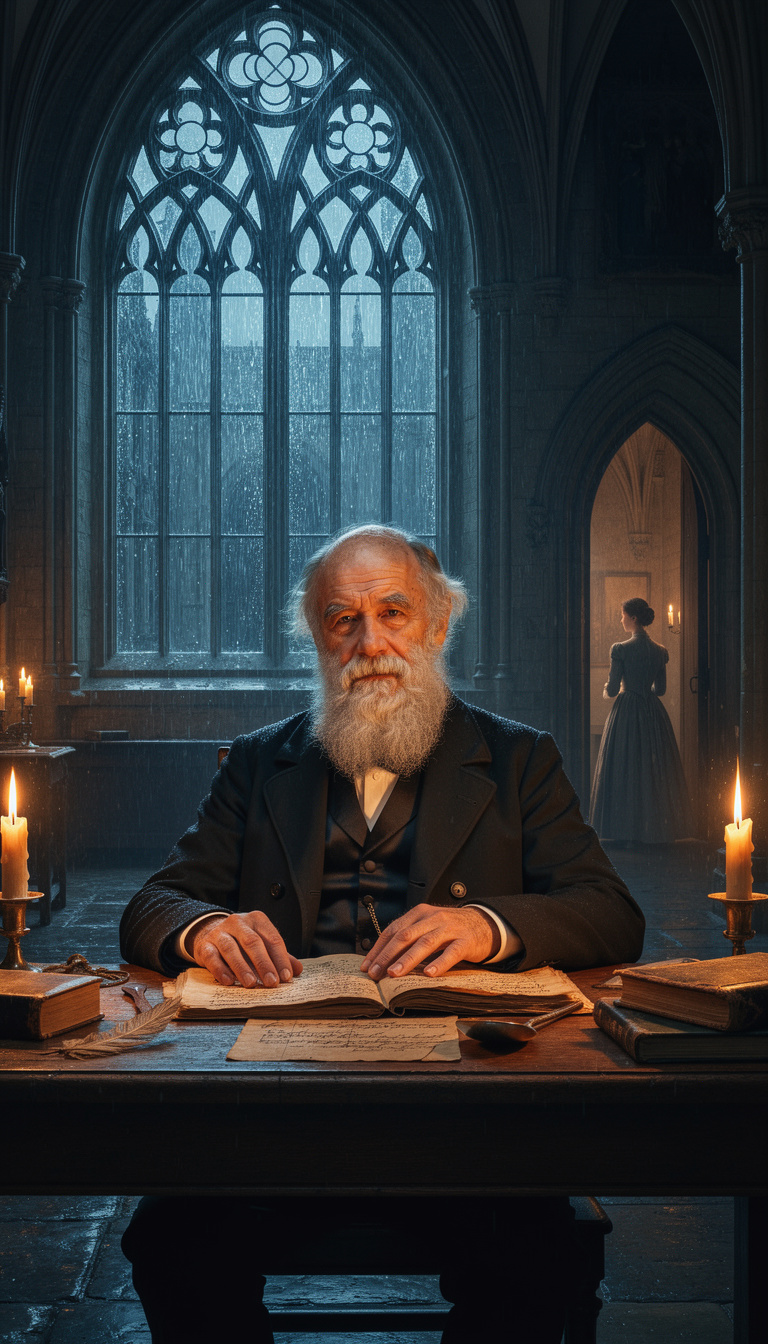
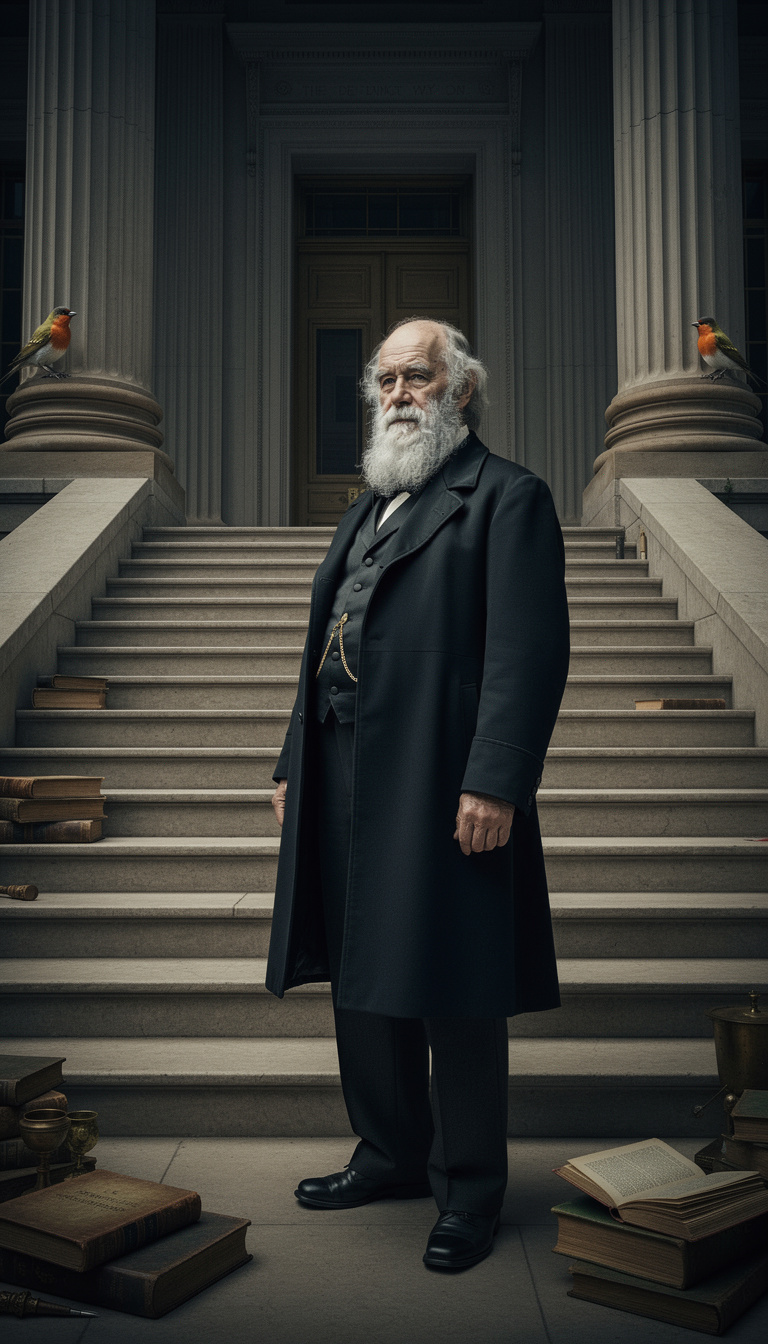
Looking back from these final days, I confess I am somewhat embarrassed by the stone. A heretic's reward, they call it — burial among kings and Newton himself. Emma whispers I should be pleased. I am, I suppose, though I spent forty years dodging such grandeur, preferring my Sandwalk's thirteen circuits to any pulpit. What I did not yet understand at twenty-two, seasick aboard the Beagle, was that patience itself becomes a kind of courage. Not the courage of proclamation, but of returning daily to the same question until the answer emerges from the evidence itself. The worms taught me this. The finches. The barnacles with their confounding variations. I am becoming, at last, simply what I always was: a man who looked longer than others cared to look.
Explain more
Darwin was buried in Westminster Abbey on April 26, 1882, against his own wishes for a simple burial at Downe. The scientific establishment, including the Royal Society, petitioned for this honor — a remarkable reversal from the controversy of 1859.
Why it matters
His burial symbolized the eventual acceptance of evolutionary theory by mainstream institutions, though acceptance of natural selection specifically would take decades longer.
Try today
Return to one observation you've abandoned too quickly. Look again tomorrow.
What is true / dramatized: Dramatized. Educational entertainment — not a primary historical source.
Autobiographical reflection on death and legacy, 1882; consistent with Darwin's known modesty and lifelong observational habits.
Difficulty: medium · ~4 min
Related
 Charles Darwin
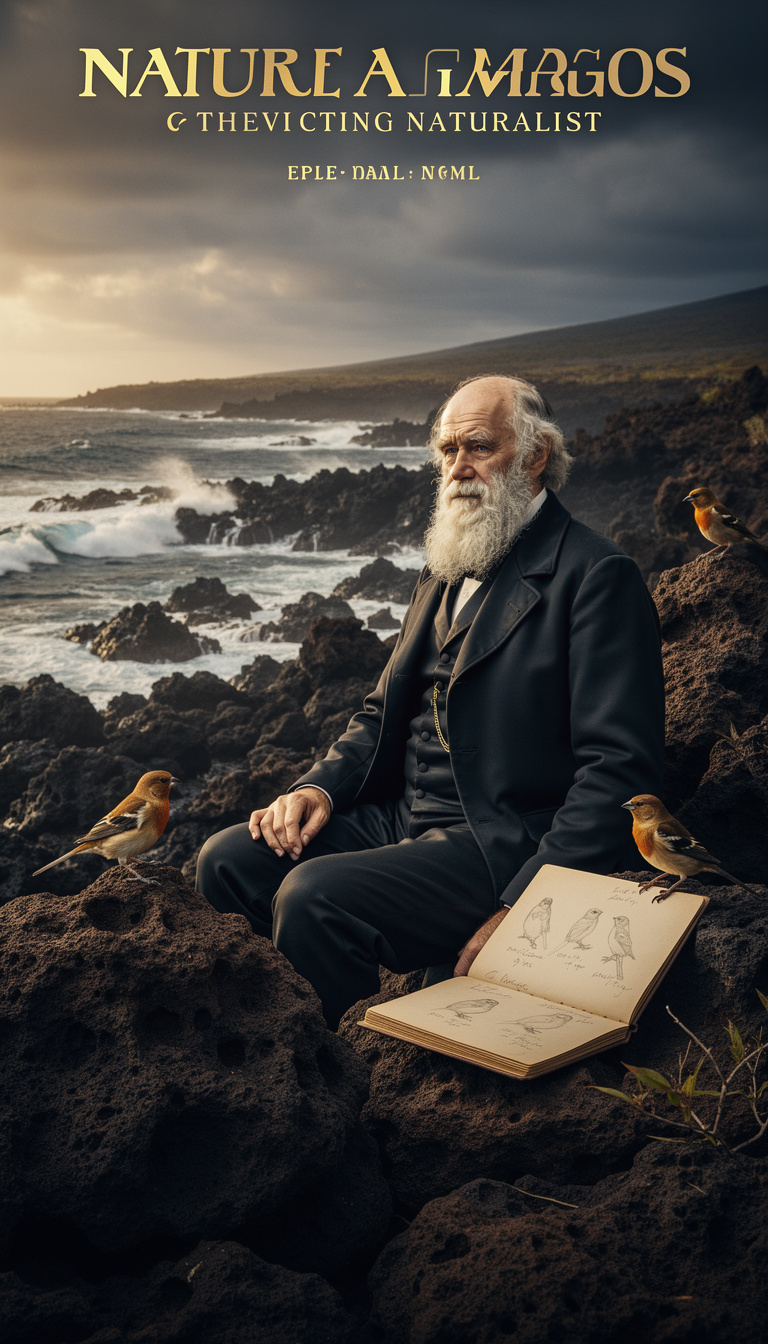
On islands, life writes variations in plain sight — beaks, shells, habits tuned to place. I did not invent change. I tried to explain how nature selects what works in a given world.
 Charles Darwin
Individuals vary. Some variations help survival and reproduction. Those traits tend to become more common. No committee designs the outcome. The environment sorts. Deep time does the rest.
 Charles Darwin
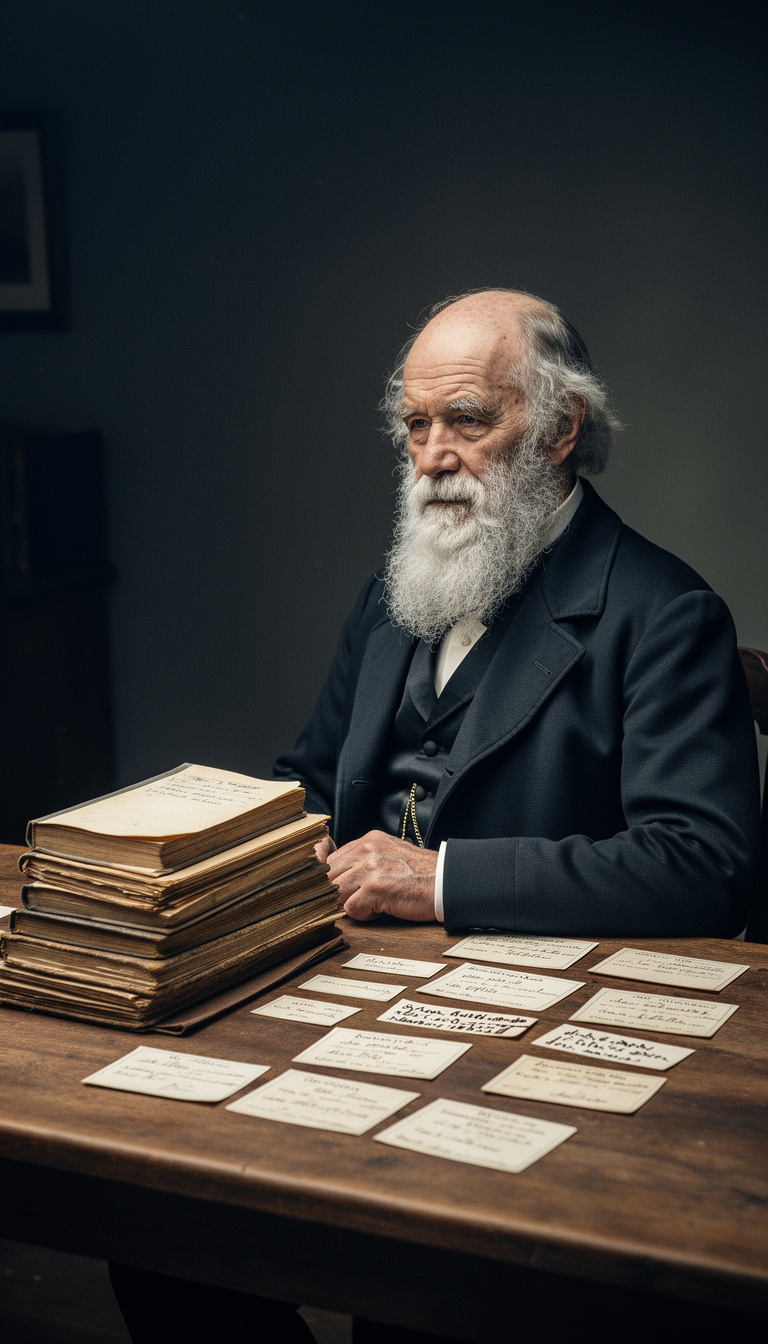
I waited years, gathering facts like a miser gathers coins — not from fear, but from respect for error. If your conclusion arrives before your evidence, you are writing fiction in science's clothing.
 Charles Darwin
On July 10, 1925, the Scopes Trial opened in Tennessee — a public clash over teaching evolution. Ideas do not only live in books. They walk into schools, laws, and arguments about who we are.
 Charles Darwin
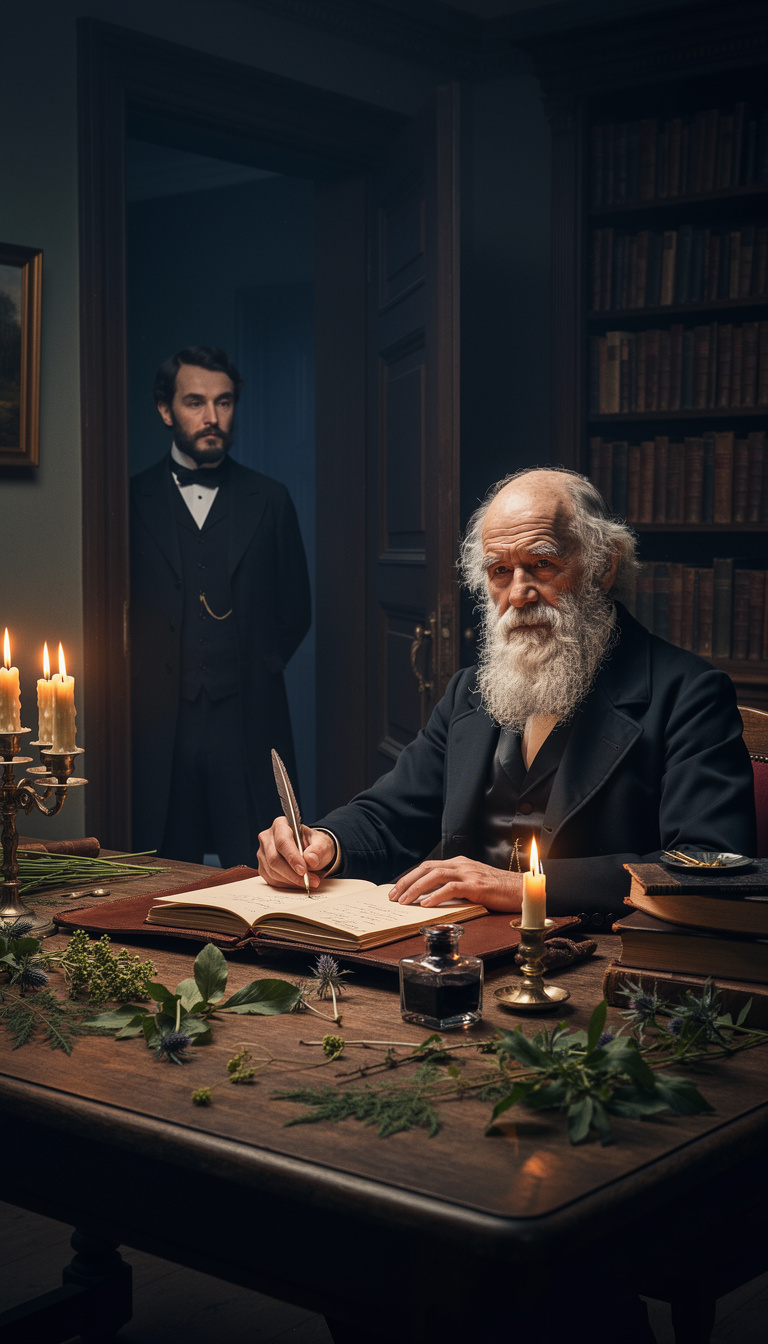
July 22, 1844 — I write this from Down House, my private notebooks on transmutation swelling with seven years of evidence. Not published, not yet. Wallace's letter still fourteen years distant. But today I confessed the full scope of my heresy to my closest friend, Joseph Hooker. 'It is like confessing a murder,' I told him. Hooker did not flinch. He listened, asked harder questions, and became the first scientist to know my secret. The murder was not against nature — it was against comfortable certainty. Every species changing, branching, dying, without divine script. I had the mechanism. I lacked the courage to print it. What I learned: a theory lives or dies by who you trust with it before the world judges. Hooker's challenge sharpened my argument. His support gave me breath. The fittest idea does not survive alone.
 Charles Darwin
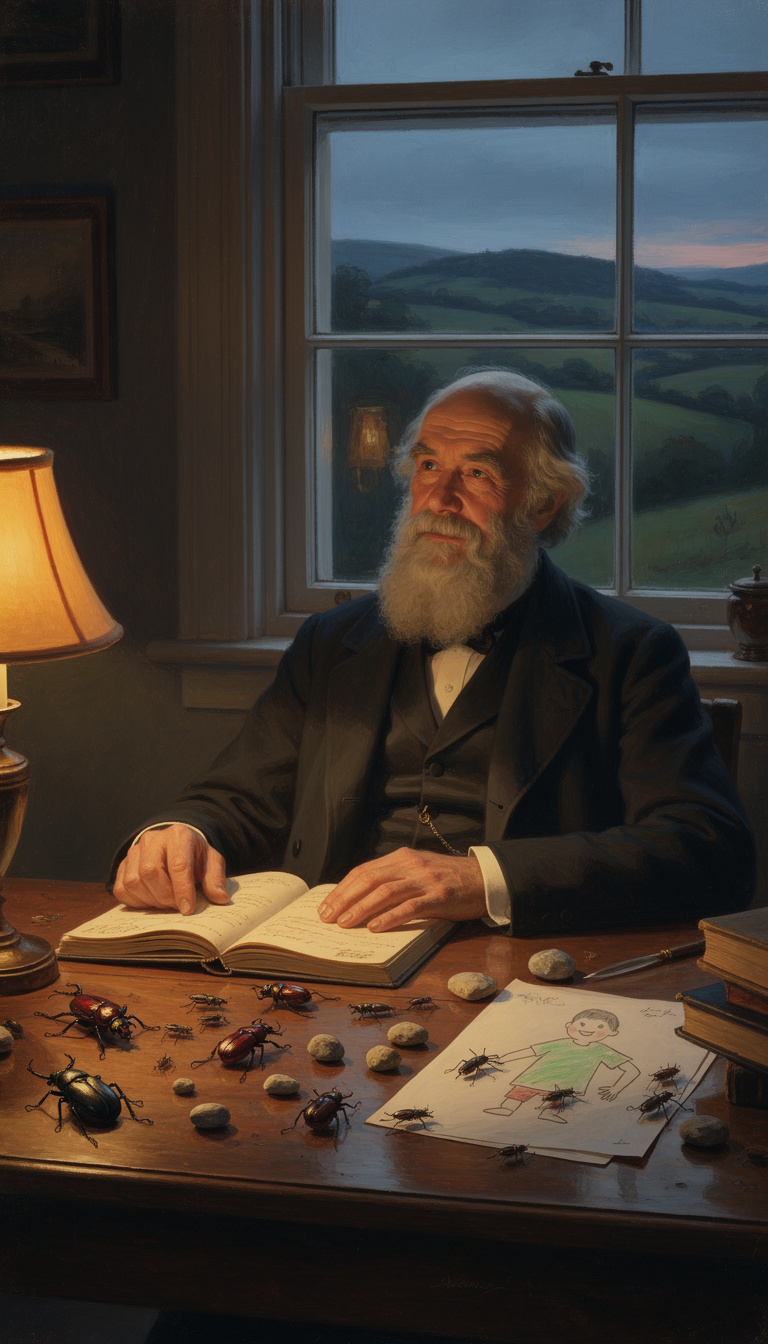
Looking back from my study at Down House, I can still smell the Shropshire earth of The Mount — that solid Georgian house where I arrived fifth of six, squalling, on a February day in 1809. My father, Robert, was already a formidable man: six feet two, weighing twenty stone, a physician who could silence a room with his practical mind. My mother Susannah, a Wedgwood, gentle and musical, would not live to see me become myself. I was a wanderer from the first. Beetles, pebbles, anything that crawled or gleamed — I pocketed it. My elder sisters thought me disorderly. I was. But I see now that this was not mere boyish distraction. I was practicing attention without knowing its purpose. The habit of looking closely, of keeping what interested me, was being forged in a nursery without a theory to guide it. What I did not yet understand: a collector without a question is only a magpie. But a collector who persists long enough may one day find the question looking back at him.