142 years ago · 1884 — The crossing, and the first spark
Dramatized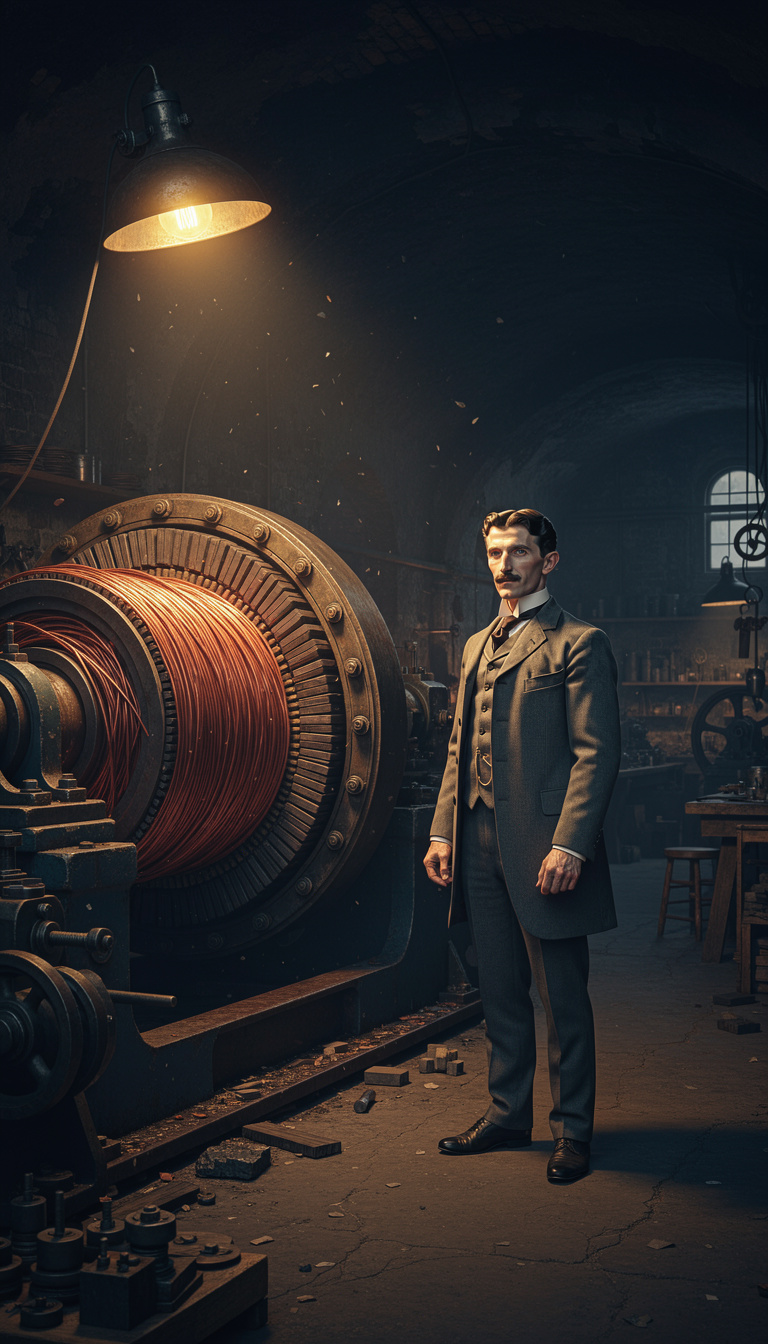
The SS Saturnia pitched through fog into New York harbor, and I stood on deck with four cents, a volume of Faust, and a letter of introduction to Thomas Edison. Within days I was at the Edison Machine Works on Goerck Street, wading through machine oil and copper filings, troubleshooting dynamos that the local engineers had pronounced hopeless. I work now until the floor men sweep around my boots. The generators speak to me—their hums off-key, their brushes chattering like teeth in fever. I see the flaw before I touch the wrench. This is not modesty; it is the only language I have ever spoken fluently. Edison himself, they say, notices the men who do not leave at the whistle. Had I only known how narrow that bridge would prove—I am becoming, in this soot and electric breath, the engineer who does not merely repair but reimagines the machine entire. The boy from Smiljan walked through fire to reach this floor. Now I must build something that outlasts the fire.
Explain more
Tesla arrived in America with almost nothing and was hired almost immediately by Edison's company. His ability to visualize and fix complex machinery problems—mentally, before touching tools—set him apart instantly.
Why it matters
This arrival marks the true beginning of Tesla's American career. The skills he sharpened troubleshooting Edison's equipment would soon lead him to conceive the AC induction motor, the invention that would reshape global electrification.
Try today
When facing an unfamiliar system—mechanical, digital, or organizational—pause before acting. Can you trace its logic in your mind first? The habit of mental simulation, practiced relentlessly, becomes indistinguishable from intuition.
What is true / dramatized: Dramatized. Educational entertainment — not a primary historical source.
Tesla's 1884 emigration and immediate employment at Edison Machine Works; his early reputation for diagnosing generator failures through mental visualization.
Difficulty: medium · ~5 min
Related
 Nikola Tesla
On this day in 1856, Nikola Tesla was born. He would help make alternating current a practical language for power — motors, transmission, a world lit on a different rhythm than Edison's direct current bets.
 Nikola Tesla
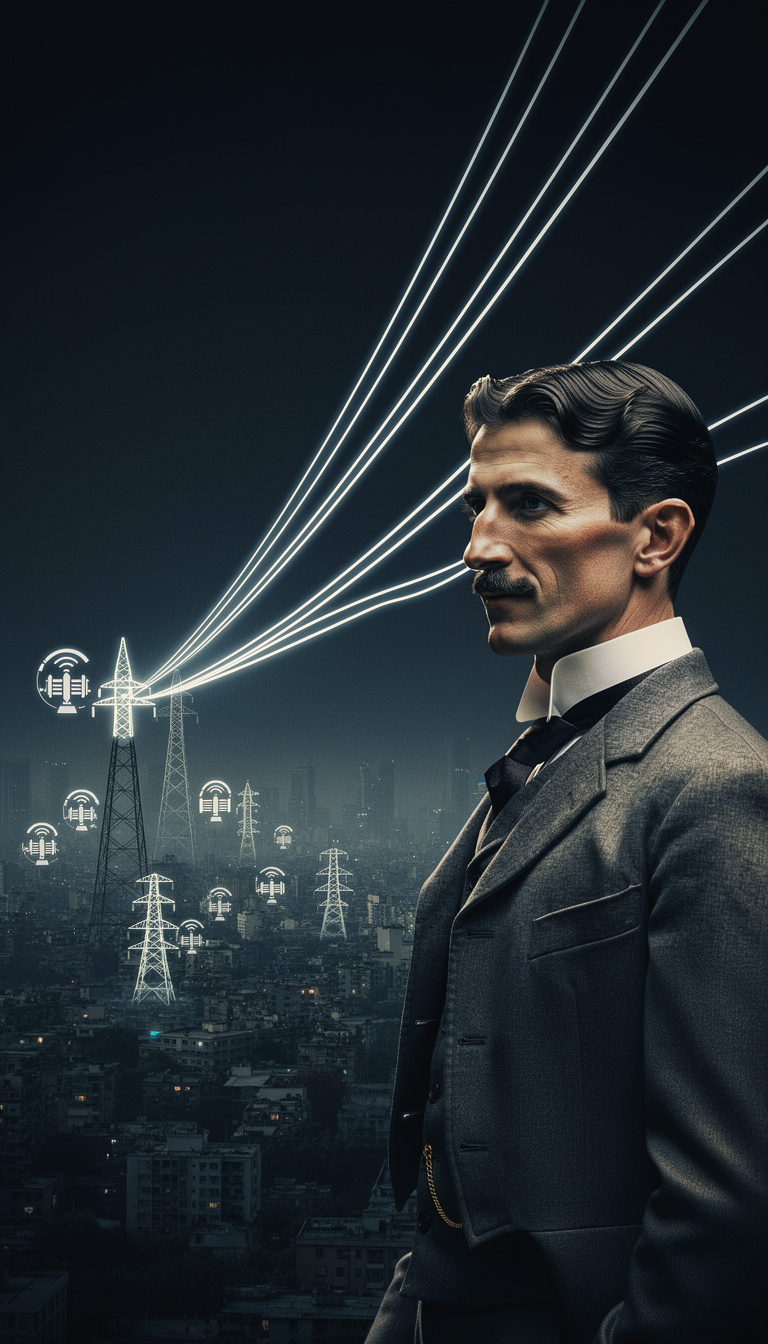
Alternating current can be transformed to high voltage for long-distance travel, then stepped down for safe use. That is why the grid prefers AC's dance: send power far, deliver it gently.
 Nikola Tesla
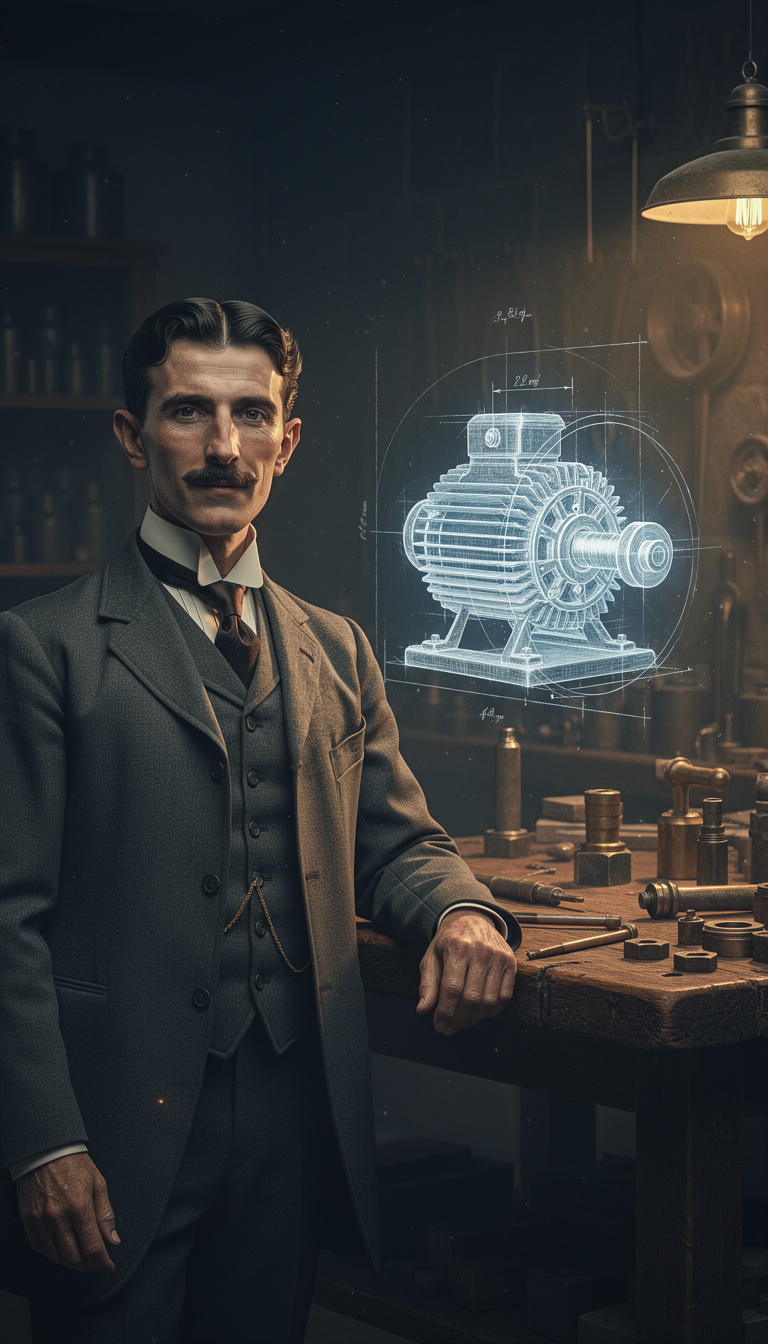
I ran machines in my head until the bearings felt real. Imagination is a laboratory with no rent — if you are disciplined enough to notice when a mental screw is loose.
 Nikola Tesla
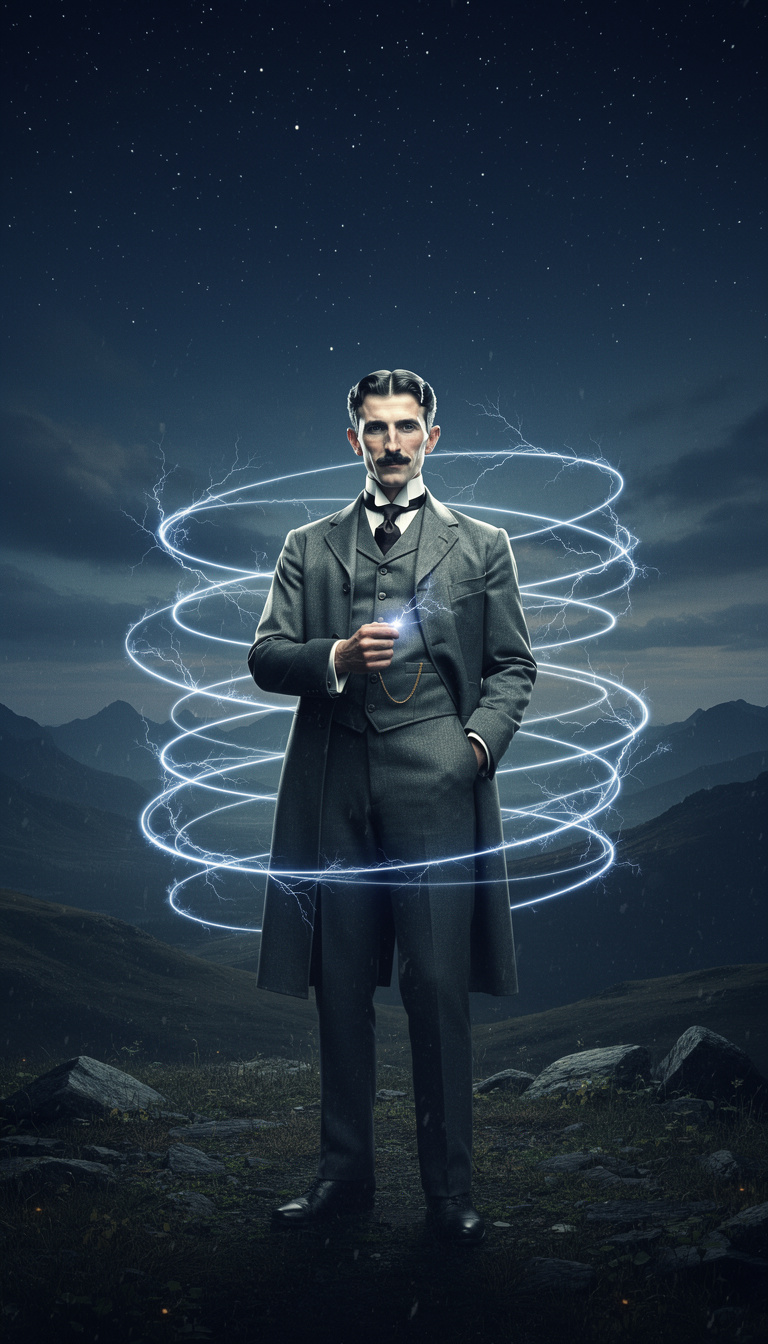
What if energy could cross space without a wire — not as fantasy lightning, but as engineered resonance? Some dreams outran the materials of their day. Dream anyway — then measure.
 Nikola Tesla
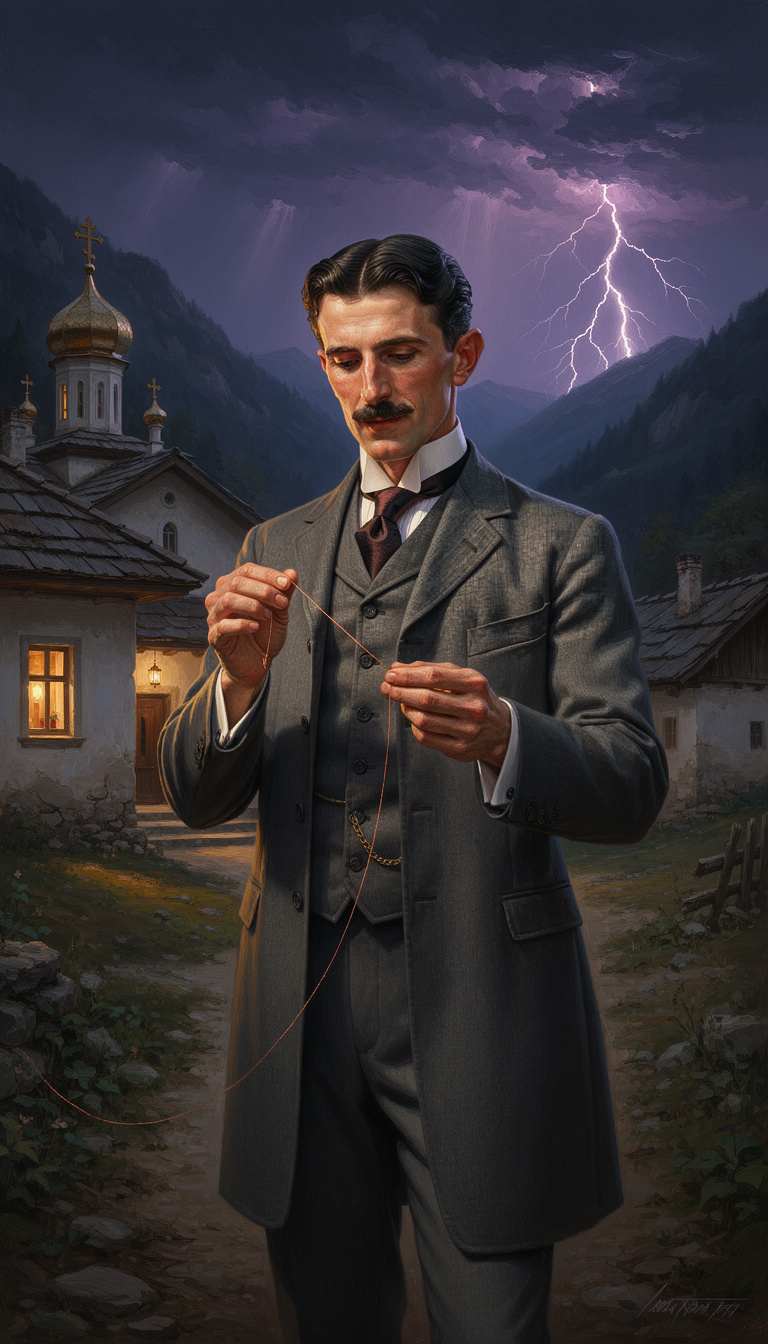
Looking back from these later years, I see that July night in Smiljan with strange clarity — not as memory, for who remembers their own birth, but as the pattern my mother described so often it became mine. The Austrian Empire's Military Frontier, our village perched between mountain and sky, and I arrived during a summer storm so violent the midwife made the sign against evil. My mother, Đuka, laughed at her. She knew lightning. She was the one who would later unravel her embroidery to let me thread copper wire through the patterns. A woman who invented her own tools when none existed. I understand now: I did not become an inventor. I was found by one, and recognized. The insight I offer you: genius is not born in isolation. It is born in recognition — someone seeing the spark in you before you dare see it yourself.
 Nikola Tesla
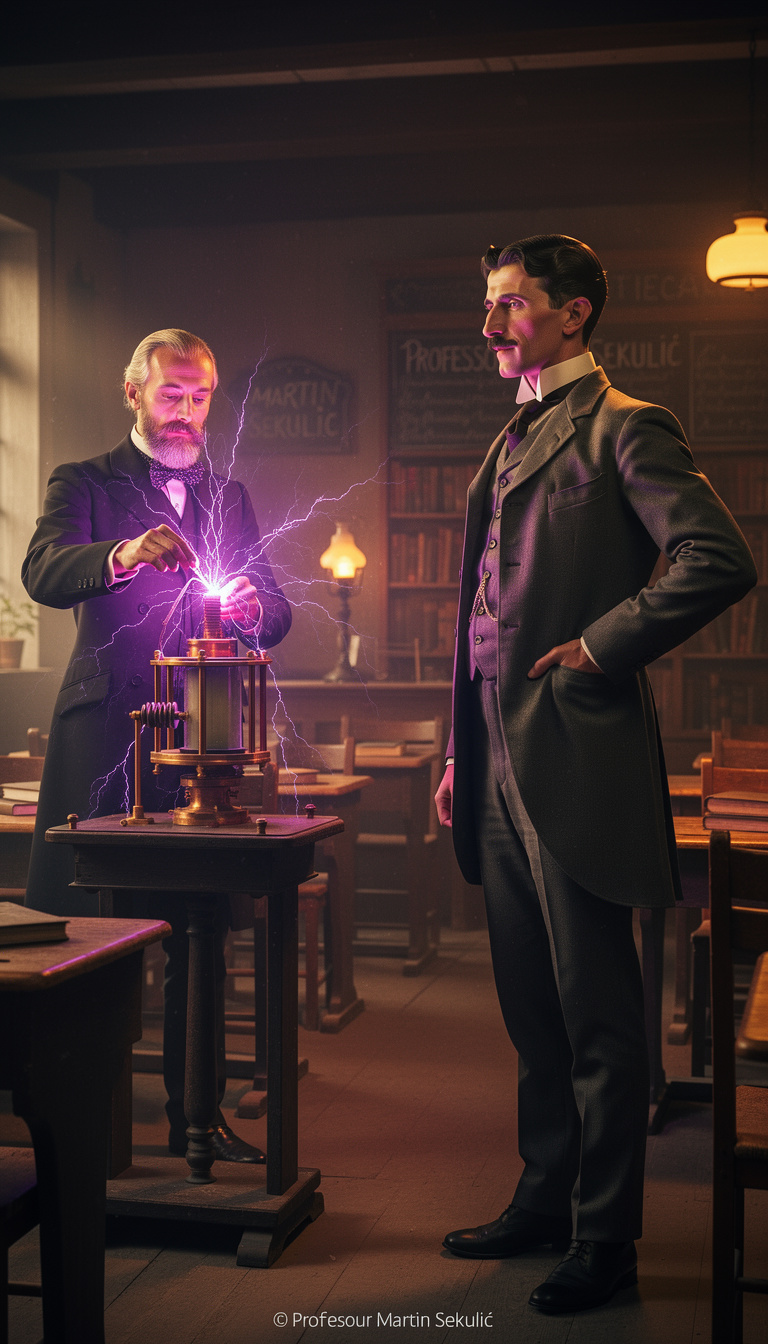
Fourteen years old, alone in Karlovac, boarding with strangers while my mother sent what she could from Smiljan. The Higher Real Gymnasium—every lecture in German, a language I had to drink down like bitter medicine. But then: Professor Martin Sekulić, his demonstrations. He would crank the electrostatic machine, and the sparks would leap between brass spheres like captive lightning. I did not merely watch. I *felt* the hair rise on my neck, the same prickling I knew from our valley storms. In that moment I understood that electricity was not magic, not theology—it was a language, and I intended to become fluent. My mind, even then, would not rest. I would walk the Kupa riverbanks until midnight, rehearsing inventions I had no materials to build, seeing them turn in perfect detail behind my eyes. This was not diligence. It was obsession, and I make no apology for it.