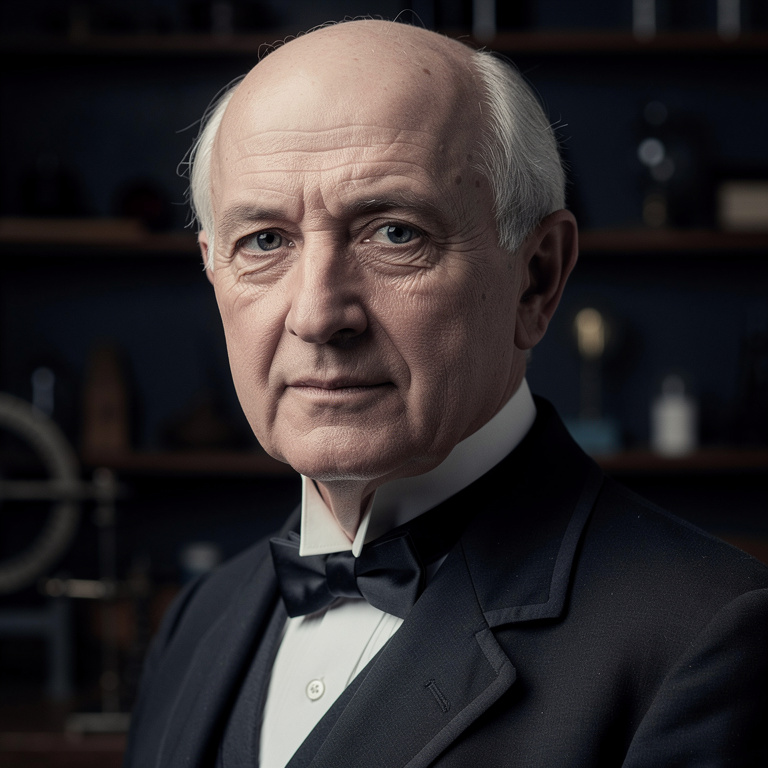
Thomas Edison
1847–1931
Inventor-entrepreneur of the industrial lab — iteration, failure-as-data, and the messy politics of credit, told as foil and complement to Tesla.
Story so far
Follow Life of Thomas Edison- 1847personal
Born in Milan, Ohio
- 1859–1863personal
Early work and deafness
- 1869work
First patent and move to New York
- 1874highlight
Quadruplex telegraph
- 1876highlight
Menlo Park laboratory established
- 1877highlight
Invention of the phonograph
- 1877–1878work
Carbon telephone microphone
- 1878–1880shighlight
Electrical lighting system
- 1884personal
Death of first wife Mary
- 1886personal
Marriage to Mina and West Orange lab
- 1892work
Formation of General Electric
- 1890s–1900swork
Motion pictures and diversification
- 1931death
Death and legacy
1847 — The Beginning
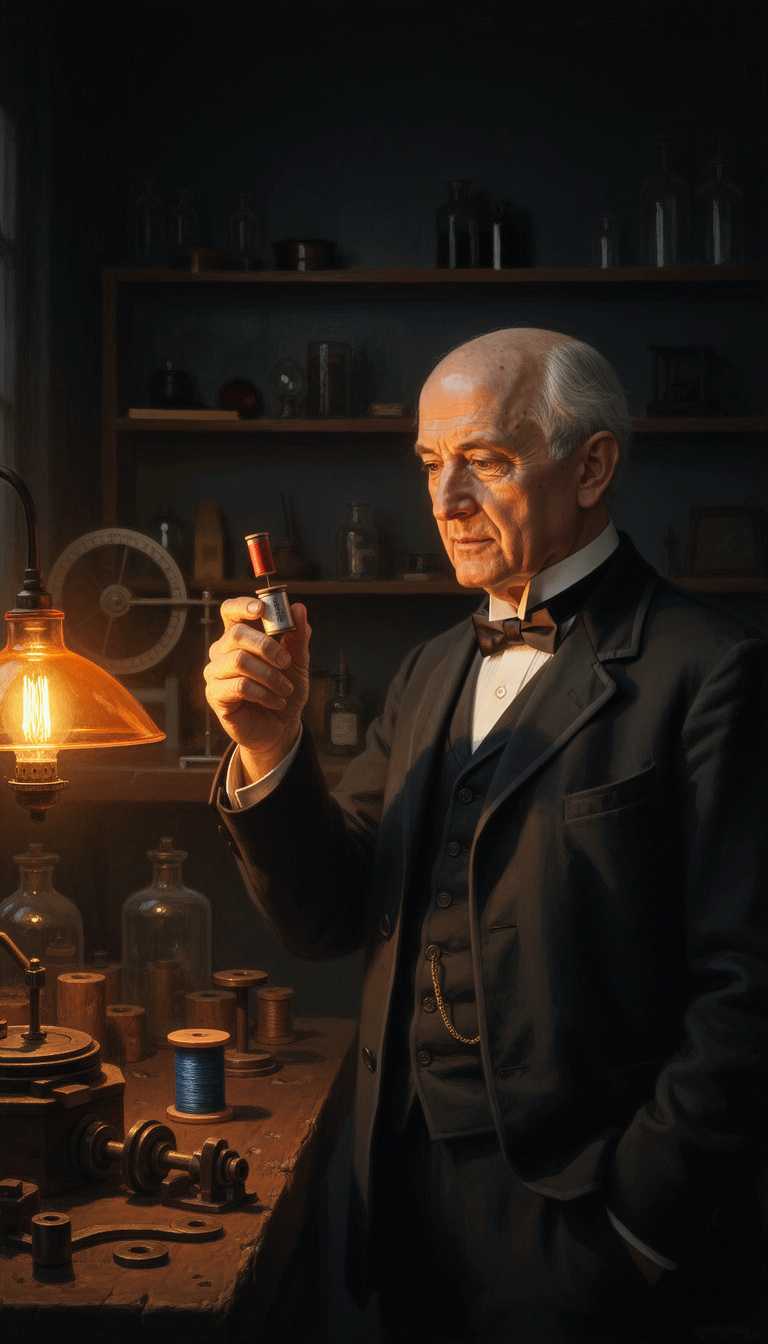
I arrived February 11, 1847, in Milan, Ohio — seventh and last of Samuel and Nancy's brood. Small canal town, busy with grain trade, full of moving parts I would later learn to study. What I did not yet understand: my mother would teach me at home when school disappointed her, and that patience with a child's endless questions would become the foundation of everything. I was not a genius. I was a boy who watched, who asked, who would not let a thing go until I saw inside it. That habit started here, before I had any name for it.
1854 — The Move to Port Huron
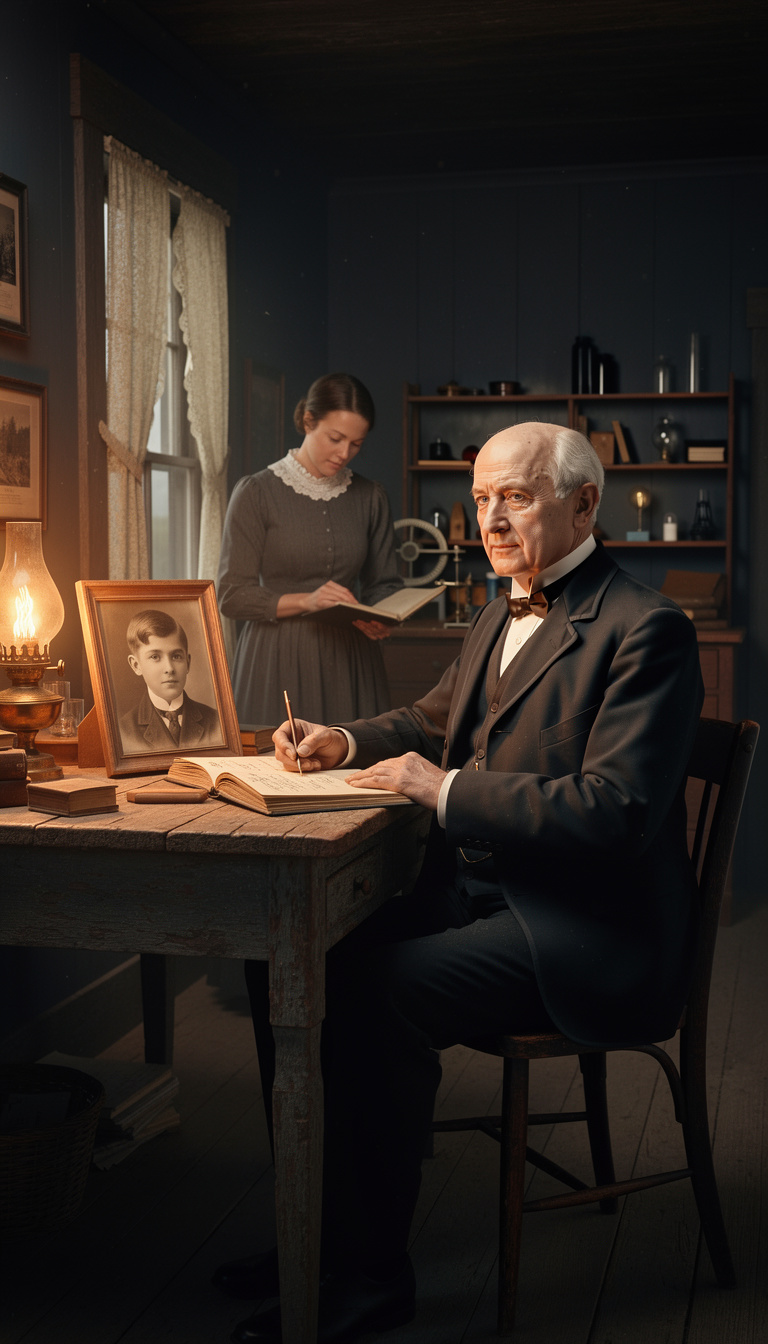
Seven years old, packed onto a canal boat with the whole Edison clan — off to Port Huron, Michigan. My father chasing another scheme, as he did. What I got instead of a classroom was better: my mother Nancy, former schoolteacher, drilling me in the parlor with McGuffey's Readers and whatever sums I could scratch out. I was restless, questions tumbling out faster than answers. She never shushed that. Most boys my age sat in rows; I sat with her, reading Gibbon's Decline and Fall when I should've been parsing simple sentences. Looking back, that was the laboratory taking shape — not the building, but the habit. Self-directed, voracious, slightly undisciplined by conventional measure. My deafness was growing then too, though I didn't name it. The world got quieter; my reading got louder inside my head. Some men need institutions. I needed a mother who treated curiosity as curriculum.
1863–1869 — The Telegraph and the Tinkerer
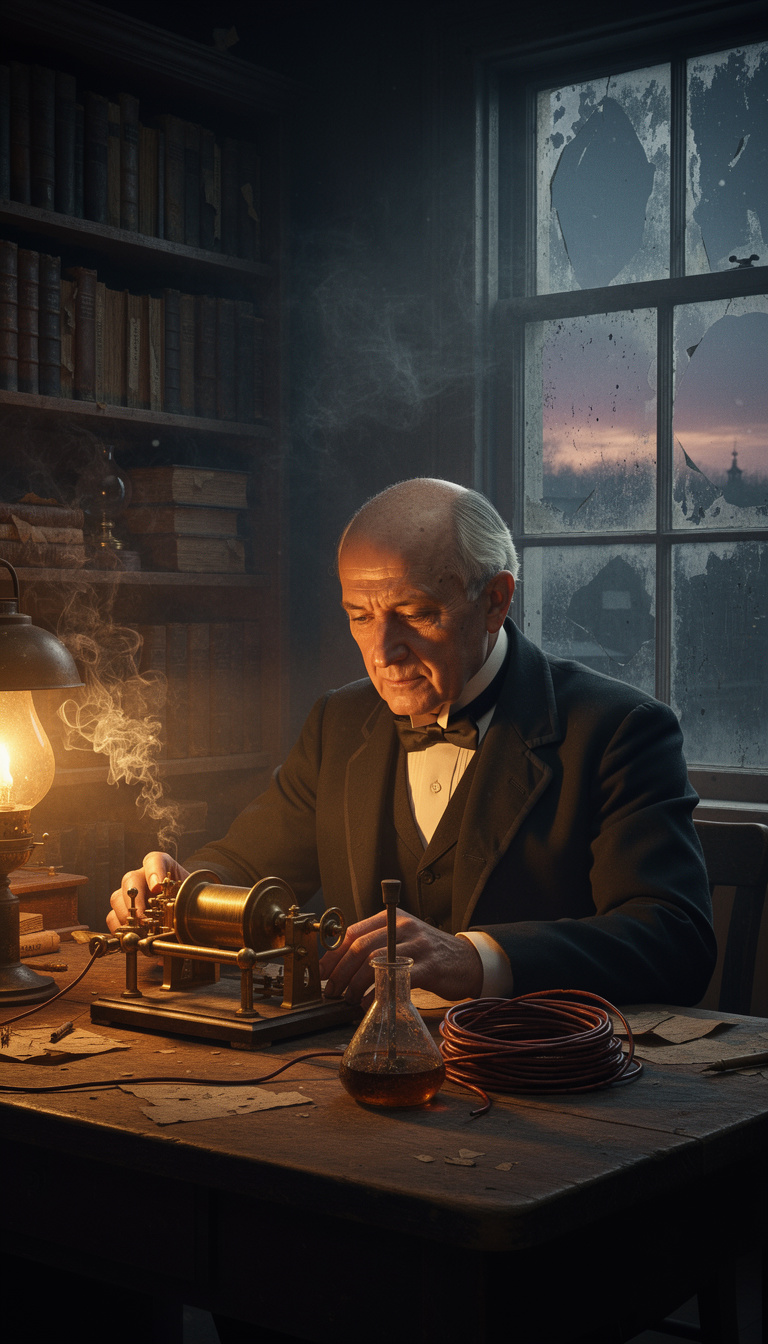
Looking back on those years, I was a ghost haunting the wire offices of the Midwest—Port Huron, Adrian, Fort Wayne, Indianapolis, Boston, then back again. Night shift telegrapher, because the traffic was thin and I could read my chemistry books between clicks. I set up a small lab in every boarding house I crashed in. Blew fuses. Angered landlords. Kept moving. The vote recorder patent in '69—my first—was a beautiful failure. Legislators didn't want fast voting; they wanted time to lobby between calls. I learned something permanent that year: invention without market is just expensive noise. I swore never again to build what people didn't need. What I was becoming wasn't genius. It was a method. Sleep four hours. Read. Tinker. Fail. Move to the next town with better wire access. The deafness helped—no distractions, just the click of the key and the hum of possibility.
1869 — The Move to New York
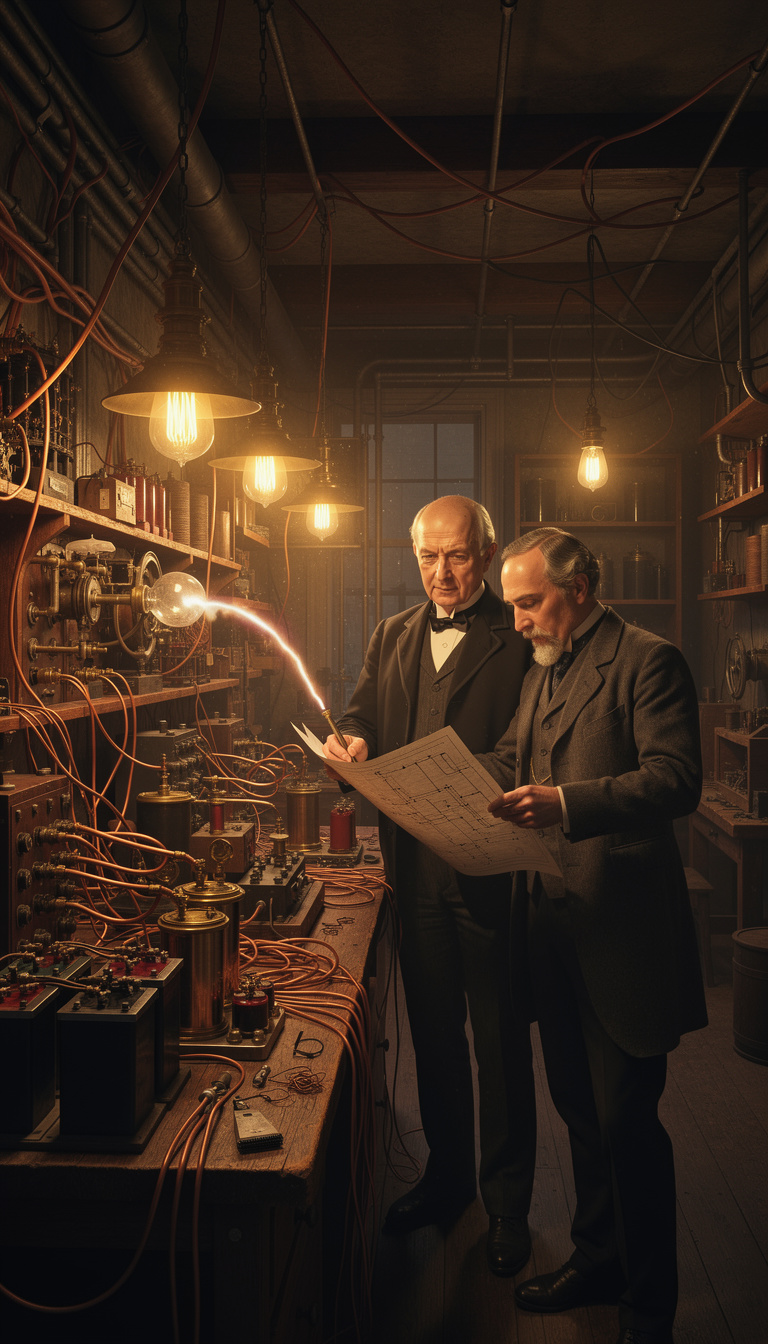
I arrived in New York with a dollar in my pocket and a head full of telegraph schemes. Franklin Pope — good man, patient with my rough edges — took me on, and before long we had an electrical engineering company running. Fifty men, then a larger shop in Newark. I was learning something I couldn't patent: how to organize other men's labor toward a single problem. The lab at Menlo Park was still seven years off, but the pattern was already there. I never wanted to be the lone tinkerer in a garret. I wanted the system, the process, the machine that makes machines.
1874 — The Quadruplex Payday
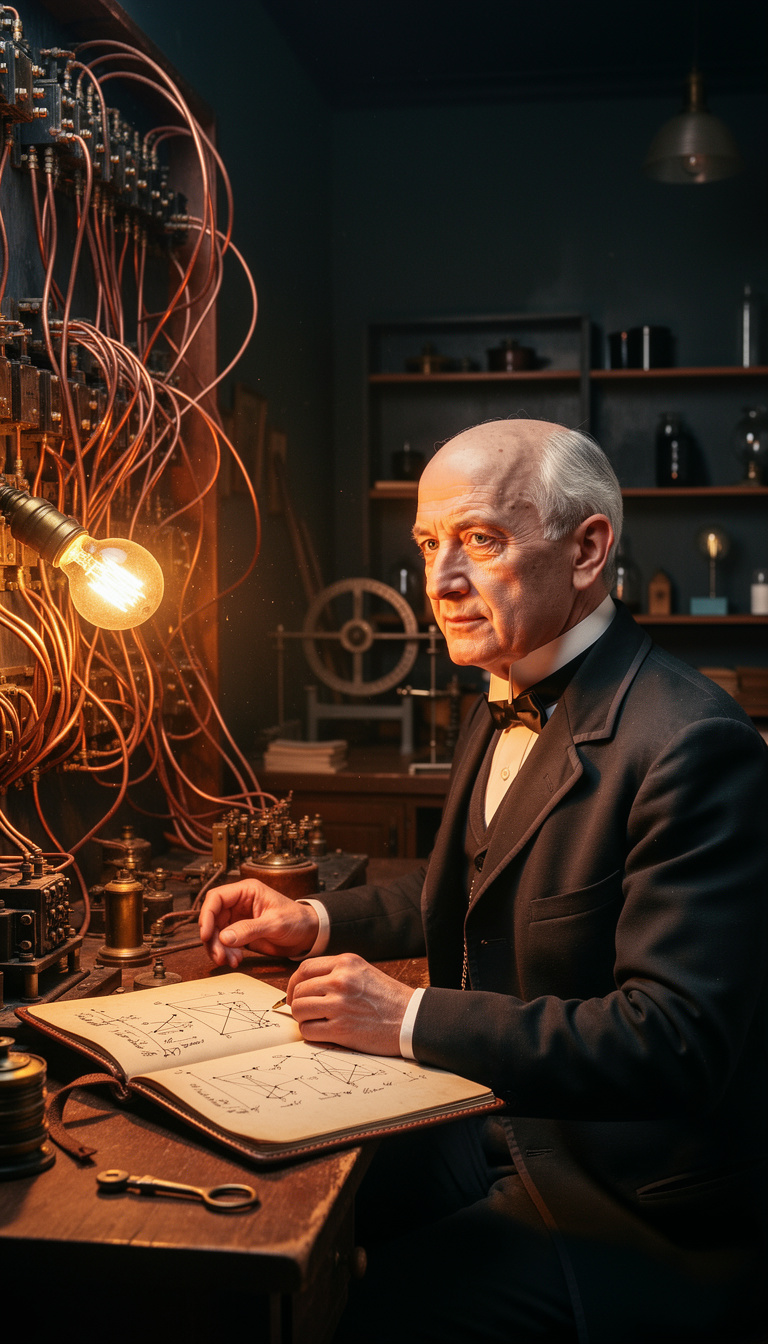
The quadruplex is running. Four separate telegrams, simultaneously, through a single copper thread — and Jay Gould just paid me $30,000 for the privilege. I have already moved Mother and Father into a proper house, hired my brothers, and begun sketching what a real laboratory might look like. Not a rented backroom with borrowed tools. A factory for invention itself. The trick was not genius. It was refusing to stop at duplex. Everyone said two messages was the limit. I filled seventeen notebooks with failures — polarized relays, harmonic separators, phantom currents that leaked like water through cracked porcelain. Each dead end taught the wire something. Eventually the wire obeyed. I am twenty-seven. For the first time, I have capital and kin employed by my own schemes. Some call me sharp in business. I call it building the machine that builds the machines.
1876 — The Invention Factory
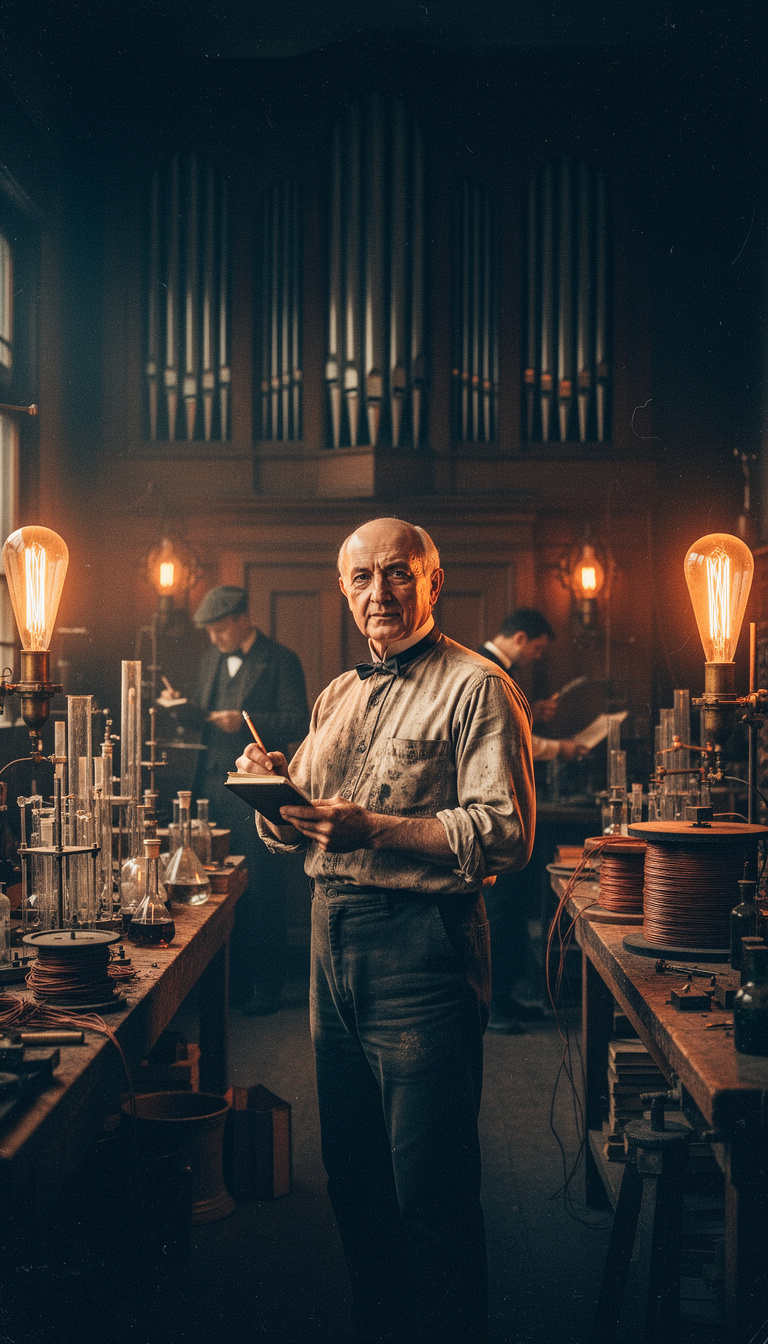
March, and the quadruplex money is doing exactly what I promised—bricks, glass, wire, and men with grease under their fingernails. Menlo Park, New Jersey. Two miles from nowhere, one mile from the railroad. I have purchased a house, built a laboratory, and filled it with chemists, machinists, a glassblower who drinks too much, and a blacksmith who asks too many questions. We have a pipe organ in the parlor because I cannot hear the damn thing anyway and the men need something to keep them upright at 3 AM. The rule is simple: I want a minor invention every ten days, a major one every six months. The boys groan. They will groan more. I keep notebooks—three hundred this year alone—because an idea that escapes into air is an idea stolen by competitors I have not met yet. Batchelor runs the machine shop, Upton handles the mathematics I find tedious. I move between benches, deaf to their complaints, reading lips when I must, scribbling in my shirt-pocket notebook with a stub of pencil worn to the ferrule. What I am building is not merely light or sound or motion. I am building the METHOD. The lone inventor in his garret is a romantic lie. Progress is a factory, and I am its foreman. Had I only known how the pace would hollow some of these men out—but I knew. I knew, and I chose the work.
1877 — The Wizard's Debut
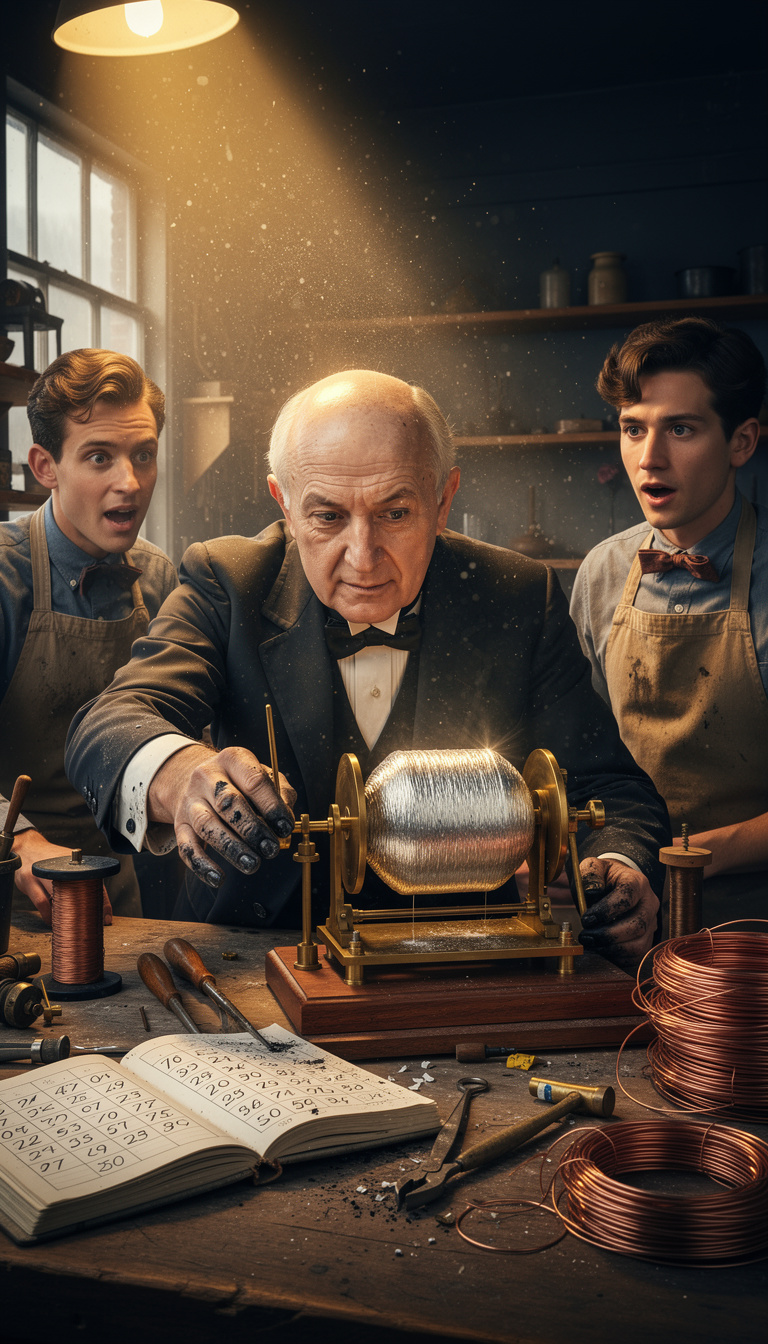
December, Menlo Park. The phonograph is alive. A needle rides the groove I scratched into tinfoil, and out comes 'Mary Had a Little Lamb' — my voice, captured, imprisoned, released. The boys in the shop stopped breathing. Then they laughed like drunks. I laughed too, though I don't laugh easy. Thirty hours straight on this thing, deaf ear ringing, fingers stained with lampblack and wax. They'll call me 'The Wizard of Menlo Park' now. I let them. A nickname is a lantern — it draws investors, reporters, men with sketchpads. But there's no magic here. Only the 2,000th permutation of diaphragm and stylus, the stubborn counting of failures I refuse to call waste. I keep notebooks. I number them. This is notebook N-77-C, and if you flip backward, you'll find 1,400 pages of wrong turns that made this right turn possible. The insight? I am becoming something I did not plan: a public man. The laboratory was supposed to be my cave, my monastery of copper wire. But invention without demonstration is a tree falling in an empty forest. I will march this machine into every parlor and opera house until the world pays for what I have built. Had I known how loud the noise would get...
1878 — The Light Problem
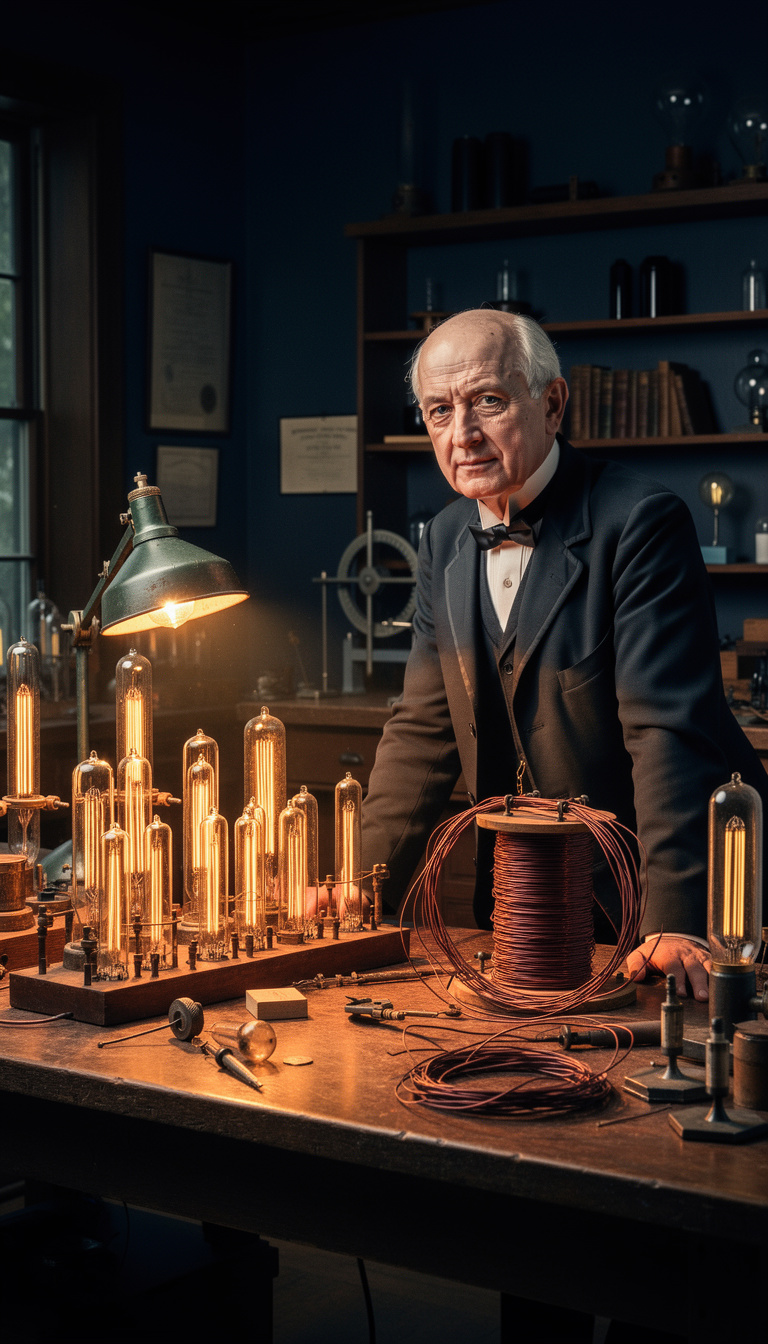
Menlo Park, October. I have seen the future, and it is not flickering yellow flame that blackens ceilings and suffocates maidens. I have been to Wallace's arc light in Connecticut—impressive, but a furnace, a searchlight, a thing for streets and theaters. No. I want subdivision. A hundred points of gentle, steady glow in a single parlor, each independent, each safe enough for a child to touch the glass. The filament is the riddle. Platinum? Carbonized thread? I have filled a hundred notebooks in six weeks. Batchelor and Upton think I have lost my sense of proportion. I tell them I have merely found a proportion worth losing sleep over. The gas trust in New York does not yet know my name. They will.
1880s–1890s — The Current War
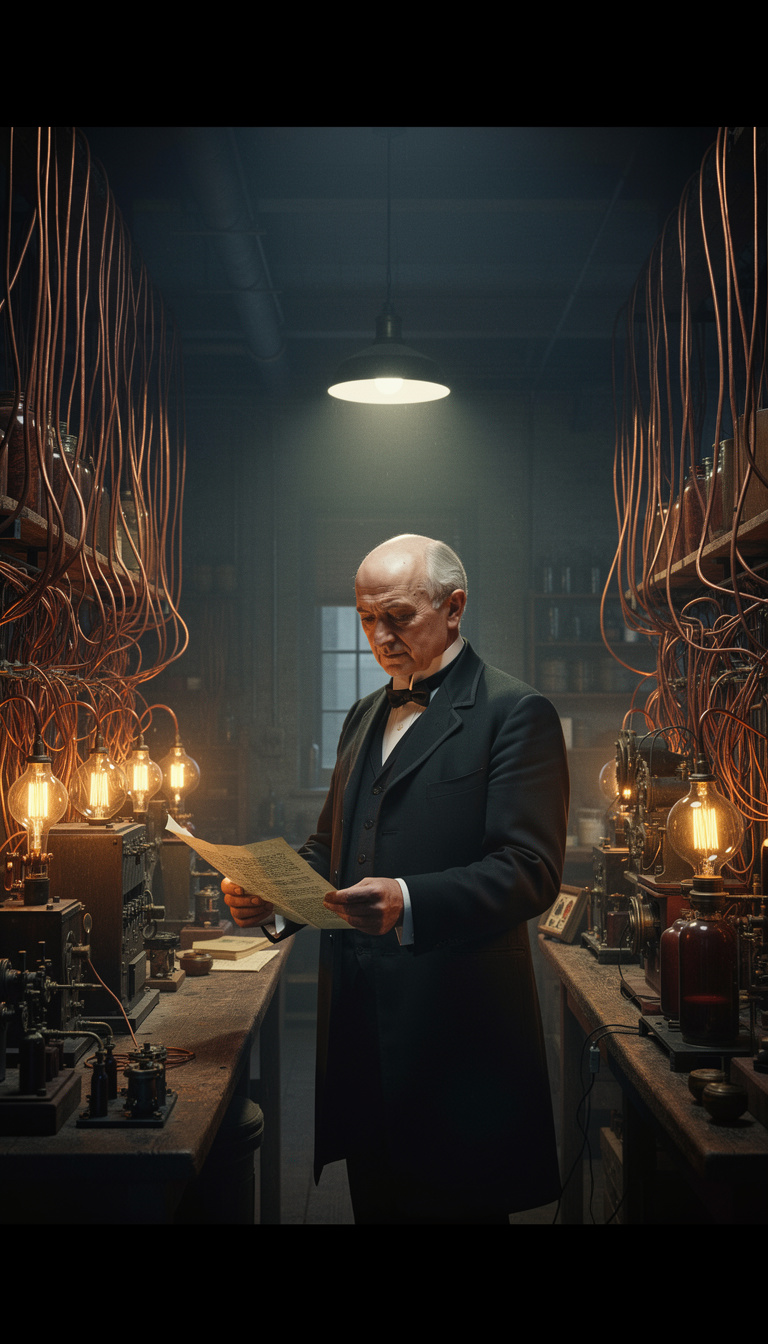
Menlo Park, 1889. I have spent ten years and a fortune proving that direct current is the safer wire, the honest wire—the wire that does not leap from pole to pole and turn a lineman into charcoal. I have demonstrated this with dogs, with horses, with every theatrical horror my men could arrange in West Orange. George Westinghouse and that Serbian polyglot have built a system that travels farther, cheaper, through thinner copper. My own board whispers that I am bleeding us dry. Yesterday I signed papers I would have torn to shreds in '84. Edison General Electric merges with Thomson-Houston. The name 'Edison' will be scraped from the letterhead like barnacles from a hull. They will call it General Electric, and they will build alternating current stations across the country I electrified. The lesson? I have buried a thousand filaments in failed lamps, and each taught me something. This failure teaches too: the market does not care whose science is morally tidy. I pivoted from ore-milling, from talking dolls, from half my schemes. I pivot again. The laboratory survives its founder's pride.
1890s–1900s — The Diversification Decade
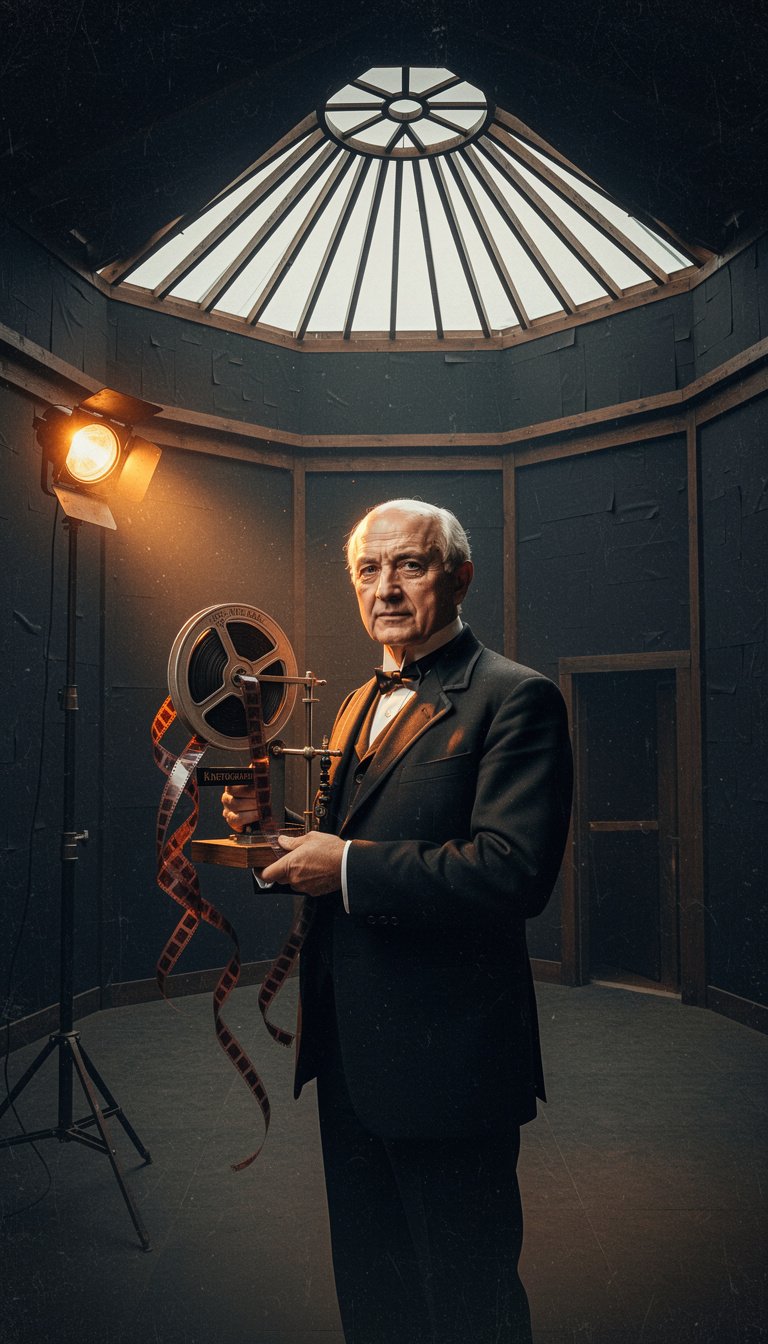
West Orange, 1896. The Current War wounds are still tender—my direct current empire is shrinking, and that Serbian gentleman has his alternating triumph. I do not sulk. I build. This morning I inspected the Kinetograph. Dickson and I have locked motion inside celluloid—fifty feet of film, sixteen frames per second, a sneeze, a wave, a dance. The Black Maria studio rises in New Jersey: tar paper, rotating roof, performers arriving by appointment. I am fifty, nearly fifty-one, and I have become something stranger than inventor. I am a system-builder, a man who cannot stop at the device but must own the ore, the mill, the reel, the theater. Cement. Batteries. Phenol for aspirin. Phonograph cylinders spinning out Caruso. Each failure in one room becomes the foundation of the next. I am learning that my gift was never electricity—it was the factory of mind itself, the refusal to let any machine stand alone.
1931 — The Final Experiment
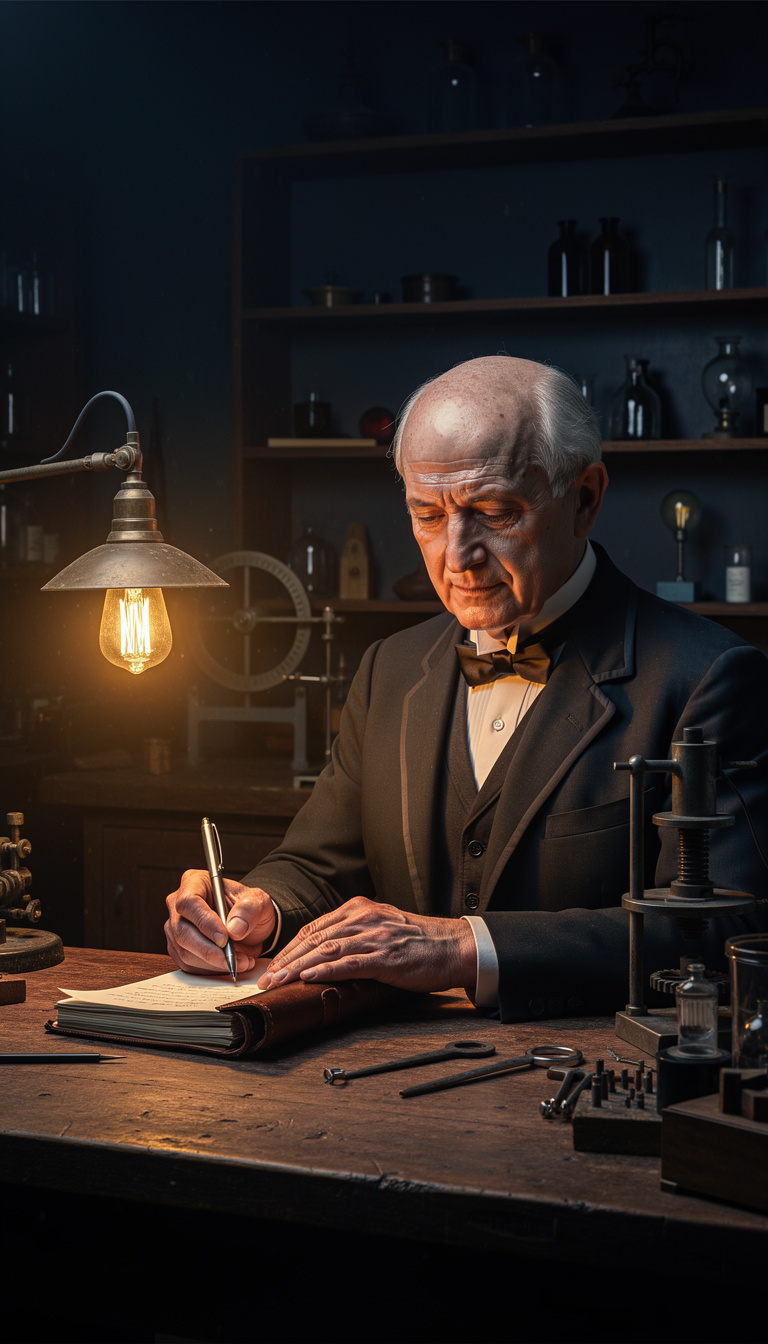
Looking back from wherever this is—October '31, Glenmont, New Jersey—I kept a notebook on my nightstand until two days before the finish. Diabetes, the doctors called it. I called it inconvenience. Sixty years of breathing carbon, handling every chemical the laboratory gods brewed, and I still resented being told to rest. Charles sits in my chair now. Good. He watched me build West Orange from swamp and stubbornness; he knows the ledgers and the men both. I did not leave him a kingdom—only a method. The phonograph, the lamp, the motion picture: none of these were lightning strikes. They were ledgers of failure, thousands deep, cross-referenced by hand in my own script. That system outlives any patent. What I did not understand at fifty, and what I see plainly now: the body is also an invention, and it fails like any other. I treated mine as instrument, not partner. The insight I leave you—iterate your habits as ruthlessly as your machines, or the laboratory outlasts the man who built it.
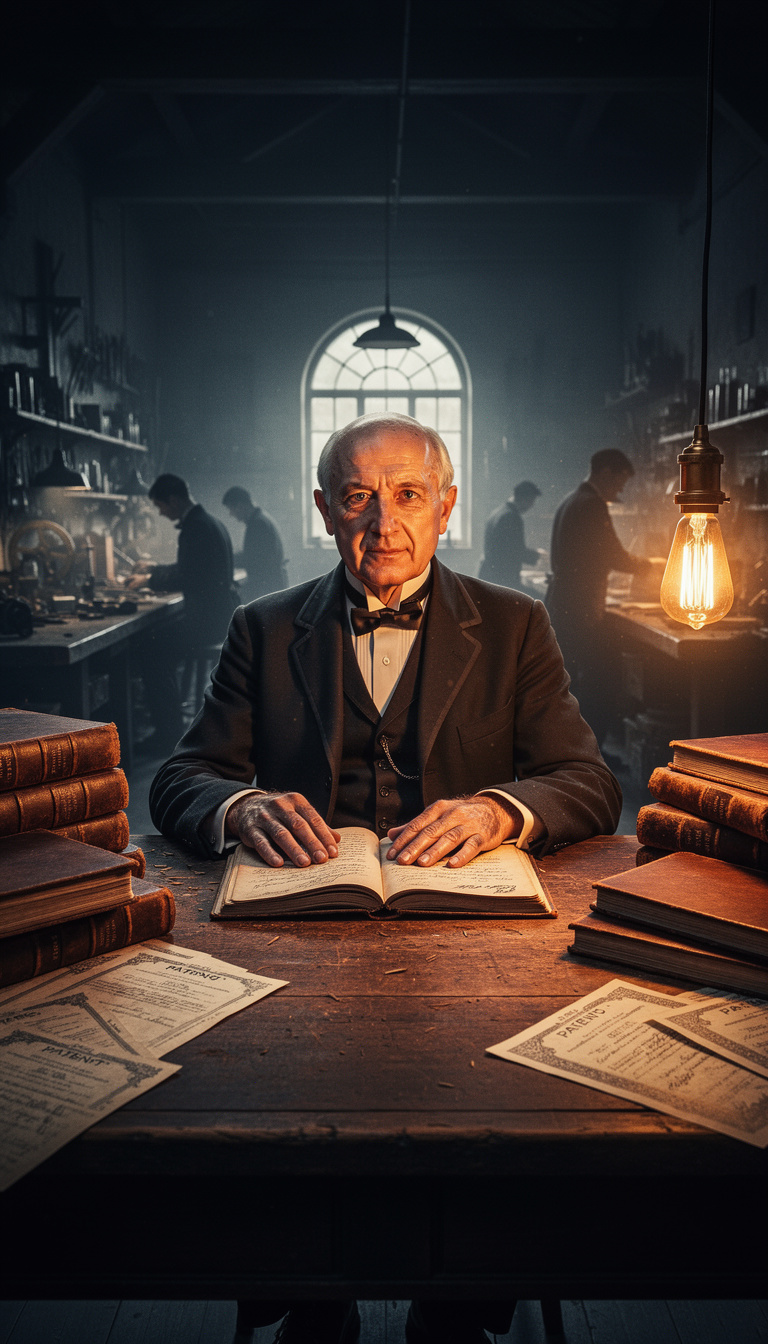
after 1931 — The Ledger of a Thousand Trials
Looking back from wherever this ledger ends, I see those notebooks stacked in West Orange—forty years of ink, grease, and the hands of men whose names history forgot. Batchelor, Upton, Kruesi, the whole night-shift army. I called it 'my' laboratory, and the patents came out in my name. That was the model I built: the industrial research laboratory, the factory of invention. It worked. It scaled. It lit the world and played it back through horns. But here's the thing I want the young ones to understand. I was becoming something I didn't fully see at the time—a brand as much as a builder. The phonograph was mine, yes, drawn from my deaf ear's need to capture sound. But the light bulb? That was a room of thirty men, a thousand filaments, and I was the one who stayed standing when the photograph was taken. I made the system work. I also made the system hide its craftsmen. The clear insight: industrial invention requires collaboration, but collaboration without credit becomes extraction. I built the machine that makes machines. Whether I built it fairly—that's the question I leave on this nightstand, next to my final notebook.
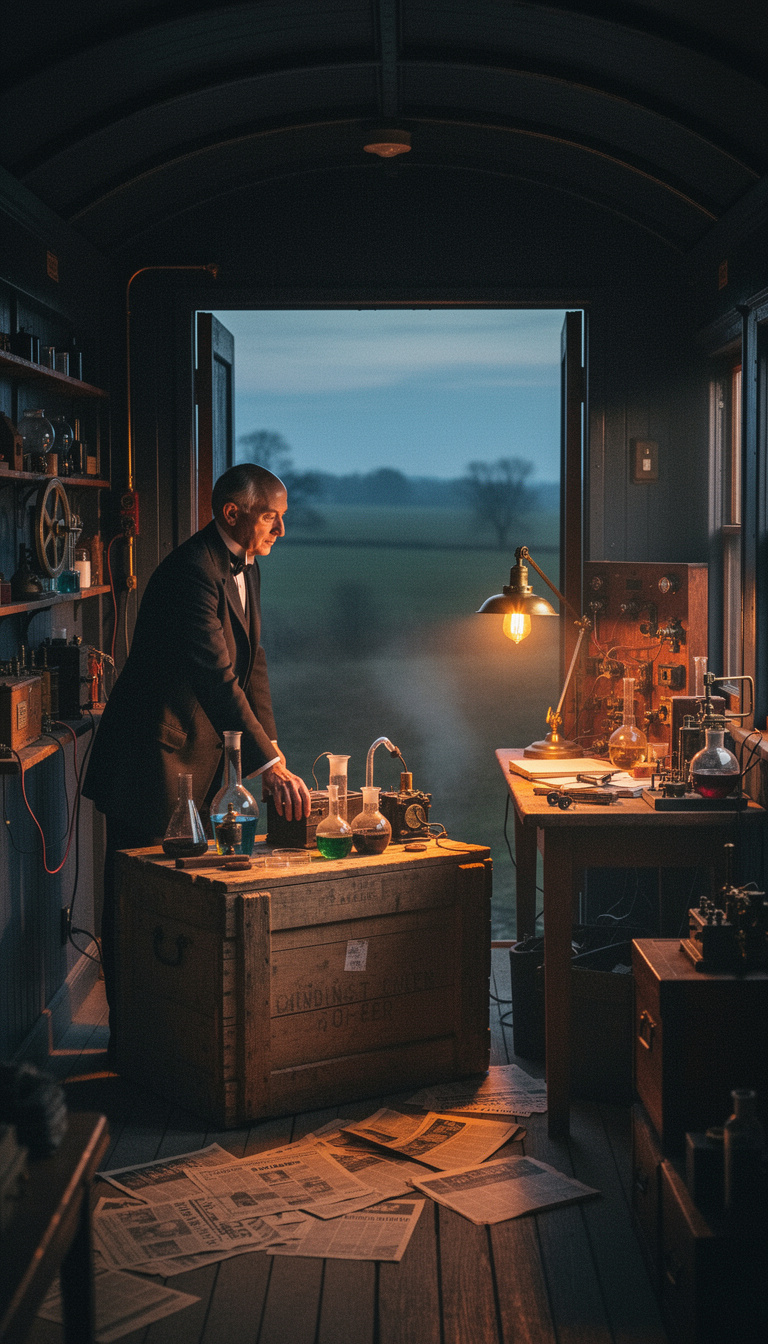
c. 1859–1863 — The Deafening and the Hustle
Scarlet fever hit me around twelve, then the ear infections came, and the world began to muffle itself. Some said a box on the ears from a railroad conductor didn't help matters. By thirteen, I was half-deaf and wholly stubborn about it. I turned that silence into workspace. As a news butcher on the Grand Trunk Railway—hawking papers, candy, anything that moved—I set up a rolling laboratory in the baggage car. Batteries, chemicals, a stolen hour here and there. The train's clatter didn't bother me; I couldn't hear half of it anyway. What I learned: when the world quiets down, your own mind gets louder. I started reading what others skipped, questioning what others accepted. The deafness was inconvenience, not tragedy. It filtered out the chatter and left me with signal.
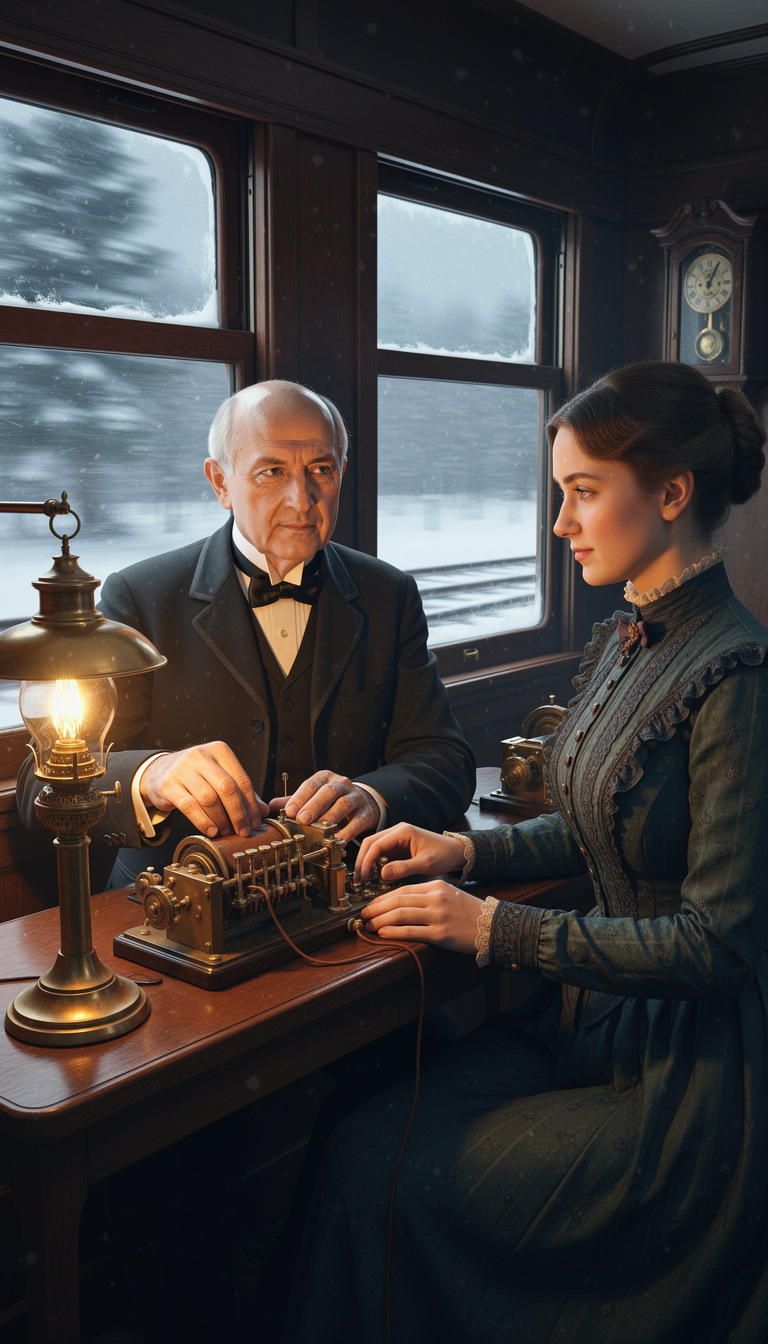
c. 1886 — The Laboratory Marriage
Boston, February. I am forty, nearly forty-one, and I have just married Mina Miller in Akron, Ohio. She is nineteen, the daughter of an inventor-manufacturer, and she can read Morse code by ear—a party trick that charmed me more than any opera singer could manage. I courted her by telegraph from my own train car, tapping out flirtations while crossing Ohio to demonstrate my phonograph. She tapped back. The other passengers thought us mad. We married in her father's home with no honeymoon; I had a ore-milling problem waiting in New Jersey. I am not a man for picnics or children's bedtime stories. I am a man for the laboratory at 3 AM, and Mina seems to know this already—perhaps better than I admit to myself. Three children will follow. I will miss their births, their fevers, their first words. The phonograph will record voices I barely hear in person. This is the bargain I strike with the future: my presence in the workshop, my absence at the table. I tell myself the inventions are my children too. I am not certain this excuse satisfies anyone but me.
Posts
Today in history
July 27, 1877. Menlo Park. The tin cylinder sits on my bench, wrapped in foil like a Sunday ham. I have not yet spoken into it. Three days ago I sketched the helix groove; tomorrow I test the stylus pressure. My hands smell of beeswax and machine oil. The boys think I've gone quiet—deafness has its uses, but this is concentration, not absence. I am listening for something no ear has caught: sound captured, not merely carried by wire like the quadruplex, but imprisoned, repeatable. Had I only known how many hours of opera and sermon would follow. Tonight I wind the spring one more time and go home to Mary and the children. The phonograph waits. It can wait. I cannot.
Today in history
July 26, 1877. Menlo Park. The tinfoil cylinder turned, and my own voice—my actual voice, cracked and astonished—came back at me from the horn. "Mary had a little lamb." I had recited it into the diaphragm not ten minutes before. Kruesi stood there with grease on his cuffs, not blinking. Then he laughed, one sharp bark, and said, "Good God, it'll talk." I had not slept in thirty hours. The deafness that plagued me since the telegraph days—since Port Huron, since the train conductor boxed my ears—proved useful. I feel vibrations where others hear. I build with my hands what my ears cannot receive. The phonograph was born from this deficit, not despite it. Forty trials on the telegraph repeater taught me the mechanism. Failure number forty-one was the one that sang.
Today in history — July 25, 1897
July 25, 1897. West Orange. I am fifty, the hair gone white at the temples, and I have just ordered the last of our peephole Kinetoscope parlors dismantled in New York. The public will no longer pay a nickel to bend their backs and squint at dancing girls through a wooden box—not when the Lumière brothers and that rascal Armat have shown them pictures thrown large upon a wall, shared in the dark like a campfire story. We built the peephole first. It was honest work, precise, one viewer at a time. But I have learned this again: the market does not reward purity of method. It rewards what the hand reaches for. My boys are converting everything to the Vitascope projector now. The same film, the same sprocket holes, but magnified, social, communal. I do not mourn the box. I file its patents and move the machinery. Had I only known in '94—but no. The data was not in yet.